

Key Takeaways
Charging & Starting System
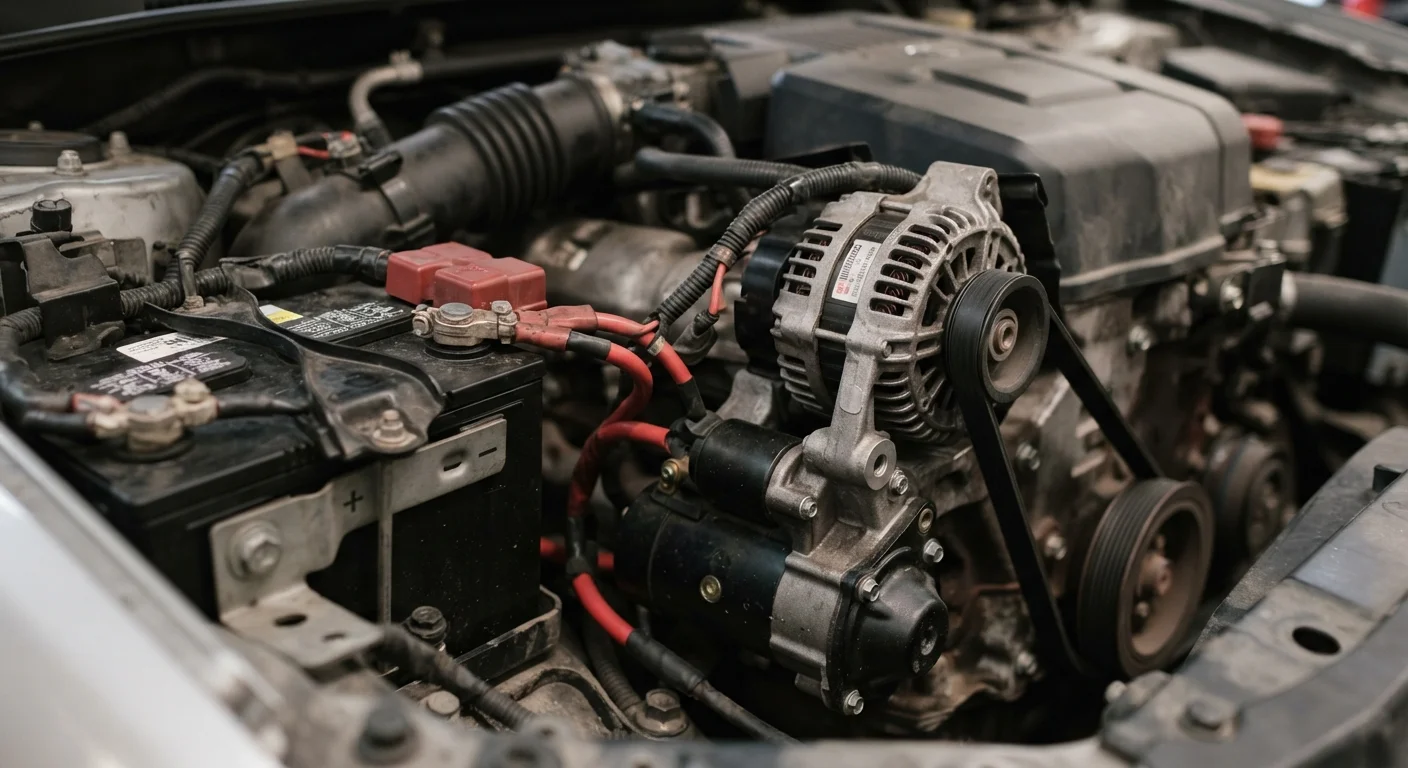
Your vehicle's starting and charging system is made up of three interdependent parts: the battery, the alternator, and the starter motor. The battery stores electrical energy and powers the starter; the starter cranks the engine to life; and the alternator recharges the battery while the engine runs. When any one of these fails, the symptoms can look nearly identical - making accurate diagnosis essential.
Because these components share electrical circuits, a failing alternator can drain a healthy battery, and a weak battery can mask an otherwise functional starter - so testing each in isolation matters.
Why These Three Components Are So Easy to Confuse
Turn the key and nothing happens - or worse, something happens but the engine doesn't start. Before you panic or reach for your wallet, understand that the battery, alternator, and starter all share the same basic electrical loop. A problem with any one of them can produce nearly identical symptoms: a no-start, sluggish cranking, or flickering electronics. The fix is completely different depending on the culprit, so a rushed diagnosis leads to wasted parts and unnecessary labor costs.
The good news is that each component tends to fail in a recognizable way. Learning to read those signals takes only a few minutes and can save you a significant repair bill.
Battery: The Most Common Suspect
The battery is statistically the most frequent cause of a no-start. It stores the charge needed to power the starter motor and run the vehicle's electronics when the engine is off. Batteries degrade gradually, often without obvious warning until temperatures drop or you leave a light on overnight.
3-5 years
Typical car battery lifespan
According to AAA, most car batteries require replacement within three to five years, with climate extremes accelerating degradation.
~20%
Of roadside calls involve the battery
AAA consistently reports that battery-related failures are among the top reasons drivers call for roadside assistance each year.
Key symptoms of a failing battery:
- Slow, labored cranking when you turn the key (a "sluggish" engine turnover)
- Electrical accessories - radio, power windows, dome lights - that are weak or unresponsive
- A battery that dies repeatedly, even after a jump-start charges it
- Visible corrosion on the terminals (white or blue-green buildup)
A simple test: jump-start the vehicle. If it starts immediately and runs fine with no warning lights, the battery is the likely culprit. Most auto parts retailers will load-test a battery at no charge, giving you a reliable pass-or-fail result before you buy a replacement.
Test Before You Replace
Many auto parts retailers offer free battery and alternator testing in their parking lots - no appointment needed. Getting a confirmed diagnosis before purchasing parts prevents the common mistake of replacing a healthy battery when the real problem is the alternator, or vice versa.
Alternator: The System's Power Generator
While the battery handles startup duties, the alternator takes over once the engine is running. It converts mechanical energy from the engine into electricity, continuously recharging the battery and powering your vehicle's systems. When the alternator fails, the battery shoulders the entire load - and drains quickly.
Key symptoms of a failing alternator:
- The battery warning light (often shaped like a battery icon) illuminates while driving
- Headlights and dashboard lights that dim or flicker at idle and brighten at higher RPMs
- A car that starts fine but stalls after a short drive
- Whining or grinding noises from the engine bay, caused by a worn alternator bearing or slipping belt
The jump-start test is useful here too: if the car runs immediately after a jump but stalls again within minutes, the alternator is almost certainly not recharging the battery. A mechanic can confirm this with a voltmeter - a healthy alternator typically produces between 13.5 and 14.5 volts at idle.
Serpentine Belt and Alternator Connections
The alternator is driven by the engine's serpentine belt. A loose, cracked, or broken belt can cause the alternator to underperform or stop charging entirely - mimicking alternator failure. Always ask a mechanic to inspect the belt when diagnosing charging system issues, as replacing a belt is far less expensive than replacing the alternator itself.
Starter: When the Engine Won't Even Try to Crank
The starter motor is an electric motor that physically cranks the engine when you turn the ignition. It draws heavy current from the battery for a brief moment - and when it fails, it usually fails distinctly.
Key symptoms of a failing starter:
- A single loud click or rapid-fire clicking when you turn the key, with no engine movement
- Complete silence when turning the key, despite working lights and electronics
- Intermittent starting - the car starts sometimes but not others, with no pattern
- A grinding noise during cranking, suggesting worn starter gear teeth
The key distinction from a dead battery: if your interior lights, headlights, and electronics are operating normally but the engine refuses to crank, the starter motor is a prime suspect. Starter failures can sometimes be temporarily addressed by tapping the starter casing with a rubber mallet - a crude trick that occasionally frees a stuck solenoid - but this is a short-term workaround, not a fix. See our guide to DIY vs. shop repairs to understand when a job like starter replacement is best left to a professional.
A Simple Diagnostic Roadmap
Before authorizing any repair, walk through this quick mental checklist:
- Check the lights first. Are your headlights and interior lights working normally? If they're dim or dead, the battery is the primary suspect.
- Listen when you turn the key. Rapid clicking usually means low battery voltage. A single click or silence with working electronics points toward the starter.
- Try a jump-start. If the car starts and runs well, suspect the battery. If it starts but stalls quickly or the battery light comes on, suspect the alternator.
- Get a professional test. A load test on the battery and a charging-system test for the alternator provide definitive answers. Many shops perform these tests as part of a routine inspection.
Replacing the wrong part is an expensive lesson in the value of diagnosis. Spending a few minutes - or a few dollars on a diagnostic fee - almost always pays off.