

Key Takeaways
Why Most Exercise Schedules Fail Before Week Three
The most common fitness mistake isn't laziness - it's overplanning. People build ambitious five-day schedules based on motivation, then abandon them when real life intervenes. Research consistently shows that adherence, not volume, drives long-term health outcomes. A schedule you follow imperfectly for months delivers far more benefit than a perfect plan you drop after two weeks.
Two structural problems undermine most plans. First, people set session frequency based on what they think they should do rather than what genuinely fits their schedule and energy. Second, they treat rest as failure rather than as a built-in requirement. Both errors are fixable once you understand that a good exercise schedule is designed around your actual life - not an idealized version of it.
If you're short on time during busy weeks, practical guidance on fitting movement into a packed day can help you stay consistent without overhauling your calendar.
What you will need
How to Structure Your Week Step by Step
Building a sustainable schedule is a process, not a single decision. Follow the steps below to create a plan grounded in your real constraints and goals.
Audit your current week honestly
Before writing a single workout, map out a typical week. Identify your non-negotiable commitments - work, family, sleep - and note when you tend to have genuine energy versus when you're running on empty. Most people overestimate free time and underestimate fatigue. This audit prevents you from scheduling a 6 a.m. strength session on a night you routinely sleep past seven.
Set a realistic session target for the week
For most beginners, two to three sessions per week is a productive and sustainable starting point. Resist the urge to schedule five days immediately - doing less consistently outperforms doing more sporadically. If you've been inactive for a while, review the guidance in our returning to exercise guide before setting your target.
Choose your movement types and distribute them
A balanced weekly plan typically blends cardiovascular exercise and strength training across different days. This spreads the physical demand and reduces injury risk. Our cardio vs. strength training breakdown can help you decide how to weight each based on your goals. Alternate muscle-intensive sessions with lighter movement days to allow adequate recovery.
Anchor each session to an existing habit
Scheduling a workout is easier when it's attached to something you already do reliably. Exercise immediately after dropping kids at school, before your morning coffee, or right after work before you sit down. This behavioral pairing reduces the decision-making friction that derails consistency. Think of movement as part of your routine, not an addition to it.
Build in deliberate rest and recovery days
Rest days are not wasted days - they are when your body adapts, repairs muscle tissue, and consolidates fitness gains. Plan at least one to two full rest or active recovery days per week. Light walking, stretching, or gentle movement on those days is fine. Understand more about why recovery matters so you treat them as intentional, not accidental.
Write the schedule out and review it weekly
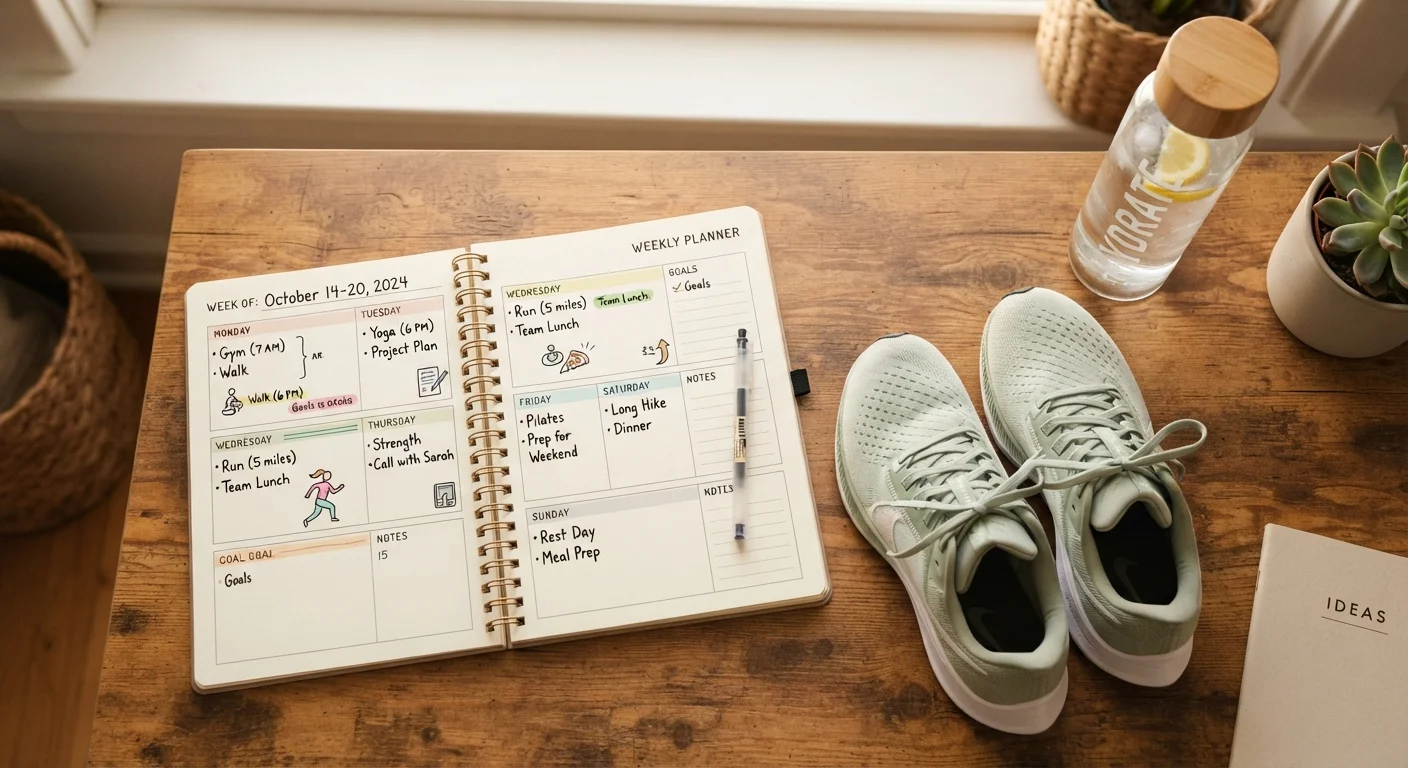
Put your plan on paper or into a calendar with specific days, times, and what you'll do in each session. At the end of each week, spend five minutes reviewing what you completed, what you missed, and why. Adjust the following week accordingly. Flexibility is a feature, not a flaw - a schedule that adapts to your life is far more effective than one you abandon after two weeks.
Progress Gradually to Build Lasting Habits
Once you've maintained your initial schedule for four to six weeks, consider adding one additional session or incrementally increasing session duration. Gradual progression keeps the routine challenging without overwhelming your recovery capacity. Sustainable fitness gains come from small, consistent steps forward - not dramatic weekly overhauls.
As you establish your routine, consider pairing your fitness habits with complementary wellness practices. A weekly meal planning checklist can help ensure your nutrition supports your activity level without requiring a complete lifestyle overhaul at once.
Don't overlook the warm-up either. Understanding when to use static versus dynamic stretching before each session can improve performance and reduce injury risk from your very first workout.
Consult a Professional Before Starting
If you have a chronic health condition, a recent injury, or have been sedentary for a year or more, speak with your healthcare provider before beginning any new exercise program. This article is general health information, not medical advice. Your provider can help you identify appropriate intensity levels and any movements to avoid based on your specific health history.
This article provides general fitness information for educational purposes only and is not a substitute for personalized guidance from a qualified healthcare or fitness professional. If you have any health conditions or concerns, consult your doctor before beginning a new exercise program.