

Key Takeaways
Why Budget Wardrobes Fail - and How to Avoid It
Most people don't struggle to dress well because they lack money - they struggle because they shop reactively. A sale item picked up without a plan, a trendy piece with nothing to pair it with, or a wardrobe full of individual items that don't combine - these are the real budget killers. Building a functional wardrobe on a tight budget is less about finding cheap clothes and more about making deliberate decisions with whatever you have to spend.
The fix starts before you open your wallet. Intentional dressing means understanding your actual lifestyle, your existing wardrobe, and the specific gaps that are costing you outfit options. When you shop to solve a real problem rather than to feel the rush of something new, every dollar works harder.
Set a Budget Before You Shop
Without a spending limit in place, even a strategic shopping trip can result in overspending. Decide on a firm dollar amount before you browse - whether that's $50 or $200 - and treat it as a hard ceiling, not a starting point. For broader guidance on setting spending limits, the Budgeting Basics hub is a solid resource.
It also helps to reframe how you think about clothing value. A $15 top worn twice is more expensive per use than a $60 piece worn forty times. This cost-per-wear logic - explored in depth in clothes that cost more upfront but save money long-term - doesn't mean you need to spend more. It means directing limited funds toward the pieces most likely to earn their place.
Step-by-Step: Building Your Functional Wardrobe
The following steps walk you through the full process - from assessing what you currently have to shopping and maintaining your wardrobe going forward. Work through them in order for the best results.
What you will need
Audit What You Already Own
Pull everything out of your closet and drawers. Try each piece on and ask three questions: Does it fit? Is it in good condition? Have I worn it in the past year? Sort into three piles - keep, repair/alter, and donate or sell. Items in good condition that simply don't fit are often worth a low-cost tailor visit rather than a replacement. For a deeper look at why fit issues derail wardrobes, see why your clothes stop fitting right.
Identify Real Gaps in Your Wardrobe
Once you know what you have, list what's genuinely missing. Focus on gaps that limit your ability to get dressed for your actual life - work, errands, casual socializing - not aspirational occasions. A gap is a category where you have nothing usable, not just fewer options than you'd like. Common gaps include a versatile layer, a comfortable but polished bottom, or a neutral shoe that bridges casual and smart-casual settings.
Build Around Versatile, Neutral Anchors
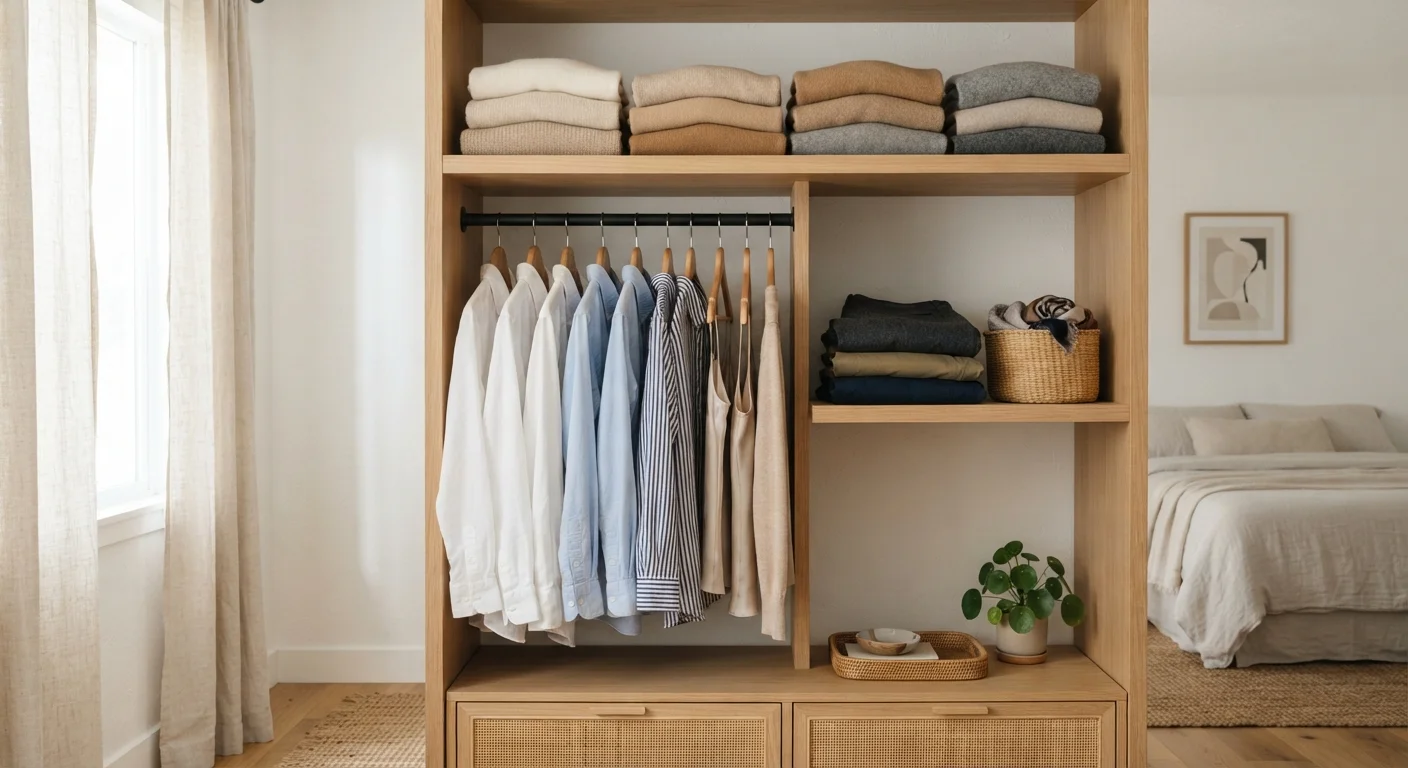
When filling gaps, prioritize pieces in neutral tones - navy, grey, white, black, tan - that pair easily with most things you already own. These anchors do the heavy lifting in a small wardrobe. A capsule wardrobe approach formalizes this idea if you want a structured framework. The goal is maximum combinations from minimum pieces, which naturally stretches a tight budget further.
Shop Secondhand and End-of-Season Sales Strategically
Thrift stores, consignment shops, and online resale platforms are practical tools for budget wardrobe building - not a last resort. Look for natural-fiber basics (cotton, wool, linen) that hold up well over time. End-of-season sales at traditional retailers can also yield quality pieces at reduced prices, particularly for items like outerwear or denim that you'll wear for years. For an honest comparison of both approaches, secondhand vs. new shopping is worth reading before you decide where to spend.
Care for What You Own to Extend Its Life
Proper garment care is one of the most underrated budget strategies. Wash items on gentle or cold cycles, air-dry when possible, and store knitwear folded rather than hung to prevent stretching. Learning basic repairs - replacing a button, fixing a small seam - keeps pieces in rotation longer and delays replacement costs. Getting more outfits out of fewer clothes pairs well with this step if you want to maximize what's already working.
Think in Outfits, Not Individual Pieces
Before adding any item to your cart or basket, picture at least three outfits you'd build with it using clothes you already own. If you can't, it likely won't earn its place in a tight wardrobe. See outfit formulas that work for almost any occasion for inspiration.
Avoid Buying Duplicates of Gaps You Already Have
It's tempting to grab another white tee or pair of black pants without checking what's already in your closet. Buying duplicates wastes budget that could go toward genuine gaps. Always complete your inventory audit before purchasing anything new.
Once your wardrobe has a solid foundation, the effort required to get dressed each morning drops noticeably. For ongoing inspiration on combining what you own, getting dressed without the stress offers practical, everyday guidance that complements what you've built here.