

Key Takeaways
Auto Insurance Coverage Types
An auto insurance policy is made up of several distinct coverage types, each designed to pay for a specific category of loss or damage. Some coverages protect other people from harm you cause; others protect your own vehicle or finances. Most states require certain coverages by law, while others are optional but often essential.
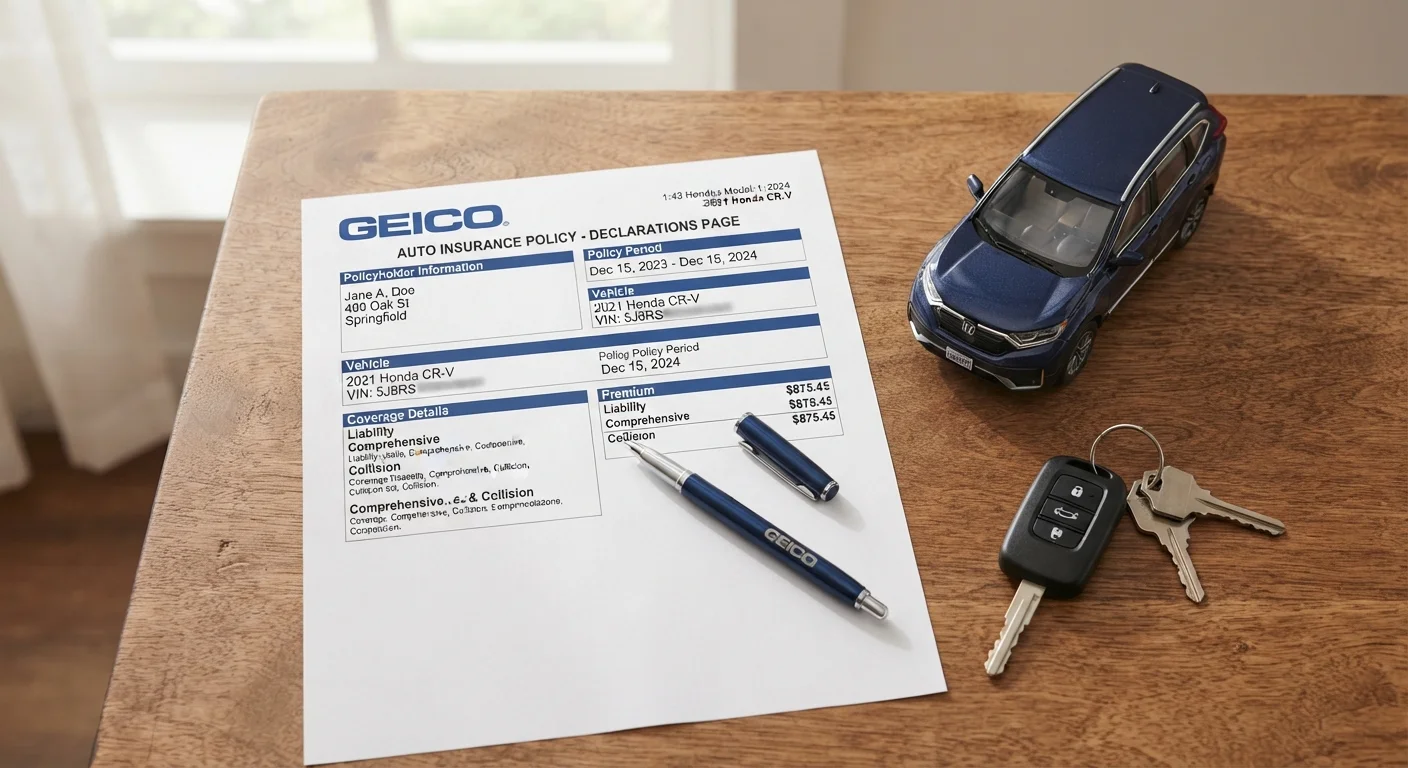
Each coverage type carries its own limit (the maximum the insurer pays) and, where applicable, its own deductible (the amount you pay before coverage kicks in). These figures are set independently and shown on your declarations page.
Liability Coverage: Your Financial Shield Against Claims From Others
Liability coverage is the foundation of virtually every auto policy in the United States, and it is legally required in almost every state. It splits into two parts: bodily injury liability and property damage liability.
Bodily injury liability pays for medical expenses, lost wages, and legal costs if you injure someone else in an accident. Property damage liability pays to repair or replace another person's vehicle or property - a fence, a storefront, another car - when you are at fault.
Liability coverage does not pay for your own injuries or vehicle damage. It exists solely to protect other parties from financial harm you cause. Limits are expressed as three numbers (e.g., 25/50/25), representing per-person injury, per-accident injury, and property damage maximums in thousands of dollars. For a deeper look at how policy limits work, see how to read your policy's key sections.
Check Your Liability Limits Against Your Assets
State-minimum liability limits are often far lower than what a serious accident can cost. If your assets - savings, home equity, future wages - exceed your liability limits, you could be personally responsible for damages beyond what your policy pays. Review your limits periodically and consider whether higher coverage or an umbrella policy makes sense for your financial situation. See how umbrella insurance extends your liability protection for more.
Collision and Comprehensive: Protecting Your Own Vehicle
These two coverages work together to protect the value of your car - and it helps to think of them as a pair.
Collision coverage pays to repair or replace your vehicle after it is damaged in a crash with another car, a guardrail, a pothole, or any other object. Fault does not matter; if your car is damaged in an accident, collision coverage applies. You pay the deductible; your insurer covers the rest up to your car's actual cash value.
Comprehensive coverage handles losses that are not collisions. This includes theft, vandalism, fire, flooding, hail, falling trees, and collisions with animals (such as hitting a deer). Like collision, it applies up to your vehicle's actual cash value minus your deductible.
If you finance or lease your vehicle, your lender will almost certainly require both coverages. On an older vehicle with low market value, the cost of carrying both may exceed likely payouts - a tradeoff worth reviewing with a licensed agent.
~13%
U.S. drivers estimated to be uninsured
The Insurance Research Council has consistently estimated that roughly one in eight drivers on U.S. roads carries no auto insurance, underscoring the value of uninsured motorist coverage.
50 + D.C.
Jurisdictions with unique liability minimums
Every U.S. state and the District of Columbia sets its own minimum liability coverage requirements, meaning the legal floor for coverage varies significantly depending on where your vehicle is registered.
~$4,700
Average collision claim payout
According to industry data from the Insurance Information Institute, the average collision claim represents a significant out-of-pocket exposure for drivers who forgo the coverage.
Uninsured and Underinsured Motorist Coverage: When the Other Driver Can't Pay
Despite legal requirements, a significant share of drivers on U.S. roads carry no insurance or inadequate coverage. Uninsured motorist (UM) coverage steps in to pay your medical expenses and, in many states, your vehicle repair costs when an at-fault driver has no insurance at all.
Underinsured motorist (UIM) coverage addresses situations where the at-fault driver has insurance, but their policy limits are too low to cover your actual losses. Your UIM coverage fills the gap between their policy limit and your total damages.
Some states require UM/UIM coverage; others make it optional. Either way, it provides a meaningful safety net against a common real-world risk. See common misconceptions about what policies actually cover for more on coverage gaps drivers often discover too late.
Medical Payments and Personal Injury Protection: Covering Your Own Medical Costs
Two related coverages handle medical expenses for you and your passengers after a crash, regardless of who caused it.
Medical payments coverage (MedPay) is available in most states and pays for reasonable medical and funeral expenses for you and your passengers up to the policy limit. It is relatively straightforward - it supplements your health insurance and helps cover deductibles or co-pays.
Personal injury protection (PIP) is broader and required in no-fault insurance states. In addition to medical costs, PIP can cover lost wages, rehabilitation expenses, and even household services you cannot perform while injured. No-fault states require drivers to file medical claims with their own insurer first, regardless of fault.
This article is for general informational purposes and does not constitute insurance, legal, or financial advice. Coverage availability, requirements, and terms vary by state and insurer. Always read your policy documents carefully and consult a licensed insurance agent for guidance specific to your situation.