

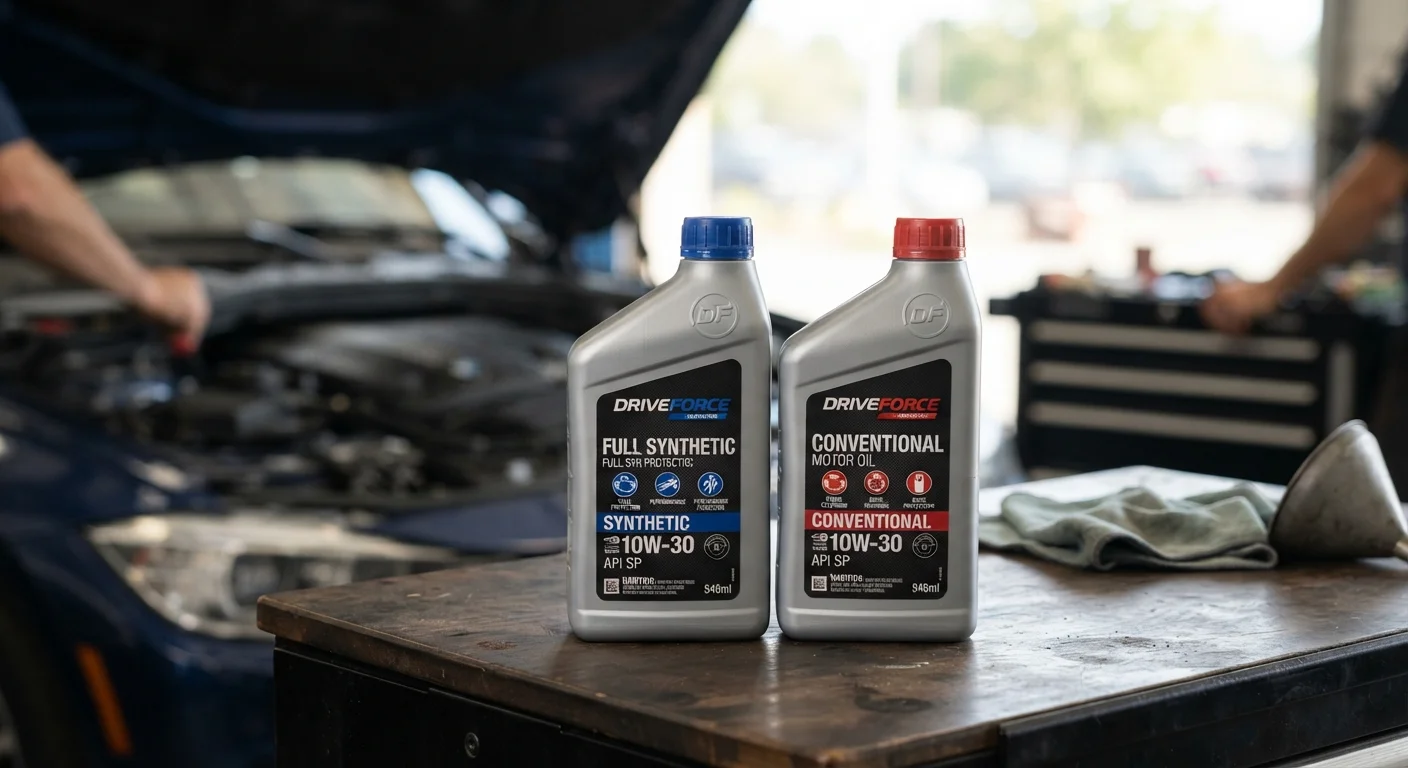
Key Takeaways
Option A
Synthetic Motor Oil
The engineered, high-performance formulation.
Best for: Drivers with newer vehicles, high-performance engines, or those operating in extreme temperatures who want maximum protection and longer drain intervals.
Option B
Conventional Motor Oil
The time-tested, petroleum-based standard.
Best for: Owners of older vehicles with simpler engines that log modest annual mileage under normal driving conditions.
If you drive a late-model vehicle or turbocharged engine
Synthetic Motor Oil
Modern engines with tighter tolerances and turbochargers generate more heat and require the consistent molecular structure that synthetic oil provides.
If you own an older, high-mileage vehicle on a tight maintenance budget
Conventional Motor Oil
Many older engines were designed around conventional oil, and high-mileage conventional formulas with seal conditioners can be a practical, cost-effective choice.
If you regularly drive in extreme cold or desert heat
Synthetic Motor Oil
Synthetics maintain viscosity across a far wider temperature range, flowing faster on frigid cold starts and resisting breakdown in sustained high heat.
If your car sees light, routine city driving with frequent short trips
Conventional Motor Oil
Under low-stress driving conditions, a quality conventional oil changed on schedule provides adequate engine protection at a lower per-service cost.
How Each Oil Is Made
The fundamental difference between synthetic and conventional motor oil starts long before it reaches your crankcase - it starts in how each is produced.
Conventional motor oil is refined from crude petroleum. During refining, impurities are removed, but the base oil retains a natural mix of hydrocarbon molecules of varying sizes and shapes. That molecular inconsistency is manageable under normal conditions, but it creates performance ceilings in extreme situations.
Synthetic motor oil is built rather than refined. Chemists start with highly purified base stocks and construct uniform, purpose-designed molecules - typically through a process called polyalphaolefin (PAO) synthesis or similar methods. The result is an oil with a consistent molecular structure that behaves more predictably across a wide range of temperatures and pressures.
Both types receive performance-enhancing additive packages - detergents, anti-wear agents, antioxidants - but synthetic's engineered base gives those additives a more stable platform to work from.
| Criterion | Synthetic Motor Oil | Conventional Motor Oil |
|---|---|---|
| Base stock origin | Chemically engineered molecules | Refined from crude petroleum |
| Molecular consistency | Uniform, purpose-designed | Naturally variable |
| Cold-start performance | Flows faster in extreme cold | Thickens more in low temperatures |
| Heat and oxidation resistance | Higher resistance to breakdown | Degrades faster under sustained heat |
| Typical drain interval | 7,500-10,000+ miles (varies by vehicle) | 3,000-5,000 miles (varies by vehicle) |
| Cost per quart | Higher upfront cost | Lower upfront cost |
| Best engine fit | Modern, turbocharged, high-performance | Older, simpler, low-stress engines |
Real-World Performance: Where the Differences Show Up
For most routine highway commuting, the gap between synthetic and conventional is narrow enough that either can protect a well-maintained engine. The differences become meaningful at the extremes.
Cold-Weather Starting
On a frigid morning, oil must flow immediately to protect metal surfaces before the engine warms up. Synthetic oil's uniform molecules resist thickening in cold temperatures, reaching critical engine parts faster than conventional oil. This is one of the most consistent performance advantages synthetics hold.
High Heat and Stress
Turbocharged engines, towing, and sustained highway driving all generate heat that breaks down oil over time. Synthetic oil oxidizes more slowly, maintaining its protective film longer. Conventional oil, especially under sustained high heat, can degrade faster and leave behind sludge deposits.
Drain Intervals
Because synthetic resists breakdown longer, many manufacturers specify oil change intervals of 7,500 to 10,000 miles or more for vehicles using full synthetic - compared to the traditional 3,000-5,000 miles often cited for conventional oil. Always defer to your owner's manual for the interval your specific engine requires. For a deeper look at how extended intervals affect your engine in practice, see our balanced breakdown of extended oil change intervals.
0W-20
Viscosity grade specified by many modern engines
Thinner grades like 0W-20 are increasingly common in new vehicle specs and typically require full synthetic to meet manufacturer standards.
~2-4×
Typical cost premium of synthetic per quart
Synthetic oil generally costs two to four times more per quart than conventional, though longer drain intervals can reduce the overall annual cost difference.
10,000 mi
Common synthetic oil change interval for many vehicles
Many automakers specify 7,500 to 10,000 miles between oil changes for vehicles using full synthetic, compared to shorter conventional intervals.
Cost, Compatibility, and What Your Owner's Manual Says
Synthetic motor oil costs more per quart - often two to four times the price of conventional. Whether that translates to higher overall cost depends on your vehicle's specified drain interval. Fewer oil changes per year can partially or fully offset the higher per-quart price.
A common concern is switching between oil types. If your vehicle has always used conventional oil and is running well, switching to synthetic is generally considered safe for most modern engines. Some mechanics caution against switching in very old engines with significant wear or known seal issues, since synthetic's better cleaning action can disturb accumulated deposits. If in doubt, consult a trusted mechanic.
Mixing synthetic and conventional oil in an emergency is not harmful short-term - both use compatible additive chemistries - but it dilutes the advantages of synthetic and is not a long-term solution.
The most important rule: Check your owner's manual. It specifies the oil viscosity grade (such as 5W-30 or 0W-20) and whether synthetic is required or recommended. Many newer vehicles - particularly those with turbocharged or direct-injection engines - are engineered specifically for synthetic oil and may see accelerated wear without it.
This article is for general informational purposes only. Always consult your vehicle's owner's manual and a qualified mechanic for maintenance decisions specific to your engine.