

Key Takeaways
Fluid Balance
Fluid balance refers to the body's ability to maintain the right amount of water in its tissues, cells, and bloodstream. It's regulated by what you take in - through drinks and food - and what you lose through sweat, urine, and breathing. When intake and loss are roughly equal, your body functions optimally. Diet plays a surprisingly large role in this equation.
Fluid balance is governed in part by osmolarity - the concentration of electrolytes like sodium and potassium in body fluids - which the kidneys continuously adjust through hormonal signals including antidiuretic hormone (ADH) and aldosterone.
More Than Just Water: Where Fluid Comes From
Most people think of hydration as a matter of how much water they drink. In reality, the body draws fluid from a wider range of sources - and food is a significant one. Research suggests that food contributes roughly 20% of total daily water intake for many adults, with that figure rising when the diet is rich in fruits and vegetables.
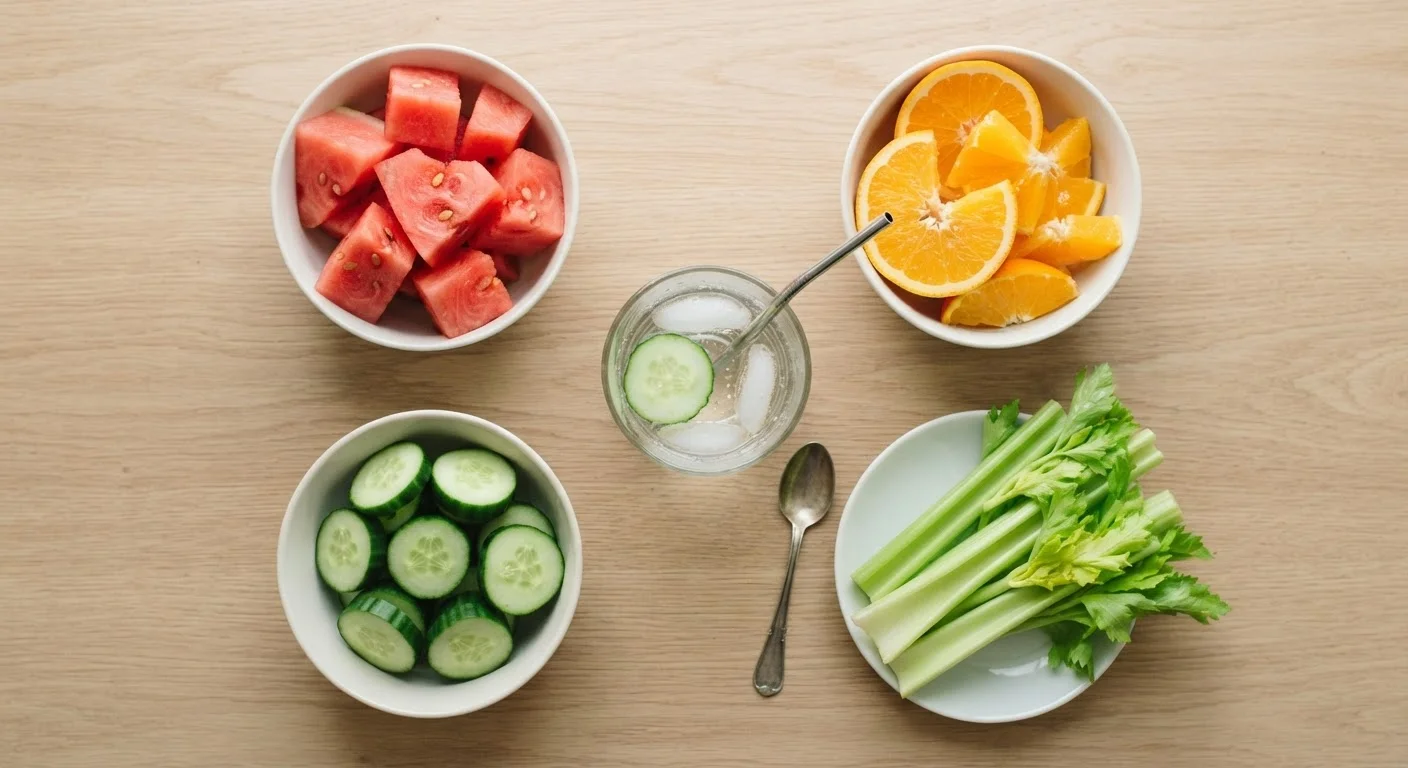
Foods like cucumbers, watermelon, strawberries, and celery contain over 90% water by weight. Soups, stews, yogurt, and even cooked grains like oatmeal add meaningful fluid to the diet. This matters because hydration is ultimately about net fluid availability - what gets absorbed versus what gets lost - not just what's poured into a glass.
~20%
Of daily fluid intake from food
Nutrition research estimates that food accounts for roughly 20% of total water intake in adults eating a typical diet.
96%
Water content in cucumbers
Cucumbers rank among the most water-rich foods available, making them a meaningful contributor to dietary hydration.
1-2%
Body water loss before cognitive effects
Studies in nutritional science indicate that even mild dehydration at this level can affect concentration and mood.
How Sodium Shapes Your Fluid Balance
Of all the dietary factors that affect hydration, sodium has the most direct and well-established impact. Sodium is the primary electrolyte in the fluid outside your cells, and it plays a central role in regulating how much water your body holds. When blood sodium rises - as it does after a salty meal - the kidneys respond by retaining water to dilute the concentration back to a safe level.
This is why high-sodium diets are associated with fluid retention and increased thirst. The body isn't dehydrated in the clinical sense, but it's working harder to maintain balance. For most Americans, dietary sodium comes predominantly from processed and packaged foods rather than the salt shaker - a distinction worth keeping in mind when evaluating your overall fluid needs.
Reading Sodium on Food Labels
The Dietary Guidelines for Americans suggest limiting sodium to under 2,300 mg per day for most adults. Checking the Nutrition Facts label on packaged foods - particularly in the "% Daily Value" column - is one of the most practical ways to keep sodium intake in check without overhauling your entire diet.
The Role of Potassium, Alcohol, and Other Dietary Factors
Sodium doesn't act alone. Potassium, found in foods like bananas, sweet potatoes, leafy greens, and legumes, works in tandem with sodium to regulate fluid movement in and out of cells. Diets low in potassium and high in sodium can disrupt this balance more than either factor alone.
Alcohol is another dietary variable with a meaningful effect on hydration. It suppresses antidiuretic hormone (ADH), which is the hormone responsible for signaling the kidneys to conserve water. The result is increased urine output relative to fluid intake - which is part of why alcohol consumption is associated with next-day dehydration symptoms.
Caffeine is often cited as dehydrating, but the evidence is more nuanced. At moderate intake levels, the diuretic effect of caffeine is largely offset by the fluid in the beverage itself. Excessive intake - particularly through energy drinks or supplements - is a different matter and warrants more caution.
“The human body is remarkably good at maintaining fluid balance under normal conditions, but the dietary environment we create either supports or works against that regulatory capacity every day.”
— Institute of Medicine, Dietary Reference Intakes panel on Water and Electrolytes
Hydration's Broader Impact on Health and Skin
Adequate fluid balance supports a wide range of body functions: cognitive performance, digestion, joint lubrication, temperature regulation, and kidney function. Even mild dehydration - often defined as a 1-2% loss of body water - can impair concentration and mood, according to research published in nutritional science literature.
Hydration also has a direct relationship with skin health. Skin that is consistently well-hydrated tends to maintain better elasticity and barrier function. As our guide to lifestyle factors that support skin health explains, hydration is one of several foundational habits that can complement - and sometimes outperform - topical skincare products.
It's also worth noting that hydration needs vary considerably by individual. Factors like body size, activity level, climate, age, and health conditions all influence daily requirements. If you have specific health concerns - particularly involving kidney function, heart conditions, or medications that affect fluid balance - consult a qualified healthcare professional before making significant dietary changes.
This article is for general informational and educational purposes only and is not a substitute for professional medical advice. Always consult a qualified healthcare provider with questions about your individual health needs.