

Key Takeaways
Why Cheap Policies Look Attractive - Until They Aren't
A lower monthly premium is easy to justify. It frees up cash today, and the risk of needing a payout can feel abstract. But insurance is a financial safety net, not a subscription service - and when the net has holes, the fall is expensive.
The fundamental trade-off in every policy is the relationship between what you pay upfront (the premium) and what you'd owe if something goes wrong (your deductible, copays, and anything beyond your coverage limits). Lowering your premium almost always shifts more financial risk back to you. Understanding exactly where that risk lands is what separates an informed choice from a costly surprise.
For a grounded breakdown of this core trade-off, see how deductibles and premiums work against each other.
Choosing a policy based on monthly premium alone without reviewing deductibles or limits.
Why it happens: Premium is the only number prominently advertised, making it feel like the primary measure of cost.
Assuming all policies in the same category cover the same risks.
Why it happens: Policy names - "comprehensive," "full coverage," "standard" - sound complete but are not standardized across insurers.
Ignoring the out-of-pocket maximum when assessing financial exposure.
Why it happens: The out-of-pocket maximum is rarely featured in summary comparisons and is often misunderstood as applying to everything - it frequently does not.
Selecting minimum liability limits to reduce premium without understanding the personal financial risk.
Why it happens: State minimums feel like a safe baseline because they are legally required, but they are often set far below what a serious claim can cost.
How to Evaluate a Policy Beyond Its Price Tag
Comparing policies means reading past the premium line. Three numbers do most of the work: your deductible (what you pay before coverage kicks in), your coverage limit (the maximum the insurer will pay), and your out-of-pocket maximum (the ceiling on your total annual exposure). A policy with a $400 annual premium but a $8,000 deductible offers very different protection than one at $700 with a $1,500 deductible.
40%
Americans with inadequate emergency savings
According to Bankrate's annual emergency savings report, roughly 4 in 10 Americans would struggle to cover an unexpected $1,000 expense - making high deductibles a meaningful financial risk.
$8,700
Average individual out-of-pocket max (ACA marketplace)
The IRS sets annual out-of-pocket maximum limits for ACA-compliant health plans; in recent plan years the ceiling for individual coverage has approached this figure, underscoring the gap a low-premium plan can expose.
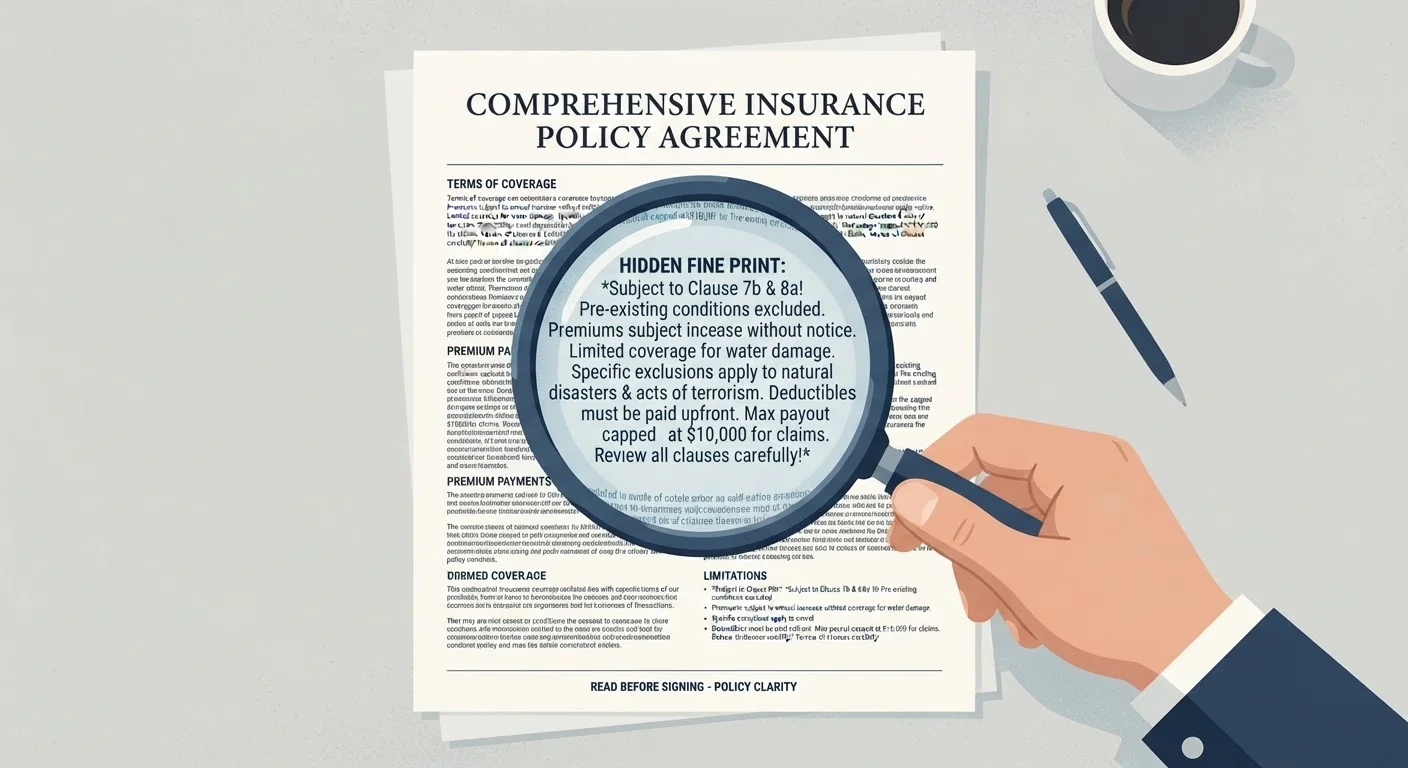
Exclusions deserve equal attention. Many low-cost policies achieve their price by carving out common scenarios - flood damage, certain liability situations, specific medical categories - that policyholders assume are covered. These omissions rarely appear in marketing materials; they live in the declarations page and the exclusions section of the full policy document.
Common misconceptions about what insurance actually covers walks through some of the most frequently misunderstood exclusions across policy types. And if you want a structured method for judging overall policy value, evaluating insurance value across coverage and cost provides a useful framework.
Low-Cost Policies Often Exclude the Most Common Claims
Flood damage, sewer backups, and certain liability scenarios are routinely excluded from standard homeowners and renters policies - even when the policy sounds comprehensive. Similarly, many low-premium auto policies meet state minimums for liability but leave large gaps in collision or uninsured motorist coverage. Always verify that the specific scenarios you're most concerned about are covered explicitly in the policy language, not assumed.
Coverage limits - the caps on how much an insurer pays per incident or per year - are another area where low-cost policies cut corners. Setting them too low means you absorb the gap personally. Why setting coverage limits too low backfires explains the mechanics in detail.
This article provides general insurance education and is not personalized financial, insurance, or legal advice. Coverage terms, exclusions, and eligibility vary by provider and state. Always read your full policy documents and consult a licensed insurance agent or adviser before making coverage decisions.