
Homeowners vs. Renters Insurance: Protections That Are Different Than You Think

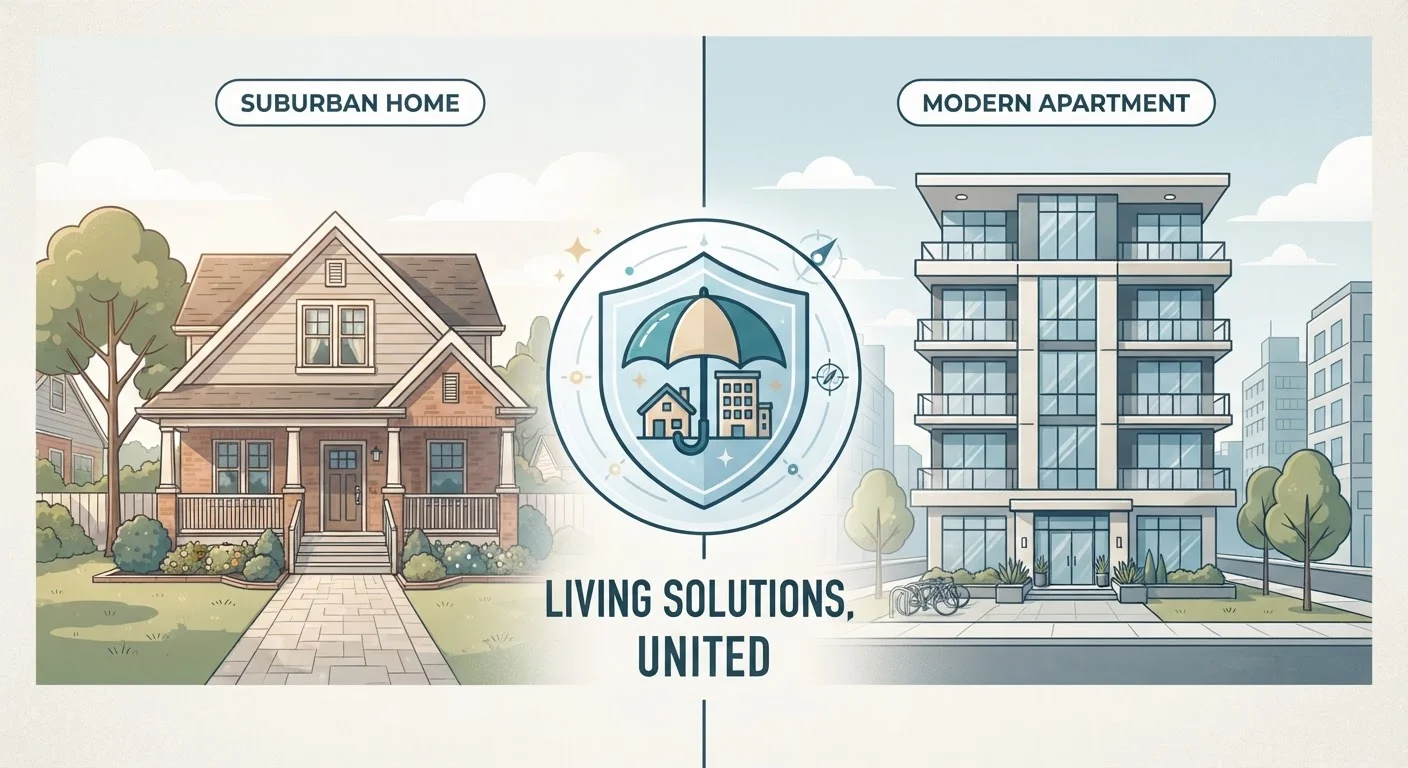
Key Takeaways
Option A
Homeowners Insurance
The all-in-one coverage for property owners.
Best for: People who own the home they live in and need protection for both the structure and its contents.
Option B
Renters Insurance
The affordable protection layer for tenants.
Best for: People who rent their home and need coverage for personal belongings and personal liability - not the building itself.
If you own the home you live in
Homeowners Insurance
Only homeowners insurance covers the structure itself, including repairs or rebuilding after a covered loss. It also includes dwelling liability and personal property protection in one package.
If you rent an apartment or house
Renters Insurance
Your landlord's policy covers the building - not your belongings. Renters insurance fills that gap and adds liability protection at a generally low annual cost.
If you want protection against a guest's injury lawsuit
Either policy (check your liability limits)
Both homeowners and renters policies typically include personal liability coverage. Review your limits carefully, as default amounts may not be sufficient for serious claims.
The Core Difference: Who Owns the Building
The single most important distinction between these two policy types comes down to ownership. Homeowners insurance is designed for people who own their residence. Because they own the structure, they bear full financial responsibility if it's damaged or destroyed - so homeowners insurance covers the dwelling itself, meaning the roof, walls, foundation, and attached structures like garages.
Renters insurance, by contrast, assumes you don't own the building. Your landlord carries a separate property insurance policy on the structure. What that landlord policy does not cover is anything belonging to you - your furniture, electronics, clothing, and other possessions. Renters insurance steps in precisely there.
This distinction matters enormously when claims happen. If a fire damages an apartment building, the landlord's insurer may pay to repair the walls and wiring, but your ruined sofa, laptop, and clothing would only be covered if you hold your own renters policy.
For a broader look at how different policy types map to specific risks, see our insurance types comparison.
| Criterion | Homeowners Insurance | Renters Insurance |
|---|---|---|
| Covers the building structure | Yes - dwelling and other structures | No - landlord's policy covers structure |
| Covers personal belongings | Yes, up to policy limits | Yes, up to policy limits |
| Personal liability coverage | Yes | Yes |
| Additional living expenses | Yes, if home is uninhabitable | Yes, if rental is uninhabitable |
| Flood damage | Not standard - requires separate policy | Not standard - requires separate policy |
| Earthquake damage | Not standard - requires separate policy | Not standard - requires separate policy |
| Typical annual cost range | Higher - reflects structural coverage | Generally much lower |
| Required by law | Often required by mortgage lender | Sometimes required by landlord |
What Each Policy Actually Covers
Homeowners insurance typically bundles several coverages into one policy:
- Dwelling coverage: Pays to repair or rebuild the home's structure after a covered peril - fire, wind, hail, vandalism, and others listed in the policy.
- Other structures: Covers detached garages, fences, and sheds.
- Personal property: Reimburses for personal belongings damaged or stolen, up to policy limits.
- Liability protection: Covers legal costs and damages if someone is injured on your property or you accidentally damage someone else's property.
- Additional living expenses (ALE): Pays for temporary housing if a covered loss makes your home uninhabitable.
Renters insurance mirrors some of these but skips everything related to the building:
- Personal property: Covers belongings against the same types of listed perils - fire, theft, certain water damage, and more.
- Liability protection: Covers legal costs if you accidentally injure someone or damage property.
- Additional living expenses: Helps pay for temporary housing if your rental becomes unlivable due to a covered event.
Both policy types share a critical limitation: standard policies exclude flood and earthquake damage. These require separate, dedicated coverage. Learn why standard policies leave these gaps and what separate coverage involves.
~90%
Homeowners with active insurance
According to the Insurance Information Institute, roughly 90% of homeowners carry homeowners insurance, often required by mortgage lenders.
~57%
Renters who carry renters insurance
Insurance Information Institute data suggests a majority of renters remain uninsured, leaving personal property and liability exposure unaddressed.
$1,000s
Potential out-of-pocket loss without coverage
A single theft or fire event can destroy thousands of dollars in personal belongings - a loss renters without insurance bear entirely on their own.
Common Misconceptions That Cost Policyholders
Many renters assume their landlord's insurance protects their belongings - it does not. That coverage is for the landlord's asset: the building. Similarly, many homeowners assume their dwelling coverage automatically keeps pace with rising construction costs. It may not, which is why reviewing your coverage limits annually matters.
Another widespread misconception: personal property coverage follows you. In many policies, renters and homeowners alike, your belongings may be covered even when they're outside the home - in your car, at a hotel, or in storage - though sub-limits and conditions apply. Read your policy carefully.
Explore more widely held insurance myths to avoid discovering gaps only after filing a claim. And for a full list of things people routinely assume are covered but aren't, see what the fine print actually says.
Replacement cost vs. actual cash value is another often-misunderstood term. Replacement cost pays what it costs to buy a comparable new item today. Actual cash value deducts depreciation - meaning a five-year-old television would be reimbursed at a fraction of its original price. Which method your policy uses significantly affects claim payouts.
This article provides general insurance information and education only - not personalized insurance, financial, or legal advice. Coverage terms, exclusions, and costs vary by provider, policy, and state. Always read your actual policy documents and consult a licensed insurance agent or adviser for guidance specific to your circumstances.