

Key Takeaways
Umbrella Insurance
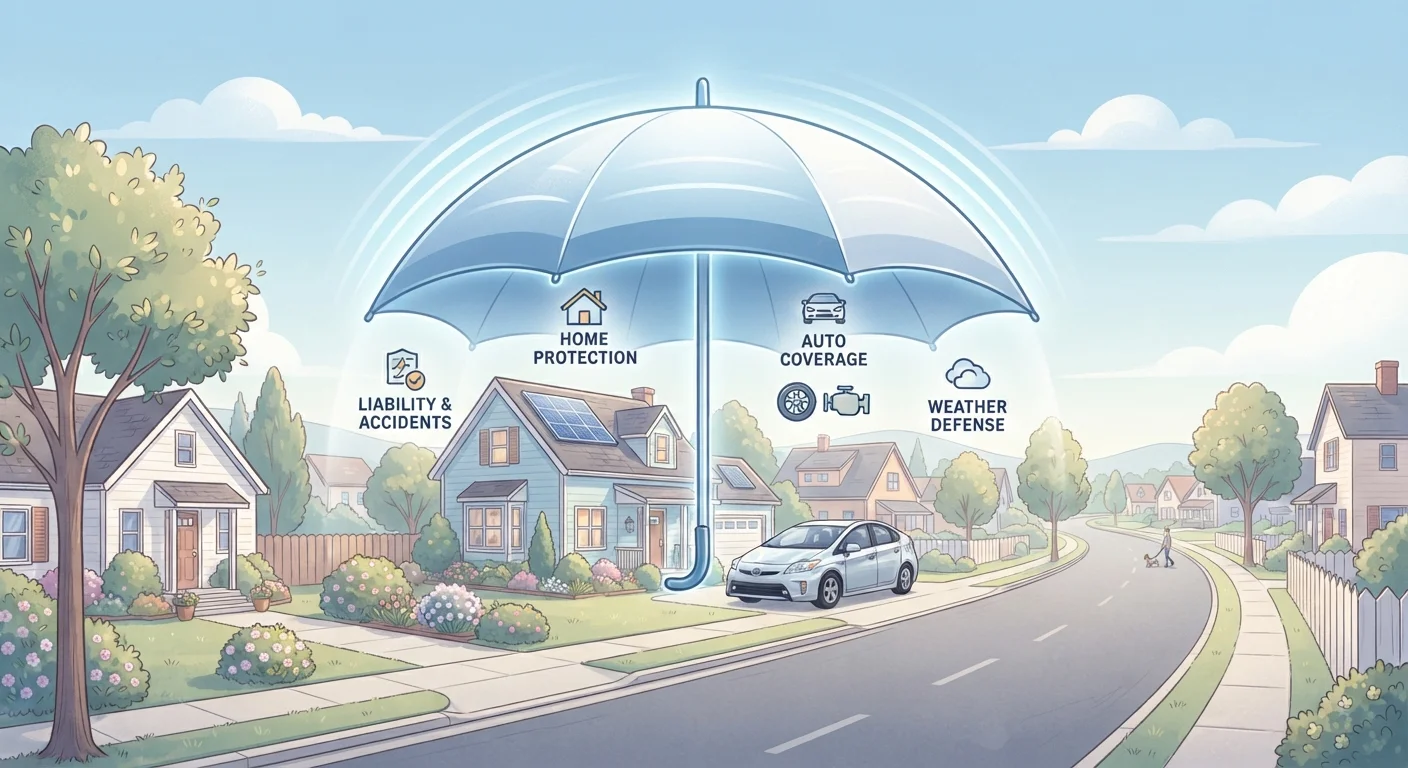
Umbrella insurance is a type of personal liability policy that kicks in after the liability limits on your home, auto, or other underlying insurance policies are exhausted. It provides an additional layer of financial protection - typically in increments of $1 million - if you are found legally responsible for damages that exceed what your standard policies will pay. Think of it as a safety net above your existing coverage.
Umbrella policies are 'excess liability' coverage, meaning they sit on top of required underlying policies with minimum liability thresholds that must be maintained to keep the umbrella in force.
How Standard Liability Limits Can Fall Short
Every standard home and auto policy includes a liability component - the portion that pays out if you are legally responsible for injuring someone or damaging their property. But those limits have a ceiling. A typical auto policy might carry $100,000 or $300,000 in bodily injury liability per occurrence. A homeowners policy might provide $100,000 to $300,000 in personal liability coverage.
These amounts can sound substantial, until you consider what a serious accident or lawsuit actually costs. Medical bills, lost wages, pain-and-suffering damages, and legal fees can push a single claim well into seven figures. When a judgment exceeds your policy's limit, you are personally responsible for the remainder - which can mean your savings, investments, or even a portion of future income are at risk.
For a fuller picture of what each part of your auto policy covers, see our guide to auto insurance coverage types.
$1M+
Minimum umbrella coverage increment available
Most personal umbrella policies are sold starting at $1 million in additional liability coverage, stackable in further increments.
~$150-$300
Estimated annual cost for $1M umbrella policy
Industry estimates commonly cite this range, though actual premiums vary by insurer, location, and individual risk profile - always obtain a personalized quote.
Varies
Required underlying auto liability minimum
Insurers typically require $250,000-$300,000 per occurrence in underlying auto liability before issuing an umbrella policy; requirements differ by insurer.
How Umbrella Insurance Layers on Top
Umbrella insurance is specifically designed to close that gap. It functions as excess liability coverage - it only activates once the liability limits on an underlying policy, such as your home or auto insurance, are fully used up. At that point, the umbrella policy pays the remaining covered damages up to its own limit.
Most personal umbrella policies are sold in $1 million increments and can be stacked to $5 million or more depending on the insurer. Because they are designed to cover catastrophic, low-frequency events rather than everyday claims, they typically cost significantly less per dollar of coverage than the underlying policies beneath them.
Insurers require you to maintain minimum liability limits on your underlying policies before they'll issue an umbrella. If you let those underlying limits lapse or drop below the required threshold, your umbrella coverage may be suspended or voided - a critical detail to monitor.
Check Your Underlying Limits Before You Apply
Before shopping for an umbrella policy, review the liability limits on your existing home and auto policies. Insurers issuing umbrella coverage typically require a minimum - often $300,000 per occurrence on auto and $300,000 on homeowners. If your current limits are below these thresholds, you may need to increase them first, which will affect your overall premium picture.
What Umbrella Policies Typically Cover
Beyond simply extending the liability limits you already have, umbrella policies often cover categories of claims that underlying policies exclude entirely. Common examples include:
- Personal injury claims - libel, slander, defamation, and false arrest, which are generally not covered under homeowners liability.
- Rental property liability - if you own rental property, some umbrella policies extend liability protection there as well (confirm with your insurer, as this varies).
- Incidents abroad - liability arising from accidents in other countries, where your domestic auto policy typically provides no coverage.
- Dog bite or animal liability - depending on the state and insurer, liability from pet-related incidents may be covered or extended beyond homeowners limits.
What umbrella policies do not cover is equally important. Intentional harm, your own property damage, and business-related liability are standard exclusions. Understanding exactly what a policy covers and excludes requires reading the actual policy language - a principle that applies across all insurance types. Our article on how covered perils are defined explains why fine print matters so much.
Deciding Whether Umbrella Coverage Makes Sense for You
Umbrella insurance is not a legal requirement, and it is not a product that every person necessarily needs at the same coverage level. But several situations commonly justify the consideration:
- You own a home, especially one with a pool, trampoline, or other higher-risk feature.
- You have teenage drivers on your auto policy.
- You host guests frequently - at home or on a boat, vacation property, or rental.
- Your net worth or future earning potential significantly exceeds your standard policy limits.
- You serve on a nonprofit board or volunteer in a capacity that carries personal liability exposure.
Because umbrella policies are sometimes available through the same insurer as your home and auto coverage, adding one may fit naturally into a bundled policy structure. See how bundling policies affects your total coverage picture for related context.
Coverage needs vary by individual. A licensed insurance agent can review your existing policy limits, assets, and risk profile to help you determine whether and how much umbrella coverage fits your situation. This article provides general educational information and is not personalized insurance advice.
This article is for general informational and educational purposes only and does not constitute personalized insurance, financial, or legal advice. Coverage terms, exclusions, and availability vary by insurer and state. Always consult a licensed insurance professional and read your actual policy documents before making coverage decisions.