

Key Takeaways
Our Verdict
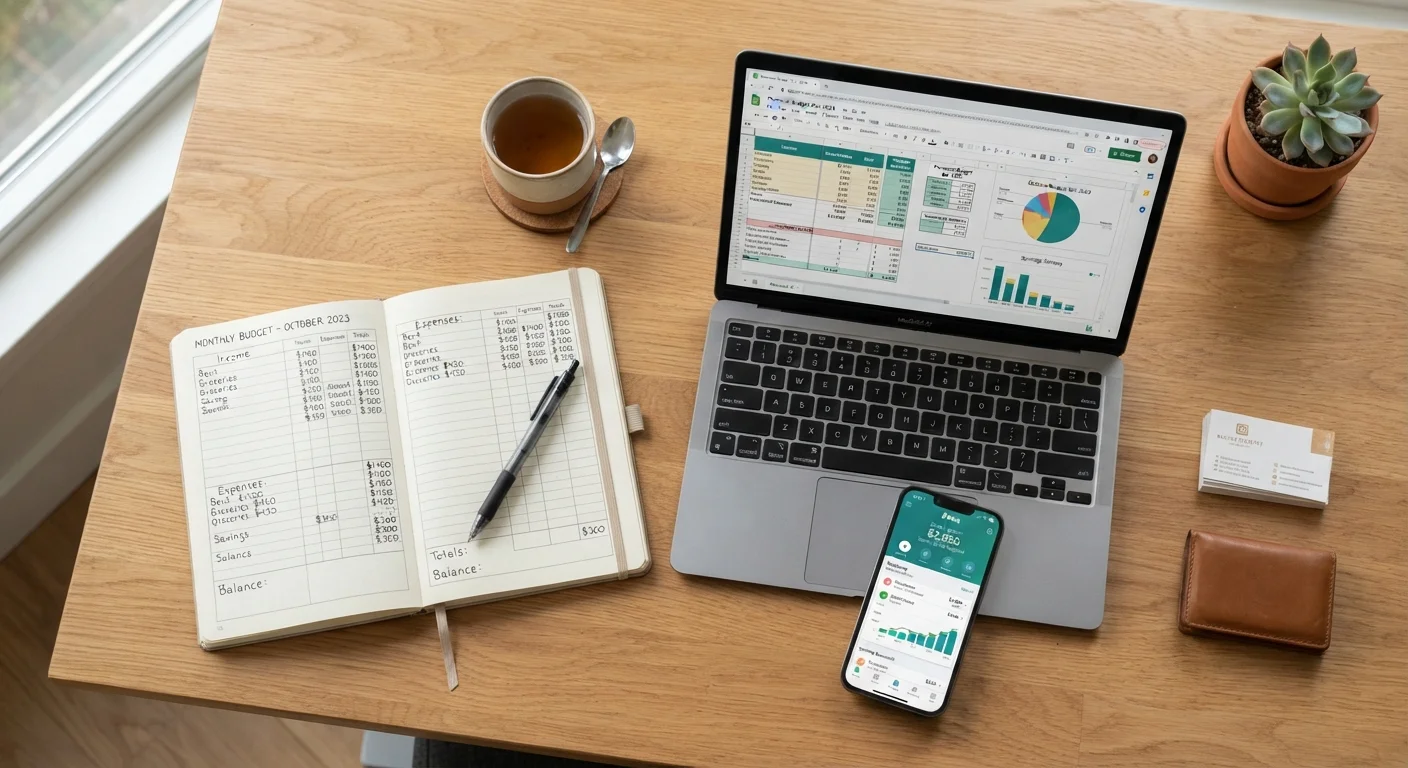
No single budgeting tool is objectively superior - each method serves a different type of person and financial situation. Paper works best for those who benefit from slowing down and engaging physically with their finances. Spreadsheets suit detail-oriented users who want full customization. Apps are ideal for busy individuals who need automation and on-the-go visibility. Consulting a qualified financial professional can help you determine which approach aligns with your broader financial goals.
| Best for | Recommended |
|---|---|
| Those who want a tactile, distraction-free approach | Paper Budgets |
| Detail-oriented users who want complete control and customization | Spreadsheets |
| Busy individuals who prefer automation and real-time data | Budgeting Apps |
| Anyone starting out for the first time | Paper Budgets or Apps |
Why Your Tool Choice Actually Matters
The budgeting method you commit to shapes how you engage with your money every day. A tool that feels cumbersome gets abandoned; one that fits your natural habits gets used. Before choosing, it's worth understanding the genuine strengths and weaknesses of each approach rather than defaulting to whatever's trending.
If you're just getting started, setting up your first monthly budget can help you clarify your income sources and spending categories before selecting a tracking method. The tool should serve the system - not replace it.
| Paper Budget | Spreadsheet | Budgeting App | |
|---|---|---|---|
| Setup time | Minutes | Hours (initially) | Minutes |
| Automation | None | Formulas only | Bank sync, auto-categorization |
| Customization | Fully manual | Fully customizable | Limited to app features |
| Privacy risk | None | None (local file) | Account linking required |
| Cost | Minimal (notebook) | Free or low-cost software | Free to premium tiers |
| Best for irregular income | Difficult | Excellent | Moderate |
| Ongoing maintenance | High effort | Moderate effort | Low effort |
Paper Budgets: Simple, Slow, and Surprisingly Effective
Writing expenses by hand forces a level of attention that digital tools rarely replicate. Research in cognitive science suggests that handwriting engages memory and reflection more deeply than typing, which may explain why some people find paper budgets help them spend more deliberately.
The core limitation is maintenance. Paper offers no automatic calculations, no bank sync, and no alerts when you're approaching a category limit. A missed entry can throw off your entire month. Paper also struggles to scale: tracking multiple income streams, irregular bills, or investment contributions becomes unwieldy fast.
That said, for those exploring the psychological side of budgeting, pen-and-paper methods are a natural complement to envelope-style cash systems, which use physical separation to enforce spending limits.
Combine Methods if One Isn't Enough
Some people find that a hybrid approach works best - for example, using a paper budget for weekly discretionary spending while maintaining a spreadsheet for monthly totals and annual goals. There's no rule requiring you to pick just one. Experiment for 30 days with one method before layering in another, so you can isolate what's actually helping.
Spreadsheets: Maximum Control, Real Commitment Required
A well-built spreadsheet can handle virtually any budgeting framework - from zero-based to the 50/30/20 method - and can be tailored to your exact income structure and financial goals. Formulas automate calculations, charts visualize trends, and version history lets you track progress month over month.
The trade-off is setup time and ongoing discipline. A spreadsheet does nothing unless you update it. For irregular earners - freelancers, gig workers - a spreadsheet's flexibility is a genuine asset; see how budgeting on an irregular income can be structured to handle variable pay. But for someone who finds spreadsheet maintenance tedious, the best-designed template in the world collects dust.
~29%
Americans with a detailed monthly budget
According to a Gallup survey, fewer than one-third of U.S. adults maintain a detailed household budget, suggesting most people lack a consistent tracking system.
3x
More likely to save consistently with a written plan
Research from the Consumer Financial Protection Bureau (CFPB) indicates that people who track spending in writing are significantly more likely to build emergency savings.
Budgeting Apps: Automation with Trade-Offs
Modern budgeting apps connect to bank and credit card accounts, categorize transactions automatically, and surface spending summaries in real time. For users with steady income and a few linked accounts, the onboarding friction is low and the visibility is immediate.
The primary concerns are privacy and accuracy. Linking financial accounts to a third-party app means sharing sensitive data with the app provider and, in some cases, their data partners. Users should review privacy policies and understand what data is collected and shared. Additionally, automatic categorization is imperfect - subscriptions miscategorized as dining or transfers flagged as income can distort your picture unless you audit regularly.
Apps tend to support a wide range of budgeting methods out of the box, making them a practical starting point for those who want structure without building it from scratch. If your goal extends beyond tracking to building savings or paying down debt, the Saving & Debt hub offers frameworks that work alongside any tool.
Review App Permissions Before Connecting Accounts
Before linking bank or credit card accounts to any budgeting app, read the privacy policy carefully. Understand what data the app collects, how it is stored, and whether it is shared with or sold to third parties. Consider using a dedicated checking account for app-linked tracking if you're concerned about full account exposure.
Choosing the Right Method for You
There is no universally superior option. The right budgeting tool is the one that reduces friction for your specific habits, schedule, and financial complexity. A few practical considerations:
- Start simple. If you've never budgeted before, a paper notebook or a basic app removes setup barriers and builds the habit first.
- Match the tool to your system. If you use zero-based budgeting, a spreadsheet or purpose-built app will serve you better than a blank notebook.
- Audit your data. Regardless of method, review your budget at least monthly - automation does not replace judgment.
- Don't over-optimize. Spending hours perfecting a spreadsheet is time not spent on the actual financial decisions that move the needle.
If your financial situation is complex - multiple income streams, significant debt, or investment accounts - consider working with a licensed financial professional who can help you identify the right structure, not just the right tool.
This article is for general informational and educational purposes only and does not constitute personalized financial advice. Please consult a qualified financial professional for guidance specific to your situation.