

Key Takeaways
What Is a Debt Cycle and How Does It Form?
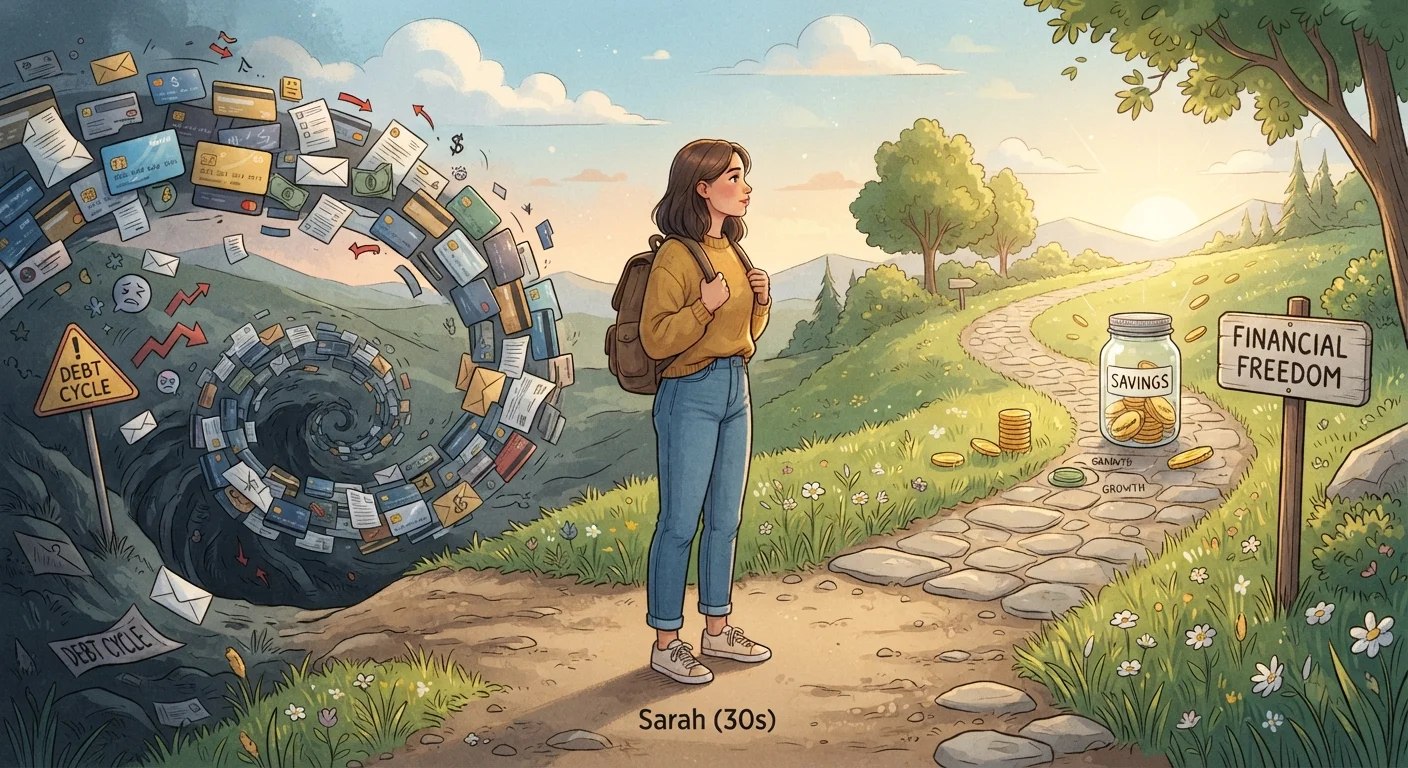
A debt cycle is a pattern in which borrowing to meet current obligations makes future obligations harder to meet - creating a self-reinforcing loop. It typically begins not from recklessness but from a gap: income doesn't stretch far enough to cover an unexpected expense, so a credit card or loan fills the shortfall. If the balance isn't cleared in full, interest accrues. Next month, the minimum payment absorbs cash that might otherwise have covered a new expense, which again gets charged - and the cycle tightens.
Several structural factors accelerate this dynamic. Minimum payment requirements on revolving credit are intentionally low, often set at 1-2% of the outstanding balance. This keeps accounts current while ensuring the lender collects interest for months or years. Combined with high annual percentage rates (APRs), even modest balances can grow substantially over time.
Common entry points include medical bills, job loss, car repairs, and overextended credit card use. None of these is a moral failing - they are the predictable friction points of household cash flow in the United States. Recognizing the mechanics behind the cycle, rather than treating it as a personal deficiency, is a prerequisite for addressing it effectively. For a deeper look at how budgeting basics can help you see these gaps before they widen, that foundational knowledge is worth revisiting.
The Psychological Forces That Keep You Stuck
Financial behavior research consistently shows that debt is not just a math problem - it carries a significant psychological load. Two forces are especially relevant here.
Present bias is the tendency to overvalue immediate relief relative to future costs. Paying a minimum and keeping money available today feels better than sending a larger payment that would save meaningfully in interest over time. This is not irrational in any simple sense; it reflects how human cognition is wired.
Debt avoidance - the impulse to stop checking balances or opening statements - is a common response to financial stress. It feels protective but is counterproductive: balances grow in the dark just as fast as in the light, and avoidance prevents the informed decision-making needed to escape. Studies in behavioral economics suggest that simply getting a clear, accurate picture of total debt and interest rates is one of the most reliable ways to prompt action.
Set automated payments at a fixed dollar amount above your minimum - not a percentage - so the extra payment stays consistent even as your balance falls.
Percentage-based payments shrink as balances decline, reducing their impact over time. A fixed overpayment keeps momentum constant and reduces the total interest paid.
Before accepting a balance transfer offer, calculate the total cost including the transfer fee, the promotional period length, and what your rate becomes if you carry a balance past the promotional window.
Balance transfer fees of 3-5% and post-promotional rates that can exceed your original APR can make these offers counterproductive if not analyzed carefully.
Understanding these tendencies doesn't excuse them, but it does allow you to design around them - for instance, by automating payments above the minimum so you remove the in-the-moment choice entirely. See also our piece on debt myths that keep Americans broke longer than necessary for a look at how misconceptions compound the psychological burden.
How High-Interest Debt Accelerates the Problem
Not all debt is equally damaging. A fixed-rate mortgage at 6% and a credit card at 24% APR behave very differently over time. High-interest debt compounds rapidly: interest is calculated on the full balance each billing cycle, so any unpaid balance generates more interest, which is then added to the principal - and interest is charged on that new, higher figure next cycle.
~$6,500
Average U.S. credit card balance per cardholder
According to Federal Reserve data and analyses by credit reporting agencies, the average revolving balance carried by American cardholders has consistently remained in this range in recent years.
20%+
Typical credit card APR in the U.S.
The Federal Reserve's consumer credit data shows average credit card interest rates have risen above 20% APR in recent reporting periods, among the highest in decades.
2-3x
How much longer minimum-only payments take to clear debt
Financial modeling consistently shows that making only minimum payments on a high-APR balance can extend repayment timelines to two to three times the duration of an accelerated plan.
This compounding effect means that carrying even a moderate balance at a high APR can cost more in interest than the original purchase price of the item purchased. For a thorough explanation of the mechanics, our article on high-interest debt and how it compounds walks through the math in plain terms.
The practical implication: prioritizing the elimination of your highest-APR balances first - a method often called the avalanche approach - generally minimizes total interest paid over the life of the debt. An alternative, the snowball method, targets the smallest balance first regardless of interest rate, which can build psychological momentum. Neither approach is universally superior; the best method is the one you can sustain.
Structured Strategies for Breaking the Cycle
Escaping a debt cycle requires both a clear repayment plan and the cash flow to execute it. Here is a practical framework:
- Map your debt completely. List every balance, its interest rate, and its minimum payment. This single step - however uncomfortable - provides the data needed to prioritize.
- Find margin in your budget. Even small amounts redirected to debt repayment matter. Review subscriptions, discretionary categories, and recurring charges. Our budgeting basics hub offers structured approaches to tracking and trimming spending.
- Choose and commit to a repayment method. The avalanche (highest APR first) or snowball (smallest balance first) approaches both work when followed consistently. Hybrid approaches - for instance, clearing one small balance for momentum, then switching to avalanche order - are also viable.
- Explore rate-reduction options carefully. Balance transfer offers, personal debt consolidation loans, or negotiating directly with creditors can reduce interest costs. Each carries its own risks and terms; read all documentation and consider consulting a nonprofit credit counselor before proceeding.
- Automate above-minimum payments. Setting automated transfers removes the friction of a recurring decision and protects against missed payments.
Debt Settlement and For-Profit Services Carry Real Risks
For-profit debt settlement companies charge substantial fees and instruct clients to stop paying creditors - a strategy that damages credit scores and can result in lawsuits. If you need outside help, nonprofit credit counseling agencies accredited by the National Foundation for Credit Counseling (NFCC) are generally a lower-risk alternative. Always read agreements carefully and verify any organization's credentials before sharing financial information.
Saving and Paying Down Debt at the Same Time
A common - and understandable - instinct is to pause all saving until debt is cleared. In practice, this approach carries its own risk: without any liquid savings, the next unexpected expense goes straight back onto a credit card, restarting the cycle.
A more resilient strategy involves building a modest emergency buffer - often cited as $500 to $1,000 - while continuing to make debt payments. This floor of savings isn't meant to be a full three-to-six-month fund; it's a firewall against relapse. Once high-interest balances are eliminated, the cash flow freed up can be redirected to building a more robust emergency fund and beginning to invest.
For a practical framework on how to balance these competing priorities month to month, see our guide on saving while in debt. And if you're weighing whether to draw down existing savings to eliminate a balance, our decision checklist for using savings to pay debt provides a structured way to think through that specific trade-off.
This article is for general informational purposes only and does not constitute personalized financial, tax, or legal advice. Consult a qualified financial professional before making decisions about your individual circumstances.
Building Financial Habits That Prevent Relapse
Breaking a debt cycle once is meaningful; not returning to it is the goal. Several habits reliably reduce the risk of relapse.
Maintain a spending plan. Budgets don't have to be rigid or punishing, but some structured awareness of income versus outflow prevents the quiet accumulation of new balances. Even a simple monthly review of bank and credit card statements creates accountability.
Use credit intentionally. Credit cards are not inherently dangerous, but using them beyond what you can clear in full each month recreates the conditions of a cycle. If you find balances growing, reducing reliance on revolving credit - even temporarily - is a practical safeguard.
Build toward a full emergency fund. The standard guidance of three to six months of essential expenses provides meaningful protection against income disruptions or large unexpected costs. Once high-interest debt is cleared, directing former debt payments toward this goal is a direct application of the cash flow you've created. From there, investing essentials become the natural next chapter.
Review and adjust regularly. Financial circumstances change - income rises and falls, expenses shift. A habit of periodic review, even quarterly, keeps your plan calibrated to your current reality rather than a snapshot from a prior year.