

Key Takeaways
Summary
18 items · 20-40 minutes
Why Preparation Comes Before the First Command
Most training mistakes happen before the session even starts. Owners dive in without the right tools, in a chaotic environment, at a moment when their pet is overstimulated - and then wonder why nothing sticks. The truth is, what you set up in advance determines how your pet experiences the whole training process.
This is especially important if you're a first-time owner. Building good habits from the start is far easier than correcting a rocky foundation later. If you're still in the early adjustment phase, see our guide to what the first weeks of pet ownership actually look like - it provides useful context for where training fits in your pet's bigger adjustment timeline.
Use this checklist to audit your readiness before you say a single command. Work through each group at your own pace; most owners can complete all preparation steps in under 40 minutes.
Small, soft training treats
High-value rewards that can be delivered quickly and eaten in one bite without interrupting the training flow.
Treat pouch or bait bag
Keeps rewards accessible at your hip so you can mark and reward behavior within the critical 1-2 second window.
Clicker or marker word
A consistent auditory signal (click or a word like "yes") that precisely marks the moment your pet performs the desired behavior.
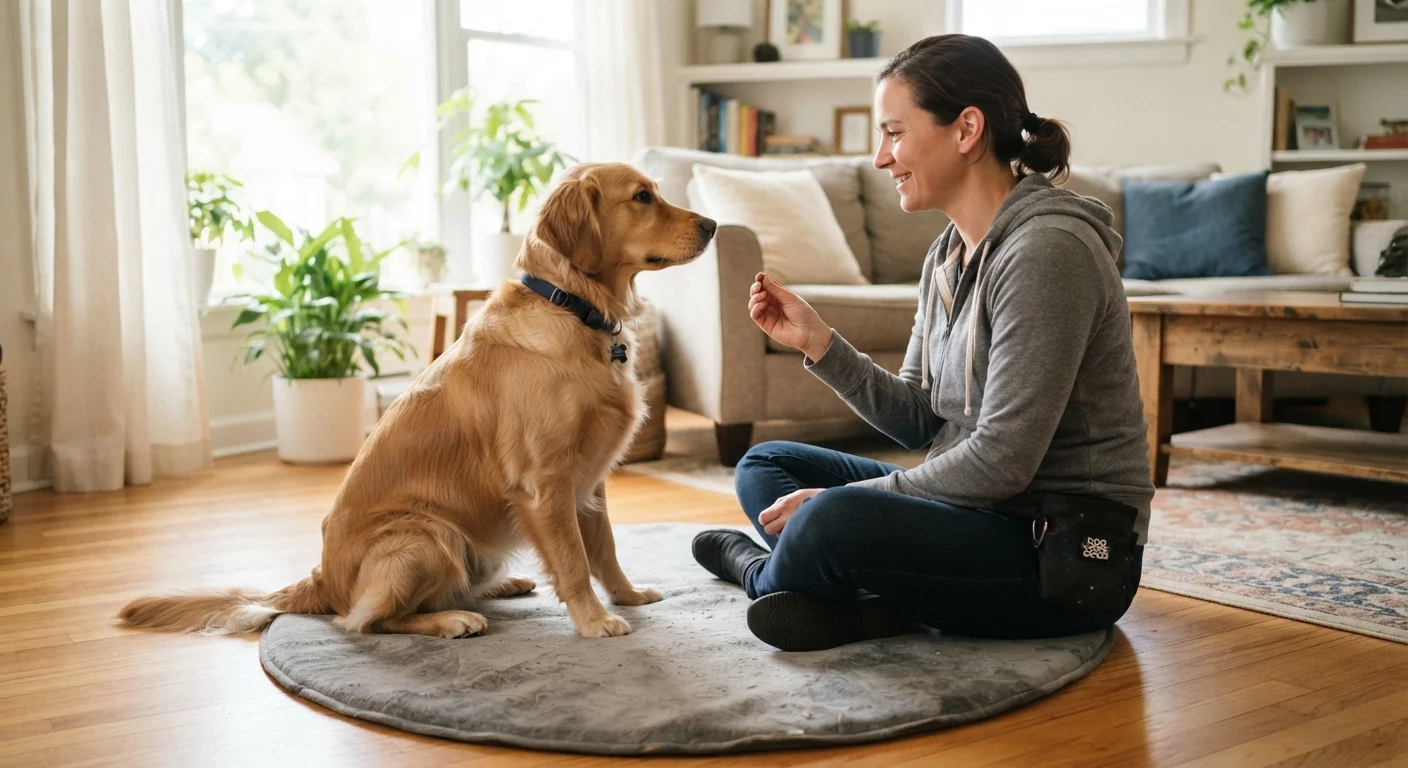
Non-slip mat or defined training spot
Creates a consistent physical cue that signals to your pet that focused training is happening in this space.
Long-line leash (for outdoor work)
Allows safe distance and movement practice for recall and outdoor commands without losing control of your pet.
Timer or phone
Keeps sessions to the recommended 5-10 minute length so neither you nor your pet loses focus or patience.
The Pre-Session Checklist
Work through these groups in order. The categories build on each other: your environment shapes your pet's focus, your rewards drive motivation, and your own mindset ties it all together.
Environment Setup
Rewards & Tools
Pet Readiness
Owner Mindset & Session Plan
Don't Train Through Stress or Fear
If your pet shows signs of stress - ears pinned back, tail tucked, yawning repeatedly, or trying to leave the space - stop the session immediately. Continuing to train an anxious or fearful pet can undermine trust and make future sessions harder. Give your pet a break and revisit the environment or reward strategy before trying again. If stress behaviors are frequent or intense, consult a certified professional trainer or veterinary behaviorist.
Setting Yourself Up for Ongoing Success
Preparation isn't a one-time event - it becomes a brief ritual before every session. Over time, your pet may start to recognize the cues that training is about to begin (the treat pouch coming out, the mat being placed), which itself becomes part of the positive association.
Punishment Has No Place in Foundational Training
Aversive techniques - including harsh verbal corrections, leash jerks, or any form of physical punishment - are not recommended in modern, evidence-informed training. Research consistently shows that reward-based methods produce faster learning, stronger human-animal bonds, and fewer behavioral side effects. If a behavior isn't progressing, the solution is to reassess your reward, your timing, or how you've broken down the behavior - not to apply correction.
For a broader foundation on your pet's health and development, our first-time owner's health foundation guide covers the full picture - from nutrition and vet relationships to the behavioral habits that support a long, well-adjusted life together.
Consistency, short sessions, and calm energy are the cornerstones of effective training. Once these habits are in place, you'll find that each session runs more smoothly - and your pet will too.
This article is for general informational and educational purposes only. For behavioral challenges beyond basic training, consult a certified professional dog trainer or veterinary behaviorist.