

Key Takeaways
Why Indoor Cats Need Deliberate Enrichment
An indoor lifestyle offers cats real safety advantages - from reduced disease exposure to protection from traffic and predators. But safety alone doesn't equal wellbeing. As explored in our overview of indoor vs. outdoor cat differences, the indoor environment removes most of the natural stimuli cats evolved to engage with: prey movement, varied terrain, novel scents, and territorial exploration.
Without deliberate enrichment, that sensory deficit builds. Cats may develop repetitive behaviors, over-grooming, aggression, or destructive habits - not out of spite, but out of unmet behavioral need. Building a daily enrichment routine addresses this proactively, supporting both mental and physical health in a structured, sustainable way.
Core Enrichment Practices for Every Indoor Cat
Effective enrichment isn't about buying more toys - it's about thoughtfully engaging your cat's natural drives each day. These practices form the foundation of a reliable routine.
Schedule two dedicated interactive play sessions daily, each lasting 10-15 minutes.
Cats are crepuscular hunters - most active at dawn and dusk. Consistent play at these times aligns with their natural activity peaks, reduces pent-up energy, and builds a rhythm they can anticipate. Short, regular sessions outperform occasional long ones in sustaining engagement.
Rotate toys every two to three days rather than leaving all toys accessible at once.
Cats habituate quickly to static stimuli. Rotating toys restores novelty, which triggers the exploratory behavior and prey-drive engagement that keeps cats mentally active. Novelty is more motivating than abundance.
Introduce foraging opportunities by using puzzle feeders or hiding small food portions around the home.
In the wild, cats spend significant time and cognitive effort locating food. Bowl feeding eliminates this entirely. Foraging activities restore that mental work, slow eating, and reduce idle restlessness throughout the day.
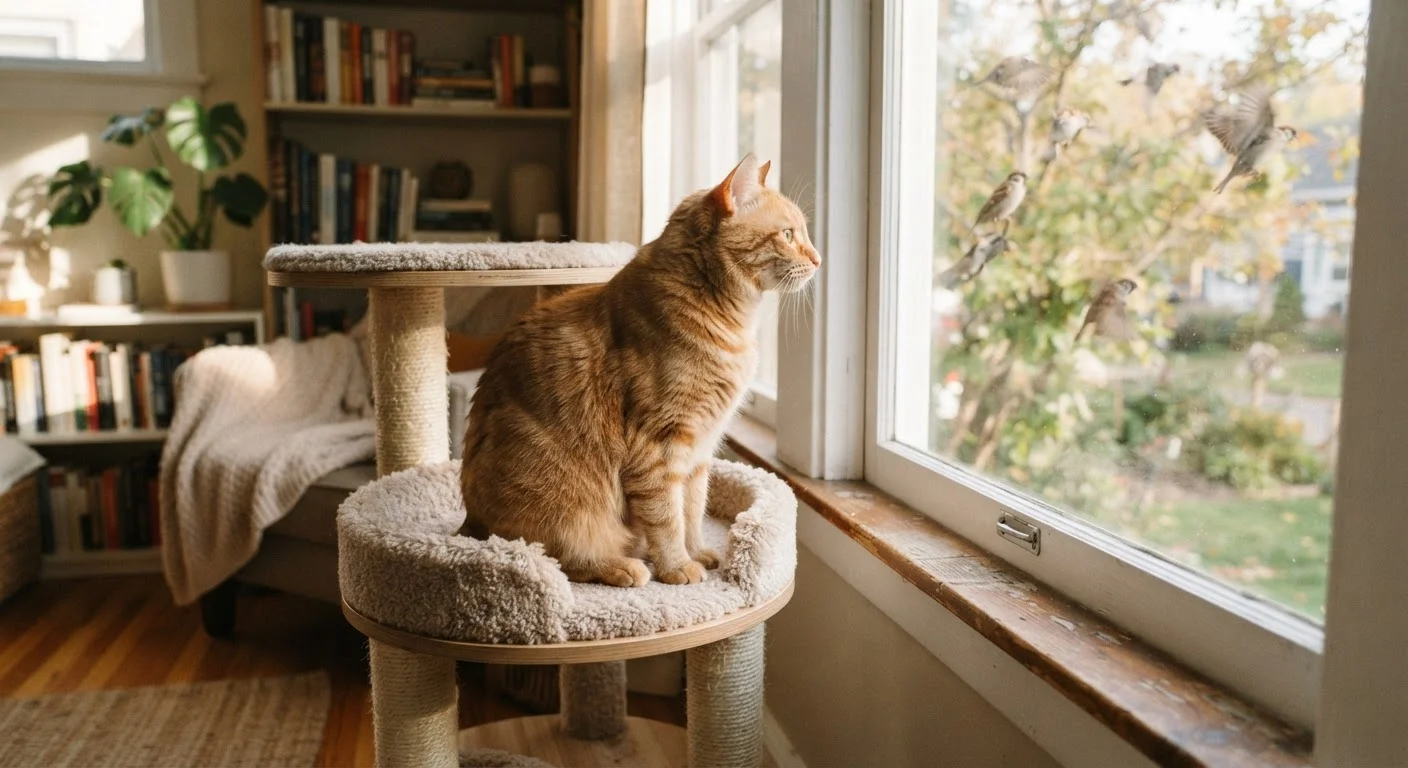
Provide vertical space and window access to support visual and environmental stimulation.
Height is a core feline need - it provides security, territory, and a vantage point for observing the environment. Window access adds an ever-changing visual stimulus that no toy can replicate.
Incorporate scent enrichment through safe botanicals, novel textures, or outdoor-sourced materials.
The feline sense of smell is far more acute than a human's and is central to how cats explore and understand their environment. Scent enrichment engages the brain in ways visual or physical stimulation alone cannot.
Quick Wins to Start Today
You don't need to overhaul your home to begin. A few targeted changes can make an immediate difference in how stimulated and settled your cat feels day to day.
For a broader framework that integrates enrichment into household routines, see our guide on building a pet care routine for busy households.
When Enrichment Isn't Enough
Even a well-designed enrichment routine has limits. If your cat displays persistent repetitive behaviors - such as compulsive tail-chasing, excessive vocalization, or rhythmic pacing - these may signal something beyond boredom. Our article on compulsive behaviors in pets explains when these patterns warrant a veterinary conversation.
When to Consult Your Veterinarian
Behavioral changes in cats - including sudden increases in vocalization, withdrawal, aggression, or repetitive physical acts - can have medical as well as environmental causes. Enrichment addresses unmet behavioral needs, but it is not a treatment for underlying health conditions. If your cat's behavior changes noticeably or persists despite enrichment efforts, schedule a veterinary assessment to rule out pain, thyroid issues, or neurological factors.
Enrichment works best as part of a complete daily care approach. The daily care routine every cat owner should know covers feeding windows, grooming checks, and litter hygiene that pair naturally with enrichment habits.
This article provides general pet care information and is not a substitute for professional veterinary advice. If you have concerns about your cat's behavior or health, consult a licensed veterinarian.