

| Primary communication modes | Body posture, tail, ears, eyes, vocalizations |
| Tail-high greeting meaning | Confident, friendly, socially positive |
| Slow blink significance | Trust signal; associated with calm, non-threatening intent (Animal behavior research consensus) |
| Ears flattened against head | Fear or defensive threat - back off immediately |
| Lashing tail during petting | Overstimulation warning - stop contact |
| Belly exposure | Comfort display, not necessarily an invitation to touch |
Why Cat Body Language Is Easy to Misread
Cats are not small dogs. Their communication system evolved from largely solitary ancestors, which means feline signals tend to be subtle, context-dependent, and frequently misinterpreted - even by well-meaning owners. A wagging tail, for instance, signals happiness in dogs but often signals agitation in cats. Understanding feline body language is one of the most practical skills a cat owner can develop, directly affecting trust, handling safety, and your cat's overall wellbeing.
Learning these signals also helps you catch early signs of distress. Because cats instinctively mask vulnerability, many behavioral cues appear before obvious physical symptoms - a point worth keeping in mind if you also follow signs your pet is in pain that are easy to miss.
| Primary communication modes | Body posture, tail, ears, eyes, vocalizations |
| Tail-high greeting meaning | Confident, friendly, socially positive |
| Slow blink significance | Trust signal; associated with calm, non-threatening intent (Animal behavior research consensus) |
| Ears flattened against head | Fear or defensive threat - back off immediately |
| Lashing tail during petting | Overstimulation warning - stop contact |
| Belly exposure | Comfort display, not necessarily an invitation to touch |
Reading the Tail: A Signal You Can See Across the Room
The tail is one of the most readable parts of a cat's body at a distance. A tail held high - straight up or with a slight curl at the tip - is a confident, friendly greeting. It's the feline equivalent of a wave. Conversely, a puffed-out tail (sometimes called a "bottlebrush" tail) signals fear or extreme arousal: the cat is trying to appear larger in response to a perceived threat.
A low, tucked tail indicates submission or anxiety. A lashing or rapidly sweeping tail is a reliable warning: the cat is overstimulated or irritated and may redirect with a swat or bite if handling continues. This is a critical cue during petting sessions - slow, deliberate tail flicks mean stop, not continue.
Piloerection
Involuntary raising of fur along the back and tail, making the cat appear larger. It's a stress or threat response driven by the sympathetic nervous system.
Slow blink
A deliberate, relaxed closing and reopening of the eyes that cats use as a non-threatening social signal. Often described as a "cat kiss" in popular literature.
Overstimulation
A state in which continued physical contact exceeds a cat's tolerance threshold, triggering sudden defensive behaviors such as biting or swatting.
Displacement behavior
An out-of-context action - like grooming during a tense moment - that cats perform to reduce internal conflict or signal mild stress.
Bottlebrush tail
A dramatically puffed-out tail caused by piloerection, indicating extreme fear or high arousal in response to a perceived threat.
Ears, Eyes, and Whiskers: The Face Tells the Story
Ear position shifts rapidly and carries precise meaning. Forward-facing ears indicate curiosity and engagement. Ears rotated sideways - sometimes called "airplane ears" - signal mounting anxiety. Ears flattened tightly against the skull mean the cat feels threatened and may act defensively. Watching ears in real time gives you a running emotional read on your cat during new introductions or vet visits.
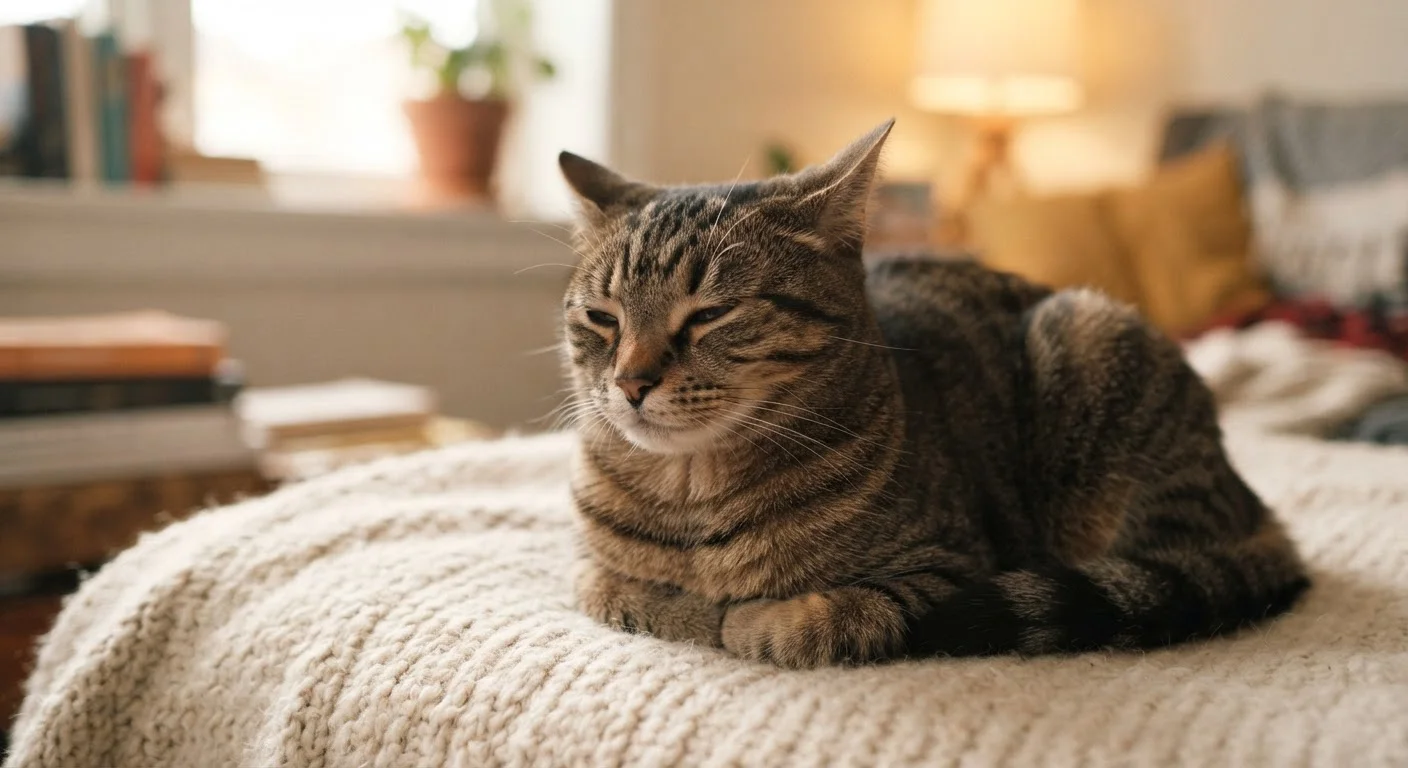
Eyes communicate differently. Slow blinking - a relaxed, deliberate closing and reopening - is widely regarded among animal behaviorists as a sign of trust and calm. Returning a slow blink to your cat is a low-risk way to reinforce the bond. Dilated pupils can mean excitement or fear; constricted pupils in a tense posture suggest focused aggression. Context always matters.
Whiskers rounding forward indicate alertness or predatory interest. Whiskers pulled back flat against the face often accompany a fearful or defensive posture. Though subtle, whisker position rounds out the picture the ears and eyes already suggest.
For a broader look at how environment shapes feline behavior, see indoor vs. outdoor cats and behavioral differences.
16+
Distinct vocalizations domestic cats use with humans
Research in animal behavior suggests cats have developed a uniquely expanded vocal repertoire specifically for communicating with people.
~70%
Of cat bites preceded by visible warning signals
Veterinary and behavioral studies consistently indicate that most defensive bites follow recognizable escalation cues that owners can learn to recognize.
Body Posture: What the Whole Cat Is Saying
Posture integrates everything else. A relaxed cat sits or lies with loose muscles, may expose its belly, and makes no effort to appear larger or smaller. Belly exposure is often misread as an invitation to pet - for many cats, it's simply a comfort display and direct touching may be unwelcome. Read the ears and tail before reaching in.
A cat crouching low with tucked paws and averted gaze is trying to be invisible - a stress response common in unfamiliar environments. Arched back with fur raised along the spine (piloerection) is a clear defensive threat display. An upright, square stance with direct eye contact and stiff limbs signals offensive aggression and a high likelihood of attack if the trigger isn't removed.
Understanding these patterns helps you interact more safely and build a calmer environment for your cat. Pair this knowledge with a solid daily care routine to support overall behavioral health. For a comparison to canine communication, reading a dog's stress signals highlights how differently the two species express the same emotions.
When Body Language Signals a Health Issue
Some behavioral changes - sudden hiding, crouching, or aggression in a normally sociable cat - can indicate pain or illness rather than a purely emotional state. If your cat's body language shifts noticeably without an obvious environmental cause, a veterinary evaluation is warranted. This article provides general behavioral education and is not a substitute for professional veterinary guidance.