

Key Takeaways
Why First Impressions Are Hard to Undo
Animal introductions aren't just social niceties - they establish relationship templates that can persist for years. A frightening or aggressive first encounter triggers a conditioned fear response in both animals. The resident pet learns that the newcomer signals threat; the new pet learns that this home is unsafe. These associations are not impossible to reverse, but they require significant time and deliberate counter-conditioning to shift.
Understanding this dynamic reframes the introduction process: it isn't about making animals 'meet' each other as quickly as possible. It's about systematically building a positive emotional history between them, one low-stakes exposure at a time. The early weeks of any new pet's arrival are a critical window for shaping long-term behavior patterns - introduction quality is part of that foundation.
Read Stress Signals, Not Just Aggression
Aggression is rarely the first warning sign. Watch for subtle stress indicators: ears pinned back, tail tucked, whale eye (whites of eyes visible), lip licking, yawning out of context, and attempts to flee. Intervening at these early signals prevents escalation far more effectively than responding to growls or hissing after tension has already peaked.
Species pairing matters. Dog-to-dog introductions follow different rules than cat-to-dog or prey-animal-to-predator introductions. The steps below apply broadly, but always consider the specific needs and instincts of each animal involved.
Before You Begin: What You'll Need
Preparation reduces improvisation, and improvisation under inter-animal stress tends to go poorly. Gather your materials before the new pet arrives, not after.
Baby gate or exercise pen
Creates a physical barrier that allows animals to see and smell each other without direct contact.
Separate food bowls, bedding, and litter/waste areas
Prevents resource guarding and gives each animal a clearly defined, unthreatened space.
High-value treats
Used to create positive associations during scent swapping and face-to-face introductions.
Leash and harness (for dogs)
Allows controlled, managed exposure during early meetings without restricting airflow or causing discomfort.
Pheromone diffuser (species-appropriate)
Synthetic calming pheromones can help reduce ambient anxiety in the home during the adjustment period.
What you will need
Also review the health checklist for a new pet's first 30 days - ensuring both animals are healthy before introductions begin is non-negotiable.
Step-by-Step Introduction Process
Follow these steps in order. Resist the urge to skip ahead - each phase builds the trust and calm that makes the next phase possible.
Set up a separate safe space for the new pet
Before the new animal arrives, designate a room or sectioned-off area exclusively for them. This space should include food, water, bedding, enrichment, and - for cats or small animals - a hiding spot. The goal is to give the new pet time to decompress and begin associating your home with safety before any inter-animal contact occurs.
Exchange scents before any visual contact
Over the first two to three days, swap bedding or soft toys between animals. Allow each pet to investigate the other's scent freely, at their own pace. Feed both animals near the barrier door between their spaces - this pairs the other animal's scent with something positive. Watch for calm investigation versus sustained fixation, pacing, or refusal to eat, which can signal high stress.
Introduce a visual barrier meeting
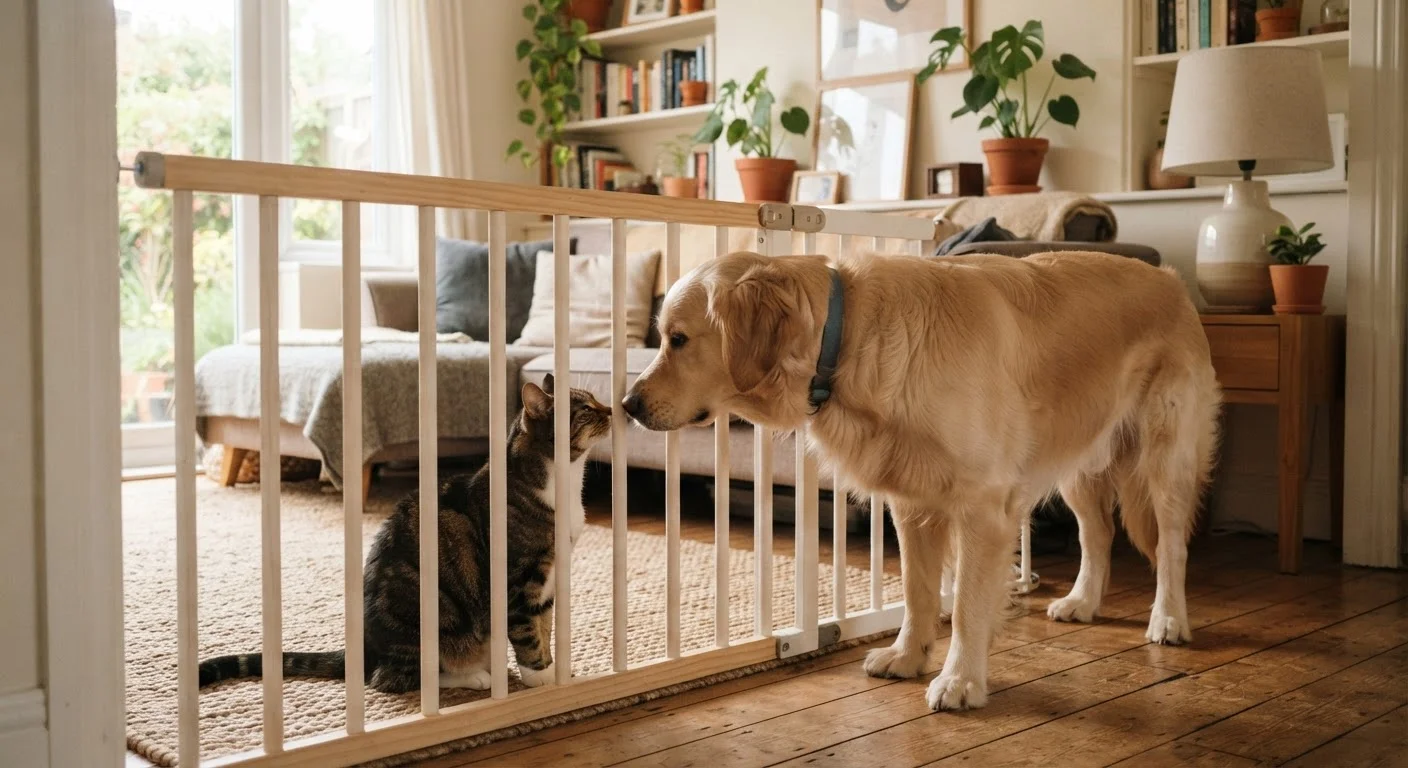
Once both animals appear relaxed around scent items, install a baby gate or cracked door so they can see and smell each other without physical access. Keep these sessions short - two to five minutes - and reward calm behavior immediately with treats and praise. End each session before either animal becomes agitated. Repeat over several days until both animals can be near the barrier without prolonged stress signals.
Conduct the first in-person meeting on neutral ground
For dog-to-dog introductions, take both dogs on parallel walks in an outdoor area where neither has established territory. Keep leashes loose - tension telegraphs directly to dogs and increases arousal. Allow brief, calm sniffing and reward disengagement (looking away, sniffing the ground) rather than prolonged face-to-face staring, which can escalate. For cat-to-dog or small animal introductions, the first meeting should still occur with a physical barrier or with the dog on leash inside the home.
Manage shared space gradually
Begin allowing shared space in short, structured sessions with full supervision. Keep the resident pet's feeding areas, sleeping spots, and favorite zones unchanged - disrupting these triggers insecurity. Give the resident pet extra one-on-one attention daily to reinforce that their status in the household hasn't diminished. Gradually extend session duration as both animals demonstrate consistent calm body language.
Separate when unsupervised until trust is established
Until both animals have demonstrated repeated, unprompted calm interactions over at least two to three weeks, separate them whenever you cannot actively supervise. This is not a step backward - it protects both animals and prevents a negative incident that could undermine weeks of progress. Supervision means eyes on animals, not just in the same building.
Don't Skip Steps to Save Time
The most common introduction failure comes from rushing. Owners who skip scent swapping or shorten the barrier phase to 'get it over with' often create lasting animosity between animals that can take months to undo. The timeline varies by species, individual temperament, and history - there is no universally 'fast' safe approach.
After the Introduction: Building a Stable Household
Once animals are sharing space comfortably, the work shifts to maintenance. Consistent routines are stabilizing for all pets - feeding times, exercise schedules, and predictable human interaction reduce ambient stress and make it less likely that resource competition will emerge. See our guide on building a pet care routine that works for busy households for a practical framework.
Consult Your Vet Before Introductions Begin
Ensure all animals are up to date on vaccinations and have been screened for parasites before sharing a household. A new pet carrying an undetected illness can transmit disease to resident animals during early shared-space sessions. Your veterinarian can advise on health clearance timelines appropriate for the species involved.
If animals regress - renewed tension, resource guarding, or aggression after a period of calm - treat it as information rather than failure. A change in routine, a new stressor in the environment, or a health issue in one animal can destabilize an established relationship. Consult your veterinarian or a certified animal behaviorist if tension persists or escalates despite consistent management. For broader foundational guidance on keeping all your pets healthy, the Pet Health hub is a useful ongoing resource.