

Key Takeaways
Why Good Intentions Create Bad Habits
Most dog owners don't set out to teach their pets to jump, bark incessantly, or ignore commands. Yet these behaviors show up reliably - often in dogs whose owners are genuinely engaged and trying hard. The culprit is almost never a stubborn dog. It's the gap between what owners intend to communicate and what their behavior actually signals.
Dogs are exceptionally good at learning cause and effect. Every interaction - a laugh, a glance, a treat handed over to buy five minutes of quiet - teaches something. When the lesson you're unintentionally delivering conflicts with the one you're deliberately trying to teach, the unintentional one usually wins, because it happens more often and in more natural contexts.
Understanding this isn't about blame. It's about becoming a more deliberate communicator. The research on reinforcement and punishment is clear: what gets rewarded gets repeated - and "reward" is defined by the dog, not the owner's intentions.
Every Reaction Is a Training Signal
Dogs don't distinguish between deliberate training sessions and everyday life. Every time you react to your dog - with laughter, scolding, a treat, or even eye contact - you're sending a signal about what behavior is worth repeating. Unintentional reinforcement is one of the primary reasons unwanted behaviors persist despite apparent correction efforts.
The Most Common Accidental Training Mistakes
The mistakes below represent patterns seen across households of all types - from first-time puppy owners to experienced dog people. Each one follows the same basic template: a well-meaning response in the moment that quietly reinforces the problem over time.
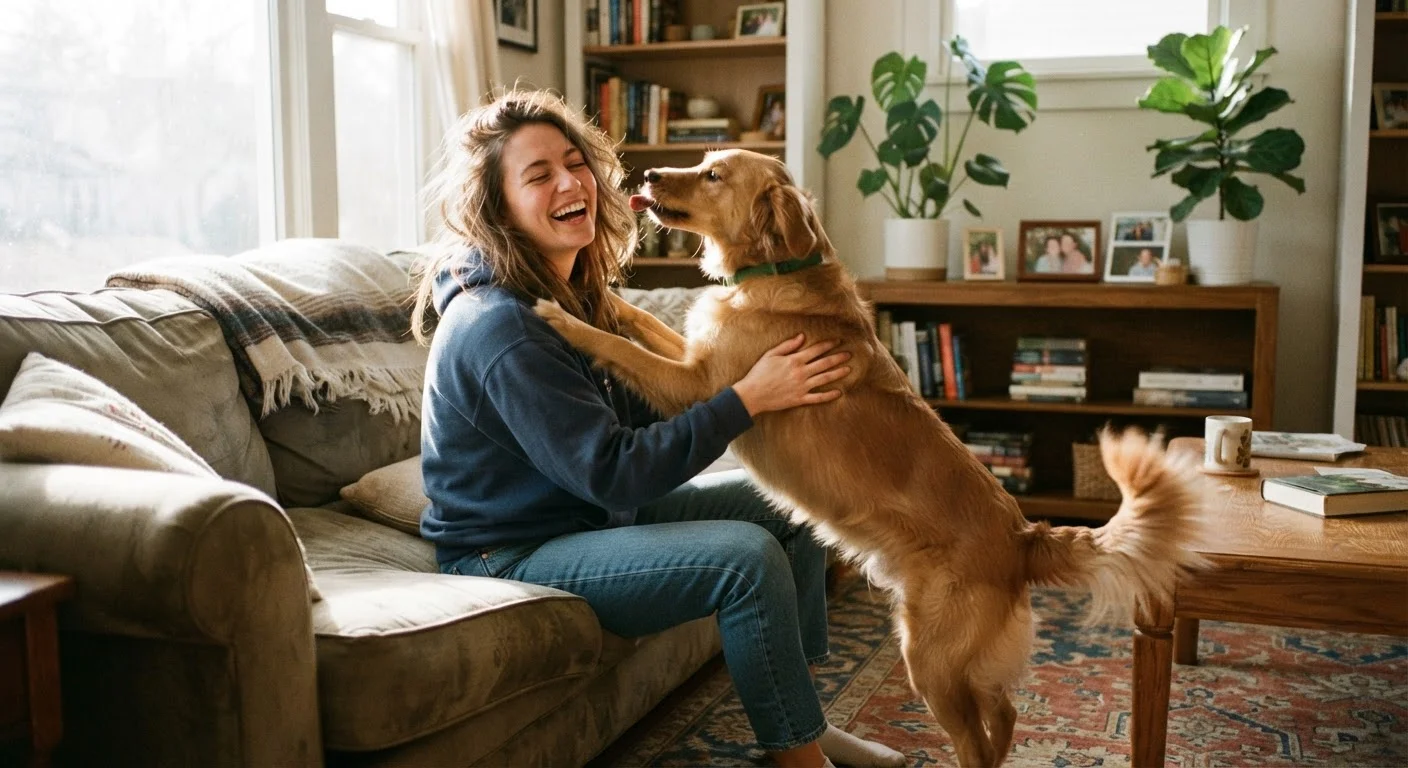
Laughing or showing excitement when a puppy jumps up on people.
Why it happens: Jumping puppies are undeniably cute, and owners often encourage the behavior early without thinking about what it will look like in an adult dog.
Giving a treat or toy to stop nuisance barking.
Why it happens: It works in the moment, which makes it feel like the right move. Owners want peace and the dog quiets down - but the dog has just learned that barking produces rewards.
Allowing rules to vary depending on mood or convenience.
Why it happens: It's hard to enforce a rule every single time, especially when you're tired or the dog gives you "the look." Most owners make exceptions thinking one instance won't matter.
Using attention - even negative attention - to respond to demanding behavior.
Why it happens: Scolding a dog for pawing, whining, or nudging feels like correction, but any attention can function as a reward for dogs that are attention-motivated.
Rewarding a behavior during training that you punish outside of it.
Why it happens: Owners often let dogs "get away with" behaviors during play that they correct in other contexts - like allowing jumping during fetch but scolding it at the front door.
Delaying correction or praise by even a few seconds.
Why it happens: Owners often wait to see if a behavior continues before responding, not realizing how precisely timed feedback needs to be for a dog to make the connection.
If you recognize several of these patterns, that's normal - and fixable. Behavior that was reinforced can be extinguished with consistency, though it typically gets briefly worse before improving. That temporary increase in intensity is called an "extinction burst" and is a sign the approach is working, not failing.
Building Better Habits Starting Now
Correcting accidental training doesn't require starting over from scratch - it requires becoming more deliberate about responses. The first step is observation: spend a few days noticing what your dog does immediately before receiving any attention, food, or play. Patterns usually become obvious quickly.
Inconsistency Undermines All Other Training
If one household member enforces a rule and another lets it slide, the dog learns that the rule is optional - not off-limits. Research in animal learning consistently shows that intermittent reinforcement (sometimes rewarded, sometimes not) actually makes behaviors more persistent, not less. Align everyone in the home before expecting reliable change.
Household alignment is non-negotiable. If you're retraining a behavior, every person the dog interacts with needs to know the plan and follow it. Even occasional exceptions can reset weeks of progress, because intermittent reinforcement is among the most powerful forces in learning.
For owners navigating more complex behavior histories, exploring different training method approaches can help identify what communication style fits your dog best. Some dogs respond faster to marker-based systems; others do better with relationship-focused frameworks.
It's also worth noting that some persistent, repetitive behaviors - beyond simple habit - may signal stress or anxiety rather than a training gap. The guide to compulsive pet behaviors covers when quirky habits cross into territory that warrants a veterinary conversation. And if your dog's behavior has escalated to tension or guarding, learning to read early stress signals can help you intervene before problems intensify.
This article is intended for general informational purposes only. For serious behavioral concerns or aggression, consult a certified professional dog trainer or veterinary behaviorist.