
Nail Trimming, Ear Cleaning, and Dental Care: The At-Home Grooming Tasks Worth Learning

Key Takeaways
Why At-Home Grooming Is Worth the Learning Curve
Professional grooming appointments are valuable, but they typically happen every four to eight weeks - and a lot can happen between visits. Overgrown nails put stress on joints, dirty ears become breeding grounds for yeast and bacteria, and plaque left on teeth hardens into tartar within days. Learning to handle these three tasks at home gives you more control over your pet's baseline health and can catch problems early.
At-home grooming also deepens your familiarity with your pet's body. Regular handling of paws, ears, and teeth makes it easier to notice when something is off - a lump, unusual sensitivity, or a change in smell. For a broader look at building consistent care habits, see our guide on building a pet care routine that works for busy households.
Start Grooming Habits Early for Best Results
Puppies and kittens who are gently introduced to nail handling, ear touches, and tooth brushing from an early age tend to tolerate - and sometimes enjoy - grooming throughout their lives. If you have an adult pet new to at-home grooming, the same principles apply; progress will simply be more gradual. Patience and consistency are the most important tools you have.
If you're newer to pet ownership overall, the fundamentals covered in Pet Health From Day One provide useful context for where grooming fits within your pet's broader care framework.
What You'll Need Before You Start
Gathering the right tools before your first session prevents mid-task scrambling and keeps your pet settled. Improvised substitutes - like human nail scissors or dish soap in place of ear cleaner - can cause real harm, so it's worth sourcing proper equipment from a pet supply retailer or your veterinarian's office.
What you will need
Pet Nail Clippers
Used to trim overgrown nails cleanly without crushing or splitting the nail.
Styptic Powder
Applied immediately to stop bleeding if the nail quick is accidentally cut.
Veterinarian-Approved Ear Cleaning Solution
Loosens wax and debris inside the ear canal without damaging delicate tissue.
Cotton Balls or Gauze Pads
Used to wipe away loosened debris from the outer ear after applying cleaning solution.
Pet Enzymatic Toothpaste
Breaks down plaque and tartar using enzymes safe for pets to swallow.
Soft-Bristled Pet Toothbrush or Finger Brush
Allows gentle scrubbing of tooth surfaces and the gumline without irritating gum tissue.
High-Value Training Treats
Rewards calm behavior and creates a positive association with grooming sessions.
Also worth knowing: common grooming missteps can do more damage than skipping the task entirely. Our companion piece on overlooked grooming habits that can quietly harm your pet is a useful read before you start.
Step-by-Step: Nail Trimming, Ear Cleaning, and Toothbrushing
Each of these three tasks follows a similar structure: prepare the environment, work gradually, reward consistently, and stop before your pet becomes distressed. You don't need to complete all three in a single session - in fact, separating them across different days can make the overall routine more manageable for both you and your pet.
Set up a calm, well-lit grooming space
Choose a quiet area with good lighting - a bathroom counter, a non-slip mat on the floor, or a sturdy table all work well. Have all your tools within reach before you bring your pet into the space. Reducing setup interruptions keeps the session calm and predictable for your animal.
Trim nails by locating and avoiding the quick
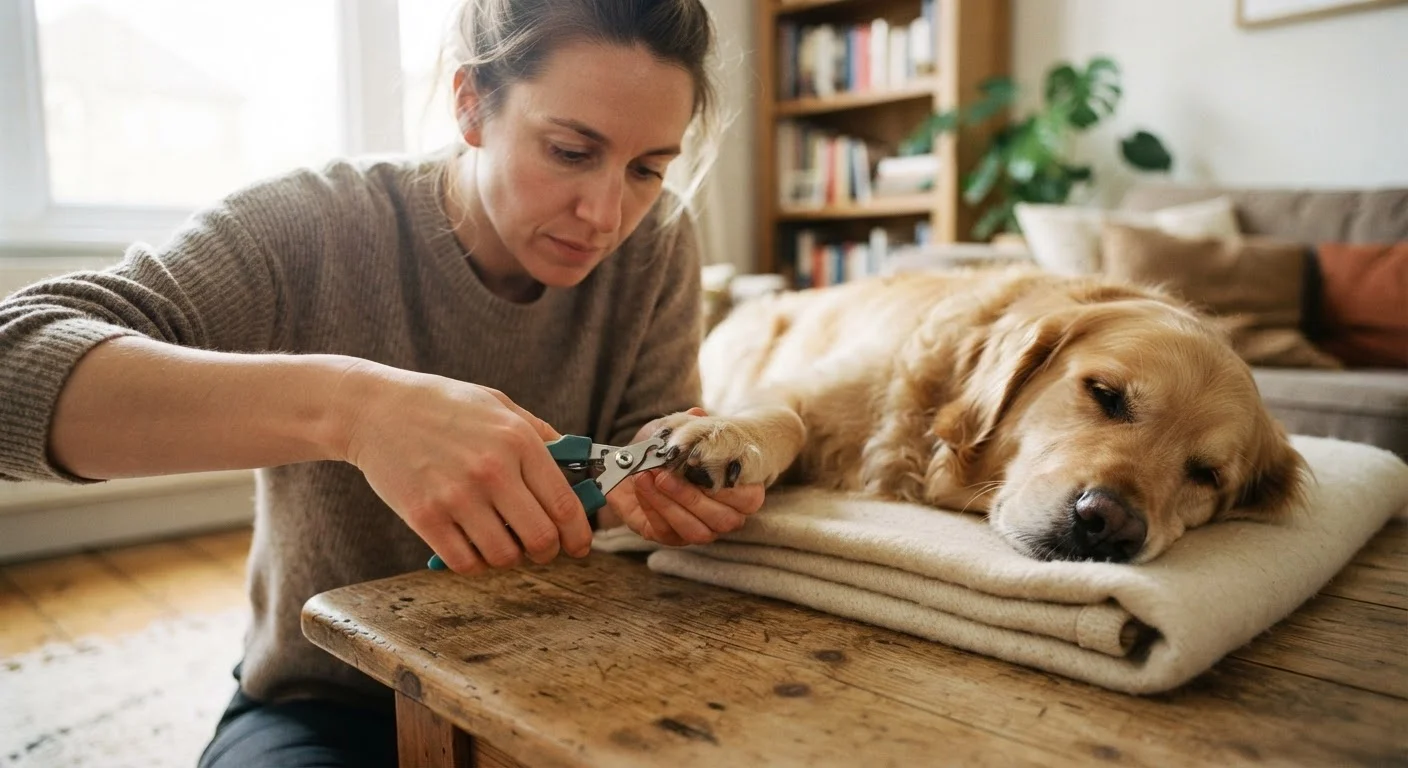
Hold your pet's paw firmly but gently and extend one nail by pressing lightly on the pad. On light-colored nails, the quick - the pink vascular tissue - is visible. On dark nails, trim small slivers at a time and watch for a dark dot to appear in the center of the cut surface; that signals you're approaching the quick. Cut at a slight downward angle, removing only the curved tip. Reward immediately after each nail.
Clean ears with solution and cotton only
Gently lift the ear flap and apply a few drops of veterinarian-approved ear cleaning solution into the ear canal. Massage the base of the ear for about 20-30 seconds - you'll hear a squishing sound as the solution works. Allow your pet to shake their head, then use a cotton ball or gauze pad to wipe away loosened debris from the visible outer portion of the ear. Work only as deep as you can comfortably see.
Introduce toothbrushing gradually
Begin by letting your pet lick a small amount of pet-safe enzymatic toothpaste from your finger. Over several sessions, transition to rubbing the paste along the gumline with your finger, then introduce the brush. Aim the bristles at a 45-degree angle toward the gumline and use small circular or back-and-forth strokes, focusing on the outer surfaces of the teeth where plaque accumulates most. Work toward 30-60 seconds of brushing per session.
Reward, observe, and schedule your next session
Immediately after grooming, offer a high-value treat and brief play or affection. Note anything that seemed uncomfortable for your pet - certain paws, one ear, or resistance to the brush - so you can address it more carefully next time. Establish a consistent schedule: nails every three to four weeks, ears every two to four weeks (or as directed by your vet), and teeth as close to daily as your pet tolerates.
Stop and Consult Your Vet If You Notice This
During any grooming session, stop immediately if you observe swelling, redness, a foul odor, discharge that looks unusual, extreme sensitivity to touch, or behavioral changes like sudden aggression. These can indicate infection, injury, or an underlying health condition. At-home grooming complements - but does not replace - regular veterinary care.
For cat owners, our detailed guide on the daily care routine every cat owner should know offers additional context on integrating these grooming tasks into a broader feline care schedule.
This article provides general pet care information and is not a substitute for professional veterinary advice. Always consult a licensed veterinarian with questions about your specific pet's health or grooming needs.