

Key Takeaways
Why these tasks feel harder than they are
A trip to the shop is the right call for many repairs, but not everything under a car's hood requires professional hands. A combination of unfamiliarity and habit leads many drivers to pay shop labor rates for jobs they could safely do in a driveway in minutes. The goal isn't to become a backyard mechanic - it's to recognize where the line is between manageable and genuinely complex.
The items on this list share a few traits: they require no specialized tools, carry low risk of damage if done carefully, and are clearly documented in virtually every owner's manual. If you're newer to ownership and want broader context, our first-time car owner's upkeep primer covers terminology and timelines across the full maintenance picture.
Start with your owner's manual
Before attempting any maintenance item, look it up in your vehicle's owner's manual. It will specify the correct part numbers, fluid types, and service intervals for your exact make, model, and trim. Following manufacturer guidance - rather than generic rules of thumb - is the safest and most effective approach.
Engine air filter replacement
The engine air filter prevents dust, debris, and contaminants from entering the engine. Most manufacturers recommend replacing it every 15,000-30,000 miles, though driving in dusty or rural conditions may shorten that interval - check your owner's manual for the specific guidance for your vehicle.
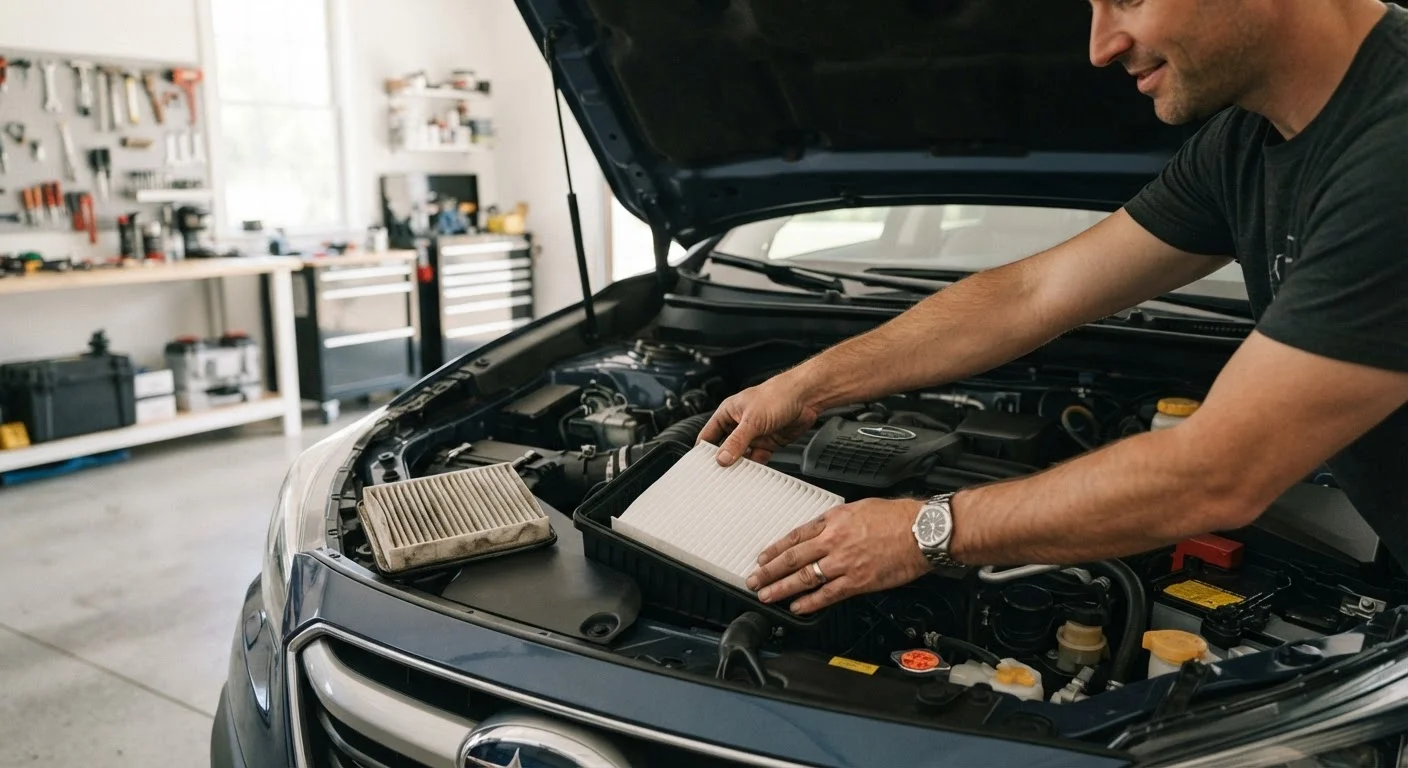
On the vast majority of cars, the air filter sits inside a rectangular plastic housing held closed by simple clips or wing nuts. No special tools are needed. Pop the housing, note the orientation of the old filter, drop the new one in the same way, and re-secure the clips. The whole job typically takes under ten minutes.
Most engine air filter housings open with nothing more than simple clips - no tools required.
Cabin air filter replacement
The cabin air filter cleans the air circulating through your heating and air conditioning system. A clogged cabin filter can reduce airflow noticeably and may cause musty odors inside the car. Replacement intervals are typically every 15,000-25,000 miles, but your manual will specify.
On most modern vehicles, the cabin filter is accessed from behind the glove box or under the dashboard on the passenger side. Many simply require you to open or lower the glove box (sometimes held by a clip or two), slide out the old filter, and insert the new one. Some vehicles route access through the engine compartment instead - check your manual first to confirm the location.
A clogged cabin filter quietly degrades your car's interior air quality and HVAC performance.
Wiper blade replacement
Streaky or skipping wiper blades are a safety issue, especially in heavy rain. Blades generally last six months to a year depending on climate and use. Replacing them is one of the most straightforward maintenance items a driver can do.
Most wiper arms use a simple hook-style connector. Lift the arm away from the glass, press the release tab where the blade meets the arm, slide the old blade off, and click the new one into place. Make sure the new blade is sized correctly for your vehicle - your owner's manual or the packaging chart at a parts store will list the right length for each arm. Lower the arm back gently rather than letting it snap against the glass.
Worn wiper blades are a genuine safety hazard - and swapping them takes less than five minutes.
Checking and topping off windshield washer fluid
Washer fluid is one of the easiest fluids to maintain. The reservoir is clearly labeled under the hood - usually with a windshield and spray symbol - and takes no special knowledge to locate or fill. Use a purpose-made washer fluid rather than plain water; formulated fluid contains detergents and, in winter blends, freeze protection appropriate for your climate.
Check the level whenever you open the hood for other reasons. Running the reservoir dry and then pressing the washer stalk repeatedly can wear the pump prematurely, so it's worth staying on top of this simple task.
Using proper washer fluid instead of plain water protects the pump and improves visibility.
Tire pressure checks
Correct tire pressure affects fuel efficiency, handling, and tire longevity. The recommended pressure for your vehicle is listed on a sticker inside the driver's door jamb - not on the tire sidewall, which shows the maximum pressure the tire can hold, not the ideal operating pressure.
A basic tire pressure gauge costs just a few dollars and is easy to use: remove the valve cap, press the gauge firmly onto the valve stem, and read the result. Most gas stations also have air pumps. Check all four tires (and your spare if it's a full-size unit) when the tires are cold - meaning the car has been parked for at least three hours - for the most accurate reading. For a broader look at tire health, see our full tire maintenance guide.
Always check pressure against your door-jamb sticker, not the maximum figure printed on the tire sidewall.
Replacing interior bulbs
Burned-out interior lights - dome lights, map lights, cargo area bulbs - are generally simple to swap. Most pry open with a flat-head screwdriver wrapped in a cloth to avoid scratching the lens, and the bulb pulls straight out or twists a quarter-turn to release.
Note the bulb type before you go shopping (it's usually printed on the old bulb or listed in the owner's manual). Exterior bulbs like headlights and taillights are often more involved and vary considerably by vehicle - some are a five-minute job, others require removing a wheel liner. Confirm the access procedure in your manual before attempting those.
Interior bulb swaps are low-risk; exterior lighting varies widely by vehicle - always check the manual first.
Building confidence over time
Tackling even one or two of these tasks yourself builds familiarity with your vehicle - and that familiarity pays dividends. Drivers who regularly open their hoods and check basic fluid and filter levels tend to catch developing problems earlier, before they become expensive repairs.
When to involve a professional
The tasks above are broadly accessible to careful, patient drivers. However, if you encounter corroded fasteners, unexpected components, or anything that doesn't match what your owner's manual describes, stop and consult a qualified mechanic. Some jobs that appear simple - like certain headlight assemblies - can require significant disassembly on specific models. Our DIY vs. shop guide can help you draw the line with confidence.
Pairing these habits with a structured maintenance schedule makes the most difference. Our seasonal maintenance checklist organizes the key checks by time of year, so nothing gets overlooked. And for drivers thinking about ownership costs over the longer term, smart habits that reduce car ownership costs covers how preventive care fits into the bigger financial picture.
This article is for general informational purposes only. Always follow the maintenance guidance in your specific vehicle's owner's manual, and consult a qualified mechanic when in doubt about any repair or service procedure.