

Key Takeaways
Why New Owners Are Blindsided
Most first-time car buyers focus almost entirely on the monthly loan payment. That figure feels concrete - it shows up in the financing offer, it fits into a spreadsheet. What doesn't show up anywhere on that paperwork is the full picture of what owning a vehicle actually costs over time.
Industry estimates consistently suggest that total annual ownership costs - insurance, fuel, maintenance, depreciation, fees - can run well above the loan payment alone, sometimes nearly doubling it for new vehicles. For a deeper breakdown by vehicle category, see our annual car ownership costs by vehicle type guide.
The mistakes below are among the most common - and the most expensive. Understanding them before you sign anything is the smartest move you can make.
Budgeting only for the monthly loan payment and ignoring all other ownership costs.
Why it happens: Lenders and dealers focus conversations on the payment amount, which makes it feel like the primary - or only - recurring cost.
Accepting dealer add-ons without reviewing each item and its cost individually.
Why it happens: Add-ons are often presented as a single line item in financing paperwork, making it easy to overlook their cumulative cost.
Failing to research the vehicle's scheduled maintenance requirements before buying.
Why it happens: Buyers focus on features and price, assuming maintenance costs are similar across all vehicles. They often are not.
Ignoring depreciation as a real cost of ownership.
Why it happens: Depreciation doesn't appear on a monthly statement, so it feels abstract until the moment you try to sell or trade in.
Underestimating how much registration fees and taxes vary by location.
Why it happens: Buyers often look up national averages or use a friend's experience in a different state as a reference point.
The Costs That Hit Before You Leave the Lot
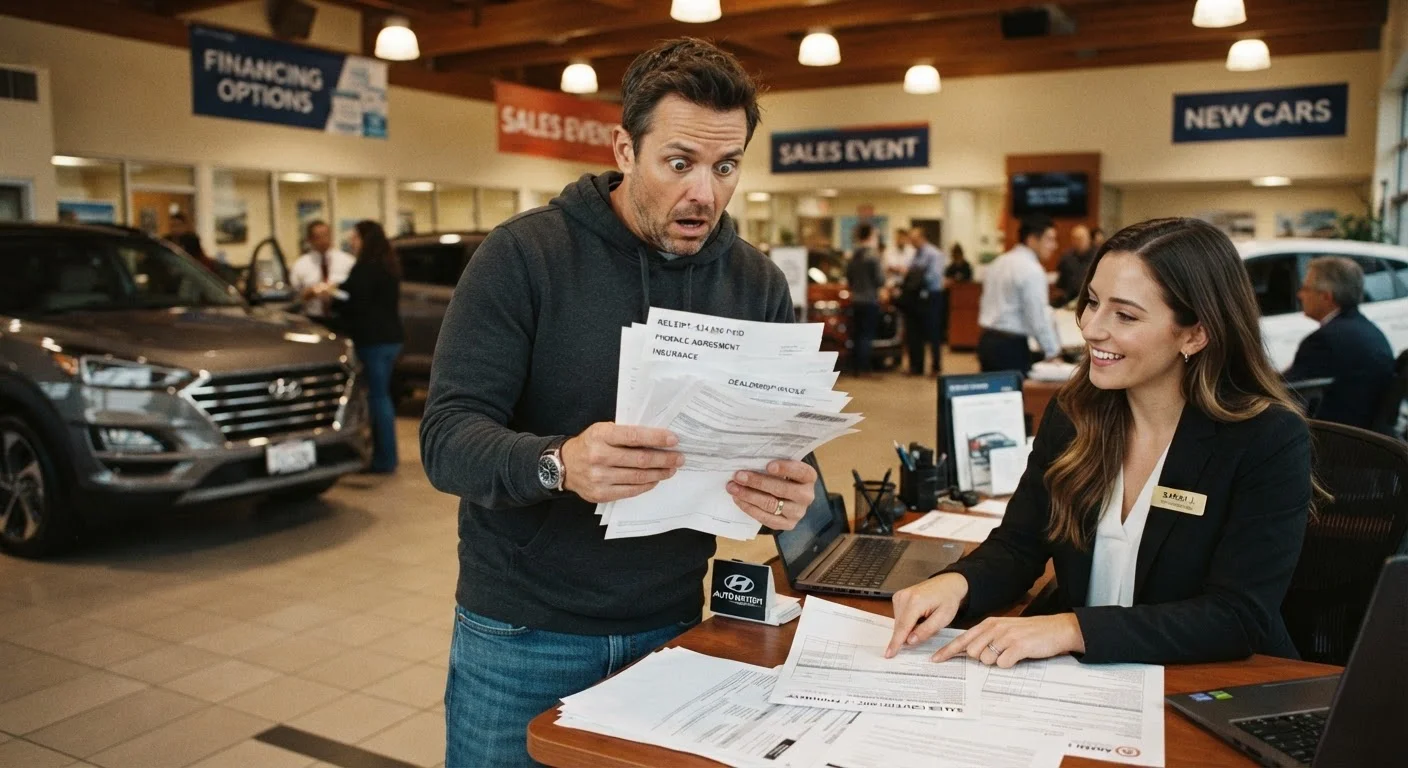
Some of the most avoidable surprises happen at the dealership itself. Dealer-installed add-ons - nitrogen-filled tires, paint sealant, fabric protection, GPS tracking devices - are often bundled into financing without much fanfare. These items rarely deliver value proportional to their cost, yet they can silently add $500 to $2,000 to your loan balance.
Always Request an Itemized Out-the-Door Price
Verbal quotes and advertised prices rarely reflect the final amount you'll pay. Before agreeing to financing, ask the dealership to provide a complete written breakdown of every fee, add-on, and tax included in your purchase price. Comparing this figure - not just the monthly payment - gives you a true picture of what you're committing to.
Documentation fees, destination charges, and dealer prep fees vary widely by state and dealership. Some states cap documentation fees; others do not. Always ask for an itemized out-the-door price before agreeing to any financing terms.
Registration and title fees are also frequently underestimated. Depending on your state, first-year registration on a new vehicle can run from under $100 to several hundred dollars - and in some states, it's calculated as a percentage of the vehicle's value. See how geography shapes what your car really costs for a state-by-state perspective.
The Long-Term Costs Most Buyers Underestimate
Once you're driving, the expenses keep coming - many of them on timelines buyers aren't prepared for.
$12,000+
Average annual cost to own a new vehicle
AAA's annual 'Your Driving Costs' study consistently estimates total new vehicle ownership at over $10,000-$12,000 per year when all cost categories are included.
~20%
Typical first-year depreciation on a new car
Many new vehicles lose roughly 15-20% of their value within the first year of ownership, according to widely cited automotive valuation research.
$1,000-$2,000
Potential dealer add-on costs at signing
Consumer advocacy groups note that bundled dealer-installed packages frequently add between $1,000 and $2,000 to a buyer's financed loan balance.
Depreciation is typically the largest single cost of owning a new vehicle, yet it's invisible in day-to-day budgeting. A new car can lose a significant portion of its value within the first few years of ownership. That lost equity matters when you trade in or sell. Our article on what depreciation actually does to your car's value explains the mechanics in plain terms.
Tires are another cost that catches owners off guard. Performance tires on crossovers and trucks wear faster and cost more to replace than buyers expect. Budget for a full set replacement every 40,000-60,000 miles depending on the tire type and your driving style.
Insurance adjustments after purchase also surprise many new owners. Your premium can shift based on the specific trim level you bought, your financed balance, and lender-required coverage levels. To build a realistic monthly car budget, insurance needs to be calculated at your actual coverage level - not a generic estimate.
For a broader look at all recurring expenses, what first-time car owners need to know about ongoing costs is a useful starting point.
Don't Forget the Annual Vehicle Cost Review
Ownership costs change over time as your vehicle ages, your driving habits shift, and insurance markets fluctuate. Running an annual audit of every car-related expense can reveal savings opportunities you'd otherwise miss. Our annual vehicle cost audit checklist walks you through the process step by step.