

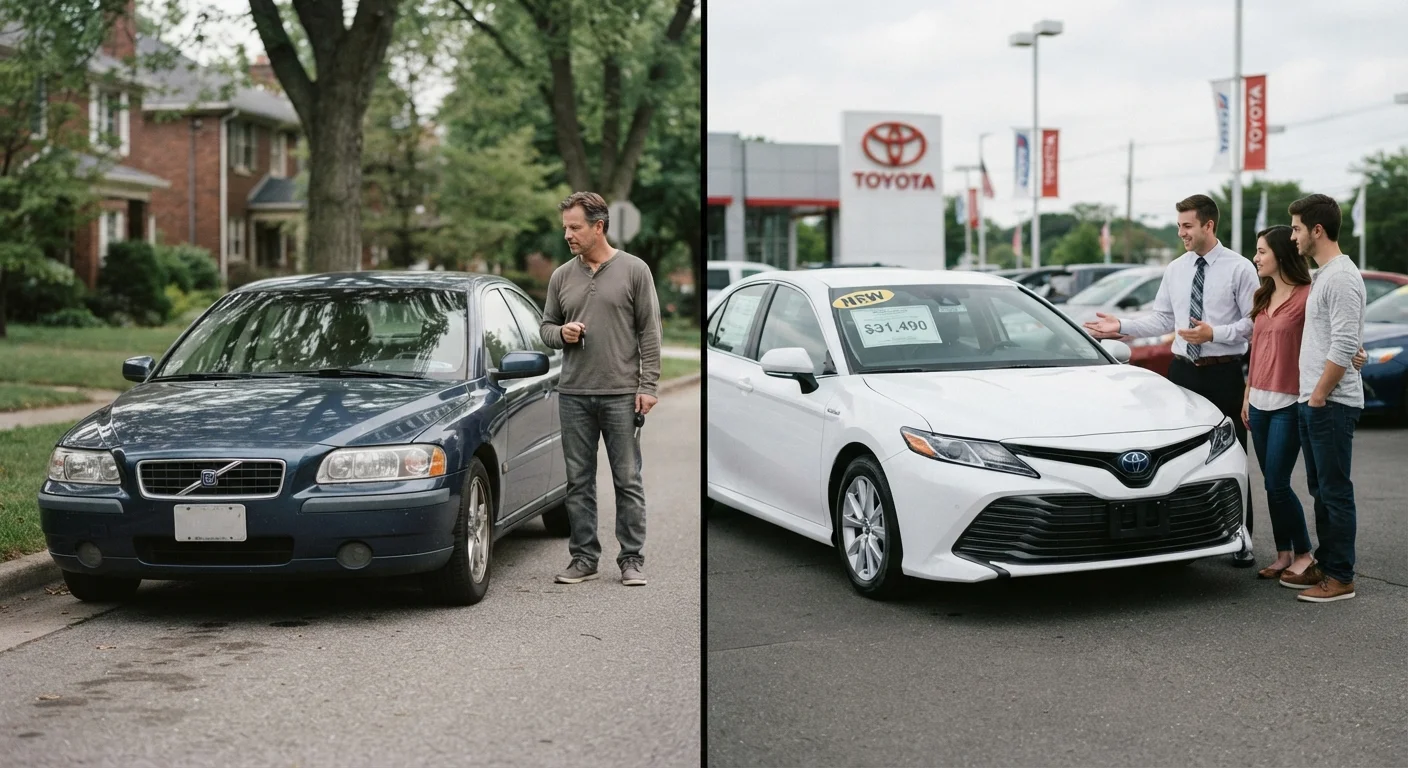
Key Takeaways
Eliminates monthly payments after loan payoff
Once the loan is retired - typically after four to six years - long-term owners free up hundreds of dollars per month. That cash can be redirected to savings, repairs, or other financial goals.
Avoids repeated depreciation losses
Depreciation is heaviest in the first three years. Holding a vehicle through that period and beyond means you absorb the hit only once rather than cycling through it repeatedly.
Lower insurance premiums over time
As a vehicle's market value declines, comprehensive and collision coverage costs often drop accordingly, reducing one of the largest recurring ownership expenses.
Known maintenance history reduces surprises
Owners who keep a vehicle long-term typically know its service record intimately, making it easier to anticipate upcoming costs and avoid deferred maintenance surprises.
Rising repair costs as mileage accumulates
Major components - timing belts, water pumps, suspension parts - reach end-of-life on predictable schedules. Older vehicles can require several significant repairs in the same year.
Missing advances in safety technology
Features like automatic emergency braking, blind-spot monitoring, and lane-keeping assist have become standard on newer vehicles. Long-term owners forgo these meaningful safety improvements.
Reliability becomes less predictable
Even well-maintained vehicles develop age-related issues that are harder to anticipate. For drivers who depend heavily on their car, unexpected breakdowns carry real practical and financial risk.
Our Verdict
For most drivers, keeping a paid-off, well-maintained vehicle for 10 or more years is the more cost-efficient path. The savings on depreciation and financing alone tend to outweigh rising repair costs. That said, frequent traders who prioritize reliability guarantees, modern safety features, and lower maintenance risk can find value in cycling through newer vehicles - especially if their budget comfortably absorbs the ongoing payments.
Long-term ownership suits budget-conscious drivers willing to invest in maintenance; frequent trading suits those who prioritize predictability and the latest technology over lowest total cost.
The Core Financial Case for Each Strategy
Every driver eventually faces this question: hold onto the car you know, or move on to something newer? The answer isn't universal, but the financial logic is more predictable than most people expect.
A new vehicle typically loses 15-25% of its value in the first year alone, with depreciation slowing significantly after years three through five. Drivers who trade every two or three years absorb that steepest depreciation curve repeatedly - while also resetting their loan term each time. Long-term owners, by contrast, get through the depreciation hit once and then drive on equity rather than debt.
For a fuller picture of where conventional wisdom breaks down, see common car cost myths examined against the facts.
~20%
First-year depreciation on a new vehicle
Industry estimates consistently place first-year depreciation between 15% and 25% of a vehicle's purchase price, making early ownership the costliest period per mile driven.
$900+
Average annual repair cost, vehicles over 10 years old
According to AAA's vehicle ownership cost research, maintenance and repair costs on older vehicles, while rising, remain well below the average new car payment for most drivers.
Pros and Cons of Keeping a Car Long-Term
Holding a vehicle for a decade or more can be a genuinely smart financial strategy - but it comes with real trade-offs that deserve honest examination.
Eliminates monthly payments after loan payoff
Once the loan is retired - typically after four to six years - long-term owners free up hundreds of dollars per month. That cash can be redirected to savings, repairs, or other financial goals.
Avoids repeated depreciation losses
Depreciation is heaviest in the first three years. Holding a vehicle through that period and beyond means you absorb the hit only once rather than cycling through it repeatedly.
Lower insurance premiums over time
As a vehicle's market value declines, comprehensive and collision coverage costs often drop accordingly, reducing one of the largest recurring ownership expenses.
Known maintenance history reduces surprises
Owners who keep a vehicle long-term typically know its service record intimately, making it easier to anticipate upcoming costs and avoid deferred maintenance surprises.
The critical enabler of long-term ownership is disciplined maintenance. Consistent, informed care is what separates a vehicle that hits 200,000 miles reliably from one that becomes a liability at 120,000. Even routine decisions like oil change intervals matter more as a vehicle ages - something worth understanding before committing to the long game. See what longer oil change intervals mean in practice.
Rising repair costs as mileage accumulates
Major components - timing belts, water pumps, suspension parts - reach end-of-life on predictable schedules. Older vehicles can require several significant repairs in the same year.
Missing advances in safety technology
Features like automatic emergency braking, blind-spot monitoring, and lane-keeping assist have become standard on newer vehicles. Long-term owners forgo these meaningful safety improvements.
Reliability becomes less predictable
Even well-maintained vehicles develop age-related issues that are harder to anticipate. For drivers who depend heavily on their car, unexpected breakdowns carry real practical and financial risk.
Pros and Cons of Trading In Every Few Years
Cycling through newer vehicles every three to five years has a real logic to it - especially when reliability, warranty coverage, and safety technology matter to you.
Warranty Coverage Is a Real Benefit
New vehicles typically come with a manufacturer's bumper-to-bumper warranty of three years and a powertrain warranty of five years or more. Frequent traders spend much of their ownership period inside that coverage window, which transfers repair risk back to the manufacturer. This predictability has genuine financial value - but it comes at the cost of higher total vehicle spending over time.
One useful comparison: trading in a car every few years is structurally similar to other "pay more for predictability" decisions consumers make. The buying vs. leasing trade-off follows a similar pattern - predictable costs and flexibility on one side, higher total expenditure on the other.
For drivers who value confident, informed consumer decisions, the key is understanding exactly what you're exchanging: peace of mind and modernity in exchange for a higher long-term spend.
Running the Numbers Over a Decade
Consider two hypothetical drivers, each starting with a $35,000 vehicle. Driver A keeps it for ten years, paying off the loan in year five and driving payment-free for the remaining five. Driver B trades every four years, always carrying a loan. Over the same decade, Driver B will likely finance two additional vehicles, paying substantially more in interest and losing more equity to depreciation - even if each new car carries a lower monthly payment than expected.
Repair costs on an older vehicle are real, but industry data consistently shows that average annual repair and maintenance costs on a well-kept older vehicle remain significantly below the cost of a new car payment. The math generally favors holding, especially once the original loan is retired.
Adopting proven practices that keep ownership costs manageable can extend the gap even further in your favor. Managing vehicle costs is also part of the broader discipline of building savings and managing debt - a car decision is rarely just a car decision.