

Key Takeaways
Why Night Driving Is Statistically More Dangerous
Traffic volume drops significantly after dark, yet fatal crash rates per mile driven rise. The core reason isn't the roads - it's human biology. Our eyes rely on two types of photoreceptors: cones for color and detail in daylight, and rods for low-light peripheral vision. At night, depth perception, peripheral awareness, and color recognition all diminish, sometimes dramatically. Drivers over 50 often experience this more acutely, since the aging eye requires more light to function effectively.
Compounding the visibility problem is fatigue. The body's circadian rhythm naturally promotes drowsiness between midnight and 6 a.m., and again in the mid-afternoon. Driving during these windows - even if you feel alert - carries elevated risk. For a deeper look at how drowsiness impairs judgment and what warning signs to watch for, see our guide to recognizing fatigue at the wheel.
Night driving also brings unique hazards: deer and other wildlife are far more active after dusk, impaired drivers are more prevalent on weekend nights, and poorly lit pedestrians or cyclists may be nearly invisible until they're dangerously close.
Give Your Eyes Time to Adjust
It takes the human eye up to 30 minutes to fully adapt from bright indoor lighting to darkness. Avoid staring at your phone screen immediately before a nighttime drive. Spending even a few minutes in dimmer lighting before you get behind the wheel can improve your initial night vision meaningfully.
What to Check Before You Drive at Night
Preparation before you leave is your first line of defense. Many drivers neglect their vehicle's lighting system until a bulb fails - but dim or misaimed headlights can cut effective visibility in half without triggering any dashboard warning.
What you will need
Headlight Restoration Kit or Professional Cleaning
Removes oxidation and yellowing from headlight lenses that reduce beam output.
Anti-Glare Rearview Mirror
Automatically or manually dims reflections from vehicles behind you to reduce eye strain.
Windshield Glass Cleaner (interior-safe)
Removes film and haze from the inside of the windshield that amplifies nighttime glare.
Step-by-Step: Adapting Your Driving Habits After Dark
Following a deliberate routine each time you drive at night helps convert knowledge into habit. The steps below build on each other - skip one and the chain weakens.
Inspect and Clean Your Headlights
Walk to the front of your vehicle and examine both headlight lenses. Yellowed or hazy plastic significantly reduces the light reaching the road. Clean lenses with an appropriate plastic-safe cleaner; if hazing is severe, a restoration treatment can restore meaningful output. Also confirm both low and high beams are functional and that the aim isn't pointing sharply downward or into oncoming lanes.
Clean Your Windshield Inside and Out
Wipe down the interior glass with a clean microfiber cloth and an interior-safe glass cleaner. Oily film from off-gassing plastics builds up on the inside surface and dramatically worsens glare from oncoming headlights and streetlamps. Finish with the exterior using a standard automotive glass cleaner. Replace wiper blades if they streak - streaks scatter light and impair forward visibility.
Reduce Your Speed to Match Visibility Range
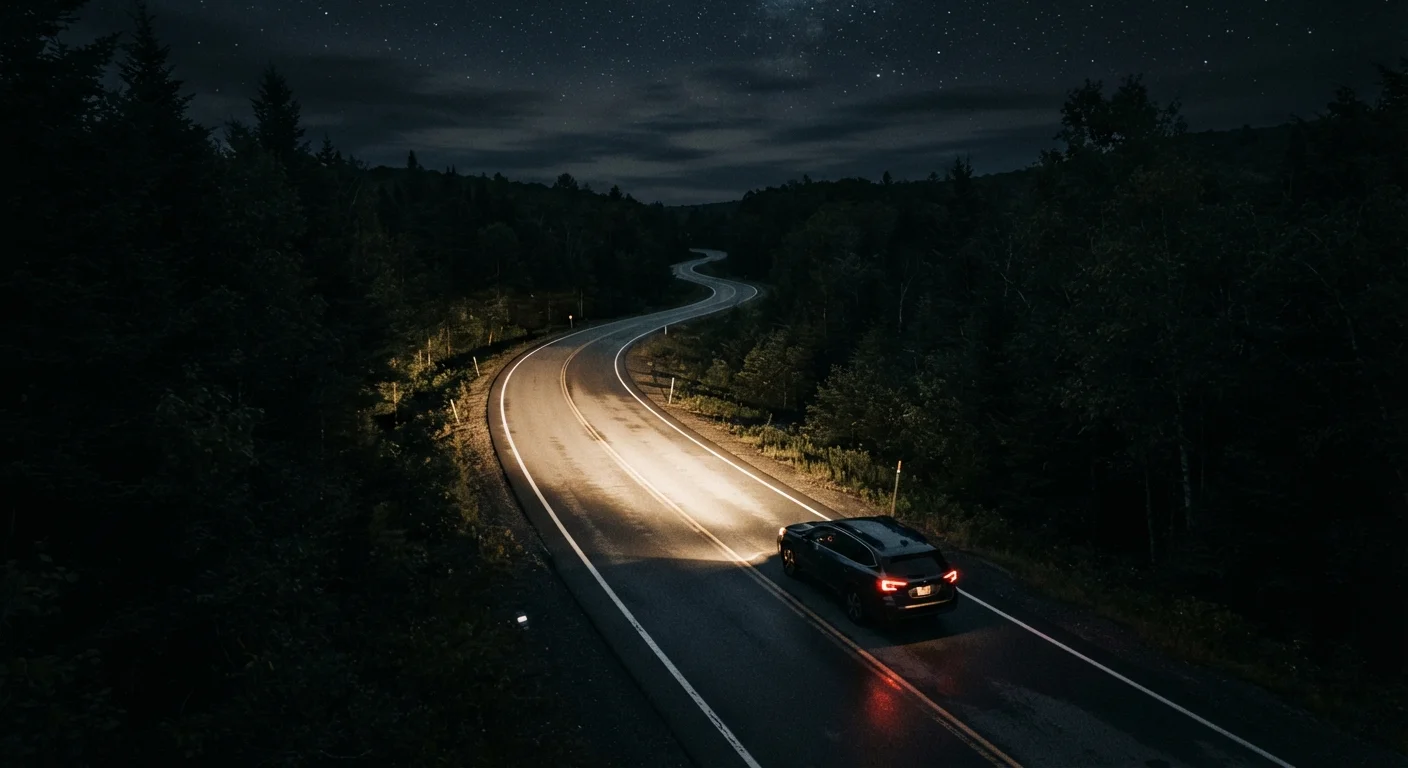
Standard low-beam headlights illuminate roughly 160-200 feet ahead. At 60 mph, your stopping distance in a typical passenger vehicle can exceed that distance. This is called overdriving your headlights - moving faster than you can stop within the lit zone. Reduce speed enough so that you could stop safely for any hazard at the edge of your headlight range. On unfamiliar roads, err toward the conservative end.
Use High Beams Strategically - and Dim Them Promptly
High beams are an underused safety tool on dark roads. Activate them when there's no oncoming traffic and no vehicle directly ahead of you. Switch back to low beams when an oncoming vehicle appears within roughly 500 feet, or sooner if the other driver flashes their lights. Failing to dim in time is not just discourteous - it can temporarily blind oncoming drivers for several critical seconds.
Increase Following Distance
The standard three-second following distance recommended for daytime driving is insufficient at night. Extend to at least four seconds - more on wet or unfamiliar roads. This buffer accounts for the reduced information you have about what lies ahead and gives you time to respond to brake lights, debris, or animals entering the roadway. Count your gap using a fixed roadside marker.
Scan Actively for Pedestrians, Cyclists, and Wildlife
Shift your scanning pattern to include the road edges and shoulders, not just the lane ahead. Pedestrians wearing dark clothing may only become visible within 100 feet or less. Watch for eyeshine - the reflective glow of animal eyes - at the roadside, which signals a deer or other wildlife nearby. In areas with high deer populations, be especially vigilant at dawn and dusk, when animal movement peaks.
Never Drive Impaired - Including by Fatigue
Alcohol and drugs are far more commonly involved in nighttime crashes than daytime ones. But fatigue is an equally serious impairment that many drivers underestimate. If you've been awake for 18 hours, research suggests your reaction time and judgment can resemble impairment at the legal alcohol limit. When in doubt, stop and rest - your arrival time is not worth the risk.
Managing Glare and Staying Alert on Longer Trips
Oncoming headlights are one of the most common complaints among night drivers. Modern LED and HID systems are significantly brighter than older halogen units, and even correctly aimed lights can cause temporary visual impairment. When facing bright oncoming traffic, shift your gaze slightly right toward the road's edge line rather than looking directly into the beams. Your night-adapted peripheral vision will still track lane position while protecting your central vision from glare.
Dirty or scratched windshields scatter light, amplifying glare far beyond what clean glass would produce. Interior reflections from a dusty dashboard can do the same - keep both surfaces clean.
On longer nighttime drives, fatigue compounds every other risk factor. Plan rest stops at least every two hours. If passengers are in the vehicle, use them - a conversation partner keeps your alertness higher than driving solo. For more on how passengers affect your risk profile behind the wheel, see driving safely with passengers.
Night driving on highways presents different challenges than city streets. Understanding how risk profiles differ between highway and city driving can help you calibrate your habits appropriately for each environment. And if weather adds to the challenge, our guide to driving in rain, fog, and snow covers how to layer those adjustments safely.
Overdriving Your Headlights Is a Hidden Risk
Many drivers don't realize their speed has outpaced what their headlights can illuminate. If an obstacle appears at the edge of your visibility, you may not have enough road left to stop. This risk compounds on curves and hills where beams point away from the actual hazard. Slowing down on unlit roads isn't timidity - it's physics.