

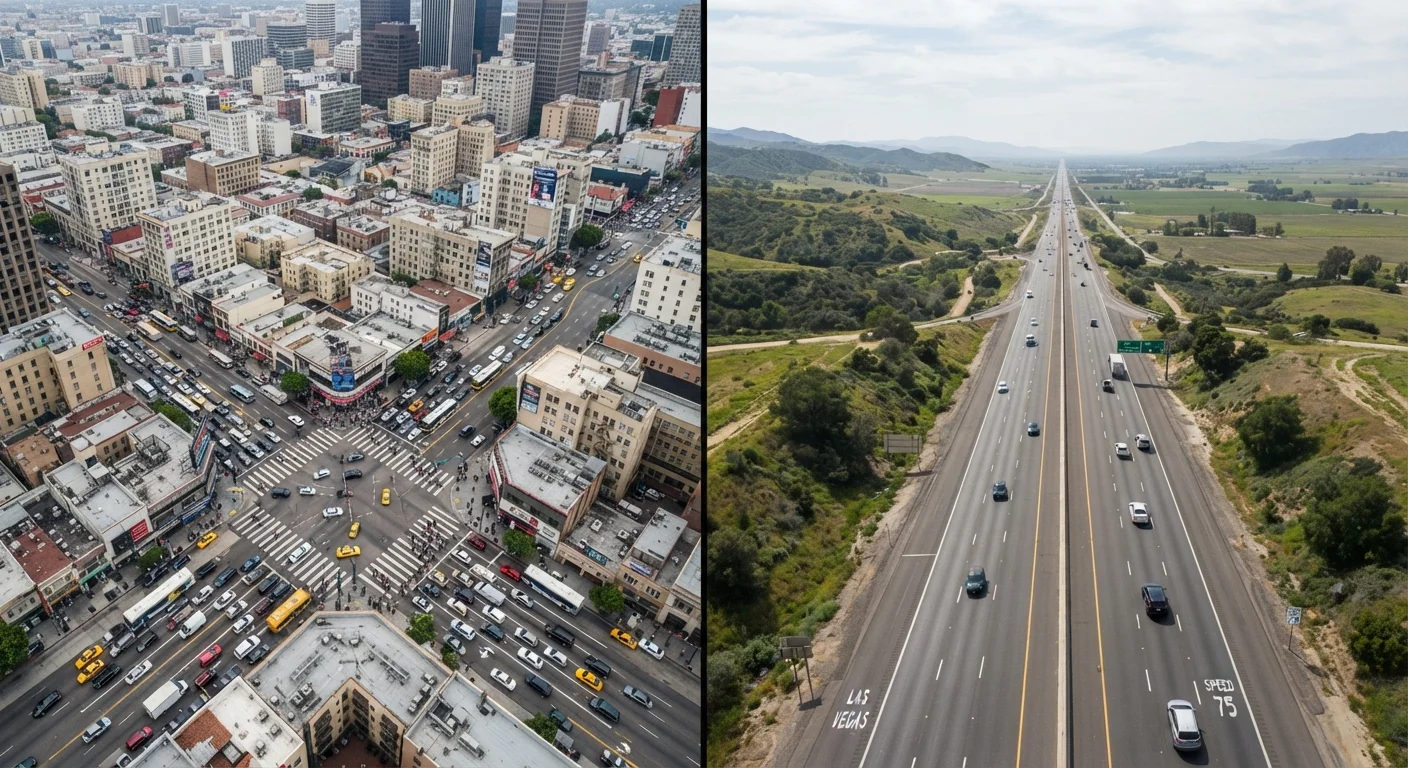
Key Takeaways
Option A
Highway Driving
High-speed, long-distance travel with fewer decision points.
Best for: Drivers covering long distances who need to manage fatigue, following distance, and high-speed merging.
Option B
City Driving
Dense, unpredictable environments demanding constant attention.
Best for: Drivers navigating frequent stops, pedestrians, cyclists, and intersections in tight urban corridors.
If you regularly commute through dense urban areas
City Driving defensive strategies
Frequent intersections, cyclists, and pedestrians demand short reaction windows and highly active scanning habits that urban-focused techniques directly address.
If you take frequent long-distance or interstate trips
Highway Driving defensive strategies
Fatigue management, proper following distance, and safe merging practices matter most when covering miles at sustained high speeds.
If you drive in both environments regularly
Both skill sets equally
Most American drivers switch between urban and highway contexts daily; proficiency in both risk profiles is the most complete safety preparation.
The Core Difference: Frequency vs. Severity
A common assumption is that highways are more dangerous simply because speeds are higher. The reality is more nuanced. Urban driving produces a significantly higher frequency of crashes, largely due to the sheer density of potential conflict points - intersections, crosswalks, delivery vehicles, cyclists, and unpredictable pedestrian movement. Highway crashes, by contrast, occur less often but carry a greater likelihood of serious injury or fatality when they do happen, precisely because of the speeds involved.
According to the National Highway Traffic Safety Administration (NHTSA), a substantial proportion of fatal crashes occur on rural highways and interstates, while urban areas account for the majority of total reported crashes overall. Neither environment is simply "safer" - they present different risk structures that call for different defensive habits.
Understanding which type of driving you're about to do is the first step toward choosing the right mental mode before you even pull out of the driveway.
Highway Hazards: Speed, Fatigue, and Following Distance
On the highway, the physics of speed change everything. At 70 mph, a vehicle covers roughly 103 feet every second. A two-second distraction - glancing at a phone or adjusting the radio - means traveling more than 200 feet with essentially no driver input. This is why following distance is one of the most critical habits on any freeway. A commonly cited guideline is the 3-second rule: pick a fixed object, and ensure at least three seconds pass between when the car ahead passes it and when you do. In poor conditions, that gap should increase. See our guide to safe speeds and following distance for a deeper look at how speed affects stopping distances.
Driver fatigue is another significant highway-specific risk. Monotonous stretches of road reduce cognitive stimulation, and alertness can degrade far faster than most drivers realize. Signs of fatigue - lane drifting, missing exits, or micro-sleeps - can appear well before a driver feels tired. Planning regular rest stops on longer trips and avoiding highway driving during peak fatigue hours (typically midnight to 6 a.m.) are practical countermeasures. Our article on night driving hazards and adaptation covers additional strategies for low-visibility, late-hour highway travel.
Merging also deserves attention. Failing to match highway speed before entering a lane - or cutting across multiple lanes shortly after an on-ramp - is a common source of high-speed conflicts.
| Criterion | Highway Driving | City Driving |
|---|---|---|
| Typical speed range | 55-80 mph | 15-45 mph |
| Crash frequency | Lower overall | Higher overall |
| Crash severity | Higher when they occur | Generally lower severity |
| Primary hazard type | Speed, fatigue, rear-end collisions | Intersections, pedestrians, cyclists |
| Decision frequency | Low - sustained attention | High - rapid repeated decisions |
| Key defensive habit | Maintain 3+ second following gap | Scan intersections before entering |
| Fatigue risk | High - monotony reduces alertness | Lower - stimulation keeps alert |
City Hazards: Intersections, Density, and Decision Load
Urban driving is cognitively exhausting in a way that highway driving is not. Every block can present a new decision: a pedestrian stepping off the curb, a cyclist filtering through traffic, a delivery van double-parked in the right lane, or a signal turning yellow at a difficult stopping distance. The sheer volume of decisions compressed into short time frames is the defining challenge of city driving.
Intersections are where urban risk concentrates. Running red lights and failing to yield are consistently among the leading causes of urban collisions. A practical habit is to pause briefly before entering an intersection even on a green light - a "defensive green" approach - to confirm that crossing traffic has actually stopped. This single practice can prevent a significant category of city collisions.
City speeds are lower, but that does not make low-speed impacts trivial, especially for pedestrians and cyclists. Aggressive or erratic urban drivers can quickly escalate tension in dense traffic. For strategies on managing that dynamic, see our coverage of road rage and aggressive driving.
~40%
Urban share of all fatal crashes
NHTSA data consistently shows urban areas account for roughly 40% of traffic fatalities despite higher total crash volumes.
103 ft/sec
Distance covered at 70 mph
At highway speeds, a vehicle travels approximately 103 feet every second - underscoring why following distance is critical.
~50%
Crashes occurring at or near intersections
The Federal Highway Administration estimates roughly half of all traffic crashes involve intersections, most of them urban.
Adapting Your Habits to Each Environment
Smart defensive driving isn't one-size-fits-all. It adjusts to context. Before entering a highway, check mirrors and blind spots before every lane change, pre-set your navigation so you're not reading signs at the last moment, and allow additional following distance in the right lane where on-ramp merges happen. When conditions deteriorate - rain, fog, or ice - speed adjustments become non-negotiable. Our companion piece on driving in adverse weather details the specific technique adjustments each condition requires.
In the city, keep your eyes scanning ahead and to the sides, not just at the car immediately in front of you. Anticipate light cycles, watch for door zones alongside parked vehicles, and reduce speed in school zones and near bus stops even when signals don't require it. If you're driving with passengers - especially newer drivers with inexperienced teens in the car - urban environments can heighten distraction risk further. Our article on driving safely with passengers offers useful framing on managing that added complexity.
Finally, vehicle insurance considerations reflect these different risk profiles too. Understanding what coverage fits your typical driving environment is worth reviewing separately; see our overview of matching insurance types to risk scenarios for context.
This article is for general informational purposes only and does not constitute professional driving instruction, legal advice, or insurance guidance. Consult a licensed professional for advice specific to your situation.