
What 'Mental Health' and 'Mental Illness' Actually Mean-and Why the Difference Matters

| Prevalence of mental illness (U.S. adults) | ~1 in 5 adults per year (National Institute of Mental Health (NIMH)) |
| Mental health applies to | Everyone-not only those with a diagnosis (World Health Organization definition) |
| Common diagnosable conditions | Anxiety disorders, depression, bipolar disorder, schizophrenia (DSM-5 / NIMH) |
| Mental health spectrum | Ranges from thriving to crisis (Mental Health Continuum Model, research literature) |
| Treatment gap (U.S.) | Over half of adults with mental illness receive no treatment (NIMH, Mental Health America reports) |
Two Terms, Two Distinct Concepts
"Mental health" and "mental illness" appear side by side so often that many people treat them as synonyms. They are not. Understanding the distinction is more than a semantic exercise-it shapes how people recognize their own needs, when they seek help, and what kind of support they look for.
Mental health
A state of psychological, emotional, and social well-being that allows a person to cope with everyday stress, work productively, and contribute to their community. Everyone has mental health, and it exists on a continuum.
Mental illness
A diagnosable condition characterized by clinically significant changes in thinking, emotion, or behavior that cause distress or impair daily functioning. Examples include major depressive disorder, bipolar disorder, and schizophrenia.
Mental wellness spectrum
The range of mental health states from thriving and resilient at one end to severe crisis at the other. Most people move along this spectrum over time depending on life circumstances and available support.
Clinical criteria
Standardized diagnostic guidelines-such as those in the DSM-5-used by licensed clinicians to determine whether a person's symptoms meet the threshold for a specific mental illness diagnosis.
Psychological well-being
A broad term encompassing positive functioning across emotional, cognitive, and social dimensions of life, including self-acceptance, autonomy, purpose, and the ability to manage environmental demands.
Mental health refers to a state of psychological, emotional, and social well-being. Everyone has mental health, in the same way everyone has physical health-it exists on a spectrum, fluctuates over time, and is influenced by stress, sleep, relationships, and environment. See our guide to the mental wellness spectrum for a detailed map of that continuum.
Mental illness, by contrast, refers to diagnosable conditions-such as major depressive disorder, generalized anxiety disorder, schizophrenia, or bipolar disorder-that are defined by clinical criteria, cause significant impairment, and typically require professional assessment and treatment.
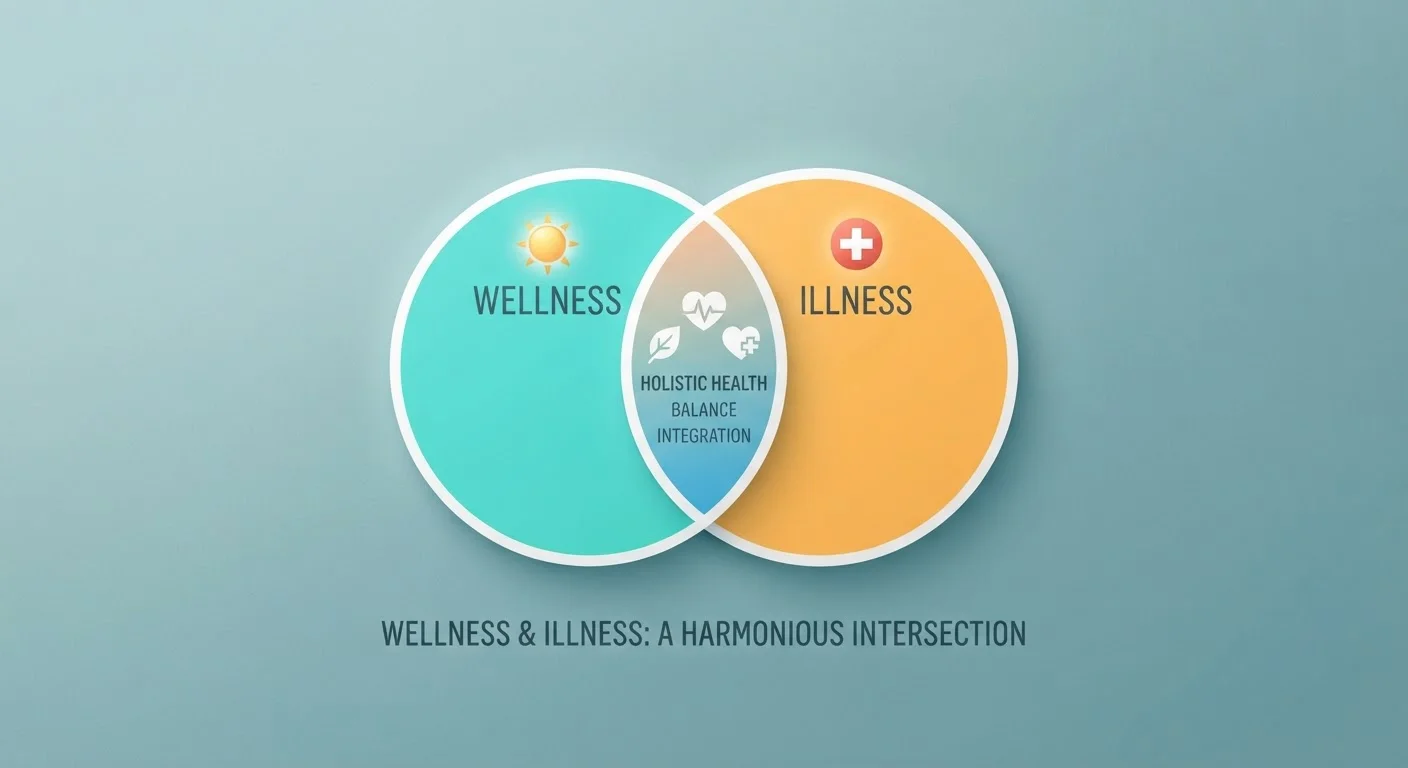
The key insight: a person can have poor mental health without having a mental illness, and a person living with a diagnosed mental illness can, with the right support, maintain good mental health most of the time.
Why the Difference Matters in Practice
| Prevalence of mental illness (U.S. adults) | ~1 in 5 adults per year (National Institute of Mental Health (NIMH)) |
| Mental health applies to | Everyone-not only those with a diagnosis (World Health Organization definition) |
| Common diagnosable conditions | Anxiety disorders, depression, bipolar disorder, schizophrenia (DSM-5 / NIMH) |
| Mental health spectrum | Ranges from thriving to crisis (Mental Health Continuum Model, research literature) |
| Treatment gap (U.S.) | Over half of adults with mental illness receive no treatment (NIMH, Mental Health America reports) |
Conflating these two terms creates real consequences. When people assume that only those with a diagnosed condition need to tend to their mental health, they may ignore early warning signs, dismiss legitimate stress, or delay seeking support until a crisis point. Conversely, when every period of sadness or anxiety gets labeled as a mental illness, it can generate unnecessary alarm or lead people to self-diagnose inaccurately.
Framing matters for how insurance coverage is understood as well. Mental health benefits in health plans are typically structured around diagnosed conditions and clinical treatment-not general wellness support. If you're navigating coverage questions, a plain-language breakdown of cost terms like premiums, deductibles, and copays can help you interpret your plan more clearly.
From a public health standpoint, keeping the two concepts distinct allows for more targeted conversations: universal mental health promotion (habits, education, community support) is a different-though complementary-effort from clinical treatment of mental illness.
Building Daily Mental Health Habits-Diagnosis or Not
Because everyone has mental health, everyone can take steps to support it. Research consistently links the following practices to improved psychological well-being across the general population:
- Consistent sleep: Sleep and mental health are deeply interconnected. The relationship between sleep and mental health is bidirectional-poor sleep worsens mood and cognition, and poor mental health disrupts sleep.
- Regular physical activity: Even moderate movement has well-documented effects on mood regulation and stress reduction.
- Social connection: Meaningful relationships act as a buffer against psychological distress.
- Purposeful downtime: Rest that genuinely restores-rather than passive scrolling-supports cognitive recovery.
These habits do not treat mental illness, but they meaningfully support mental health. If you are living with a diagnosed condition, these practices can complement-not replace-professional care. Options like CBT and mindfulness-based therapies have strong evidence bases and are worth discussing with a qualified clinician.
Digital Tools Have Limits
Mental wellness apps can support general habits like mindfulness or mood tracking, but they are not clinical tools and cannot diagnose or treat mental illness. For a balanced view of what these tools can and cannot do, see our look at the trade-offs of digital mental health apps. If you are experiencing significant distress or impairment, please seek guidance from a licensed mental health professional.
This article provides general health information and education only. It is not a substitute for professional medical advice, diagnosis, or treatment. If you are concerned about your mental health or that of someone you know, please consult a qualified healthcare professional.