

Key Takeaways
Dietary Fiber
Dietary fiber is the part of plant-based foods that your body cannot fully digest or absorb. Unlike carbohydrates, proteins, and fats, fiber passes largely intact through your stomach and intestines. It plays a critical role in digestive health, blood sugar regulation, and long-term disease prevention.
Fiber is classified into two main types - soluble (which dissolves in water to form a gel-like substance) and insoluble (which adds bulk to stool). Both types serve distinct physiological functions and are found in varying proportions across plant foods.
Why Fiber Deserves More Attention
Nutrition conversations tend to orbit macronutrients - protein, carbohydrates, fat. Fiber rarely gets top billing, yet it's consistently identified as one of the most under-consumed nutrients in the American diet. The gap isn't small: public health data suggest average adult intake sits around 15 grams per day, roughly half of what most guidelines recommend.
That shortfall matters. Fiber is involved in a wide range of physiological processes, from how quickly glucose enters your bloodstream to how efficiently your digestive system moves waste through the colon. Understanding what fiber actually does - and where to reliably find it - is a practical first step toward closing the gap.
~15g
Average daily fiber intake for U.S. adults
According to data cited by the Dietary Guidelines for Americans, average adult intake falls well short of the 25-38g recommendation.
95%
Americans not meeting fiber recommendations
A frequently cited analysis in the American Journal of Lifestyle Medicine identified fiber as one of the most widespread nutrient shortfalls in the U.S. population.
10-15%
Lower cardiovascular disease risk with higher fiber intake
Multiple large cohort studies have found associations between higher dietary fiber intake and reduced risk of coronary heart disease, though individual results vary.
What Fiber Does in the Body
Soluble fiber - found in oats, apples, citrus fruits, beans, and barley - dissolves in water and slows the rate at which food leaves the stomach. This has two well-studied effects: it moderates post-meal blood sugar spikes and helps lower LDL ("bad") cholesterol by binding to bile acids in the digestive tract.
Insoluble fiber - abundant in whole wheat, bran, nuts, and most vegetables - doesn't dissolve. Instead, it adds bulk to stool and accelerates transit through the colon, reducing the time potentially harmful substances remain in contact with the intestinal wall. This mechanism is one reason higher fiber intake is associated with reduced colorectal cancer risk in epidemiological research.
Beyond these two categories, fermentable fibers - sometimes called prebiotics - serve as fuel for beneficial gut bacteria. A diverse, fiber-rich diet supports a healthier microbiome, which emerging research links to immune function and metabolic health, though this area continues to evolve.
“Dietary fiber is arguably one of the most important yet most overlooked components of a healthy diet. Its benefits extend far beyond digestion - influencing metabolic health, inflammation, and even the diversity of the gut microbiome.”
— Dr. Frank Sacks, Professor of Cardiovascular Disease Prevention, Harvard T.H. Chan School of Public Health
The Best Everyday Sources of Fiber
There's no single superfood that delivers all your fiber needs. The most effective strategy is variety across plant food groups:
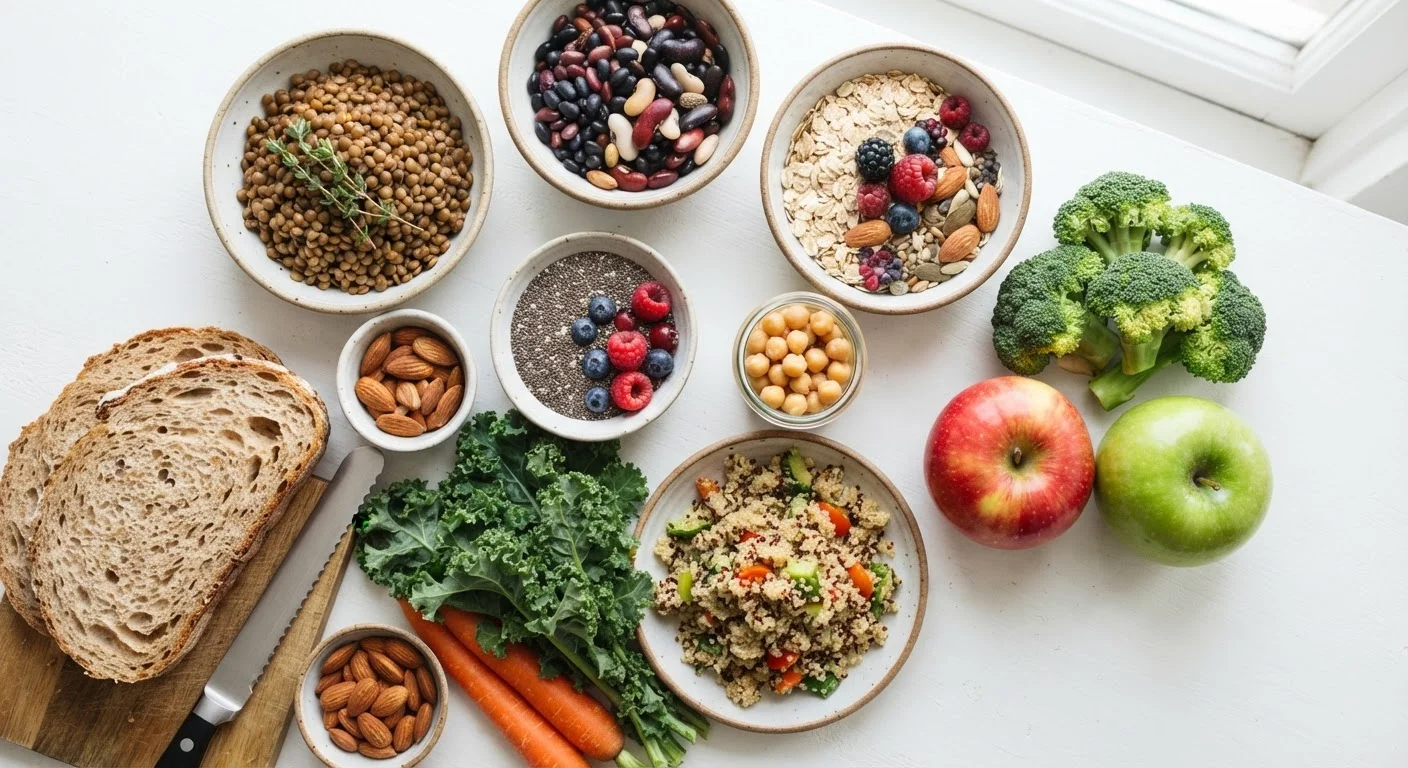
- Legumes: Cooked lentils (~15g per cup), black beans (~15g per cup), and chickpeas (~12g per cup) are among the most fiber-dense foods available. They're also economical and shelf-stable.
- Whole grains: Oats, barley, bulgur, and whole wheat bread provide both soluble and insoluble fiber. When reading labels, look for "whole grain" as the first ingredient. Our article on whole grains vs. refined grains explains what the distinction means nutritionally.
- Vegetables: Broccoli, Brussels sprouts, carrots, and artichokes are particularly fiber-dense. Cooking doesn't significantly reduce fiber content.
- Fruits: Pears, raspberries, apples (with skin), and avocados are standout sources. Eating the whole fruit preserves fiber that juicing removes.
- Nuts and seeds: Chia seeds, flaxseeds, and almonds add meaningful fiber alongside healthy fats.
Learning to spot fiber on packaging is straightforward once you know what to look for. Our guide on reading the Nutrition Facts label breaks down exactly how to use the % Daily Value column.
A Simple Rule for Adding More Fiber
Aim to include at least one plant food at every meal - a piece of fruit, a handful of vegetables, a serving of whole grains, or a scoop of beans. This habit-based approach is more sustainable than tracking grams and naturally builds fiber intake across the day.
How to Increase Fiber Without the Side Effects
The most common reason people abandon fiber increases is digestive discomfort - bloating, gas, and cramping that can follow a sudden dietary shift. This happens because gut bacteria need time to adapt to increased fermentable material. The fix is patience and pacing.
A practical approach: add one high-fiber food per week rather than overhauling your diet overnight. Pair the increase with more water, since insoluble fiber absorbs fluid and moves more efficiently when you're well-hydrated. Most people adapt within two to four weeks.
It's also worth noting that many common nutrition myths overstate the complexity of eating more fiber. Swapping white rice for brown, adding a handful of beans to a soup, or choosing a whole grain bread are low-effort changes that compound over time.
This article is for general informational purposes only and does not constitute medical or dietary advice. If you have a digestive condition, diabetes, or other health concerns, consult a qualified healthcare professional before making significant changes to your diet.