

Key Takeaways
Nutrition Facts Label
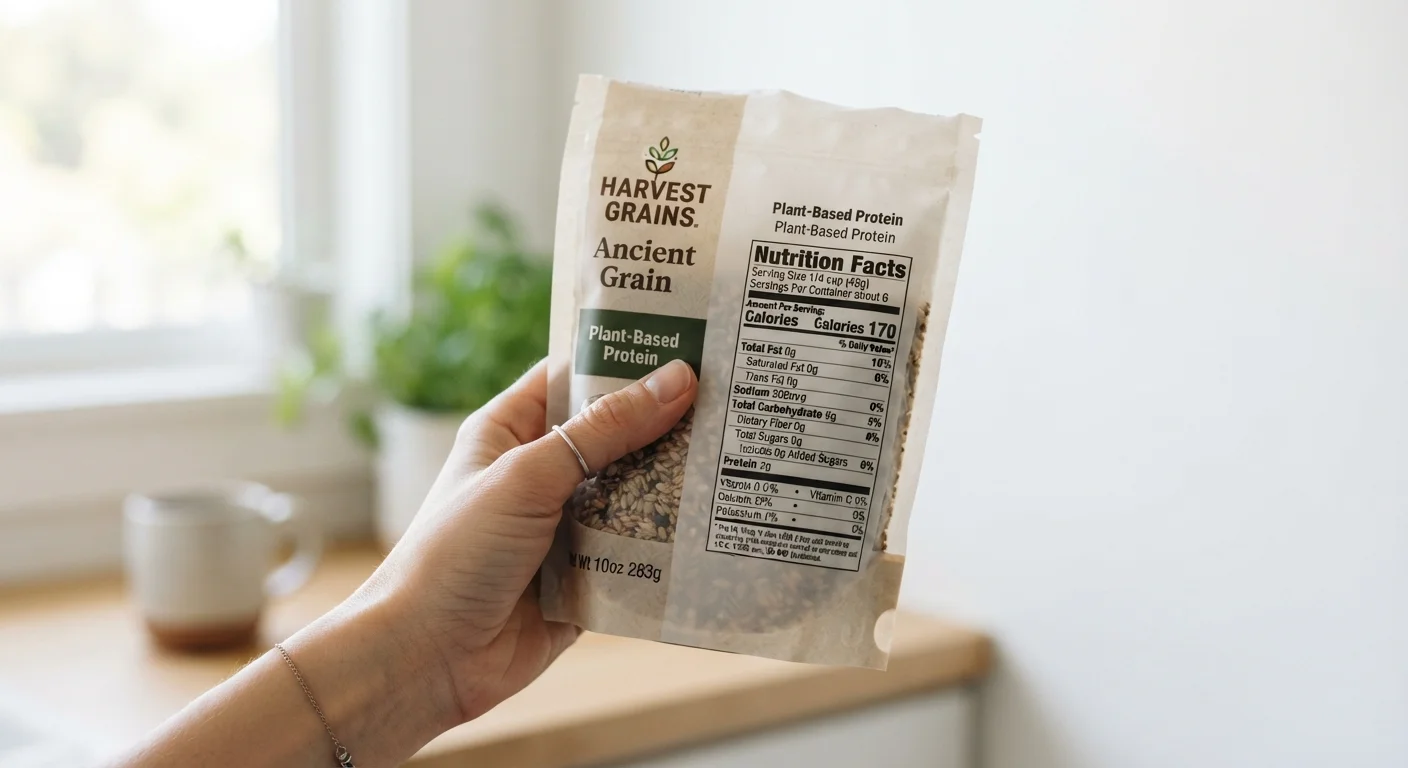
The Nutrition Facts label is a standardized panel required by the FDA on most packaged foods and beverages sold in the United States. It tells you how many calories and key nutrients - such as fat, sodium, fiber, and sugar - are contained in a specific serving of that product. Reading it correctly helps you compare foods and make more informed choices about what you eat.
The current label format was updated by the FDA in 2016 and phased in by 2020, reflecting updated scientific understanding of nutrition and disease prevention, including revised Daily Values for several nutrients.
Start Here: Serving Size Sets the Stage
Before reading a single number on the Nutrition Facts label, find the serving size. Every calorie count, gram, and percentage listed below it is calculated based on that specific amount - not the whole container.
The FDA sets standard serving sizes using Reference Amounts Customarily Consumed (RACCs), which are based on how much people typically eat. Since 2016, manufacturers have also been required to display the number of servings per container prominently at the top. If a bag of chips lists a serving as 1 ounce but you eat the whole 3-ounce bag, you've consumed three times every number on that label.
Some packages now feature a dual-column format: one column for a single serving, one for the whole package. This is especially common on items that could realistically be consumed in one sitting, like a small bottle of juice or a single-serve snack bag.
Check Servings Per Container First
Before comparing any numbers across products, confirm whether the serving sizes are equivalent. A product with fewer calories per serving isn't necessarily lower-calorie overall if its serving size is smaller. Adjust all values to a common amount - such as per 100 grams - when making direct comparisons.
Calories and the Key Nutrients to Watch
Calories measure the energy a food provides. The label lists calories per serving in large, prominent type - a design choice intended to make this the first number most people notice. Below calories, nutrients are broken into two general groups: those many Americans tend to consume too much of, and those they often fall short on.
Limit these: Saturated fat, trans fat, sodium, and added sugars are listed because excess intake is associated with increased risk of cardiovascular disease, high blood pressure, and other chronic conditions. Trans fat has no safe level according to current FDA guidance, so look for 0g wherever possible.
Get enough of these: Dietary fiber, vitamin D, calcium, iron, and potassium are nutrients many people in the U.S. consume below recommended levels. The label highlights these because low intake is linked to health concerns over time. For a deeper look at one of the most underconsumed nutrients, see our article on why most Americans fall short on fiber.
90%
Americans exceed sodium recommendations
According to the CDC, approximately 90% of Americans consume more sodium than the recommended limit of 2,300 mg per day.
17 tsp
Average daily added sugar intake in the U.S.
The CDC estimates the average American adult consumes about 17 teaspoons of added sugar daily - well above the recommended maximum of about 12 teaspoons on a 2,000-calorie diet.
<10%
U.S. adults meeting fiber recommendations
Research published in the American Journal of Lifestyle Medicine found that fewer than 1 in 10 American adults meet daily fiber intake guidelines.
Decoding % Daily Value
The percentage listed to the right of each nutrient is the % Daily Value (% DV). It answers a simple question: how much does one serving of this food contribute to a typical daily diet?
The reference point is a 2,000-calorie-per-day diet - a general benchmark, not a prescription for any individual. Two rules of thumb make the % DV immediately useful:
- 5% DV or less = low in that nutrient
- 20% DV or more = high in that nutrient
Use % DV to compare two products quickly or to spot foods that are unexpectedly high in sodium or saturated fat despite modest-sounding serving sizes. Note that protein does not have a % DV listed because deficiency is uncommon in the U.S. general population under typical dietary patterns.
For nutrients you want to limit - saturated fat, sodium, added sugars - lower % DV is generally preferable. For nutrients you want more of - fiber, iron, vitamin D - higher % DV is a positive signal. This same principle applies when decoding other consumer product labels.
The 2,000-Calorie Reference Is a Baseline, Not a Target
% Daily Values are calculated against a 2,000-calorie-per-day diet, which is a standardized reference established by the FDA for label consistency - not a recommendation for any specific person. Children, older adults, pregnant individuals, and people with chronic conditions often have substantially different nutrient needs. Always consult a healthcare provider or registered dietitian for personalized guidance.
Added Sugars and the Ingredient List Connection
One of the most significant updates in the 2016 label redesign was the addition of a separate line for added sugars, indented beneath total sugars. This distinction matters because naturally occurring sugars - in plain yogurt, unsweetened fruit, or milk - behave differently in the diet compared to sugars added during processing to enhance sweetness or shelf life.
Dietary guidelines recommend that added sugars make up no more than 10% of total daily calories. With a 2,000-calorie reference diet, that translates to a % DV you can now track directly on the label.
The Nutrition Facts panel, however, only tells you how much of something is present - not what form it takes. For that, you need the ingredient list. A food can have 12 grams of added sugar listed as organic cane sugar, high-fructose corn syrup, honey, or a combination. Our guide to reading an ingredient list explains how to interpret what's listed and in what order.
This article is for general informational and educational purposes only and is not a substitute for personalized nutrition advice. For guidance tailored to your health status and dietary needs, consult a registered dietitian or qualified healthcare professional.
“The Nutrition Facts label is one of the most powerful tools available for making informed food choices - but only if you know how to read it. Most people look at calories and stop there, missing the bigger nutritional picture.”
— Frank Sacks, Professor of Cardiovascular Disease Prevention, Harvard T.H. Chan School of Public Health