

Key Takeaways
Added Sugar
Added sugar refers to any sugar or caloric sweetener introduced to a food or beverage during processing or preparation - as opposed to sugars that occur naturally in whole foods like fruit or milk. It can appear as table sugar, syrups, honey, or dozens of chemically named compounds. The FDA requires manufacturers to list added sugars separately on the Nutrition Facts panel, giving consumers a clearer picture of what's in their food.
Added sugars and naturally occurring sugars both contribute calories and raise blood glucose, but naturally occurring sugars come packaged with fiber, vitamins, and other nutrients that affect how the body processes them.
Why Added Sugar Is So Easy to Miss
Food manufacturers are not required to call sugar 'sugar' - they only need to use the ingredient's accurate chemical or common name. This means a single product can list cane syrup, brown rice syrup, and dextrose separately, none of which triggers immediate recognition as 'sugar,' yet together they may make sweetener the product's dominant ingredient by weight.
Understanding this labeling landscape is one of the most practical skills in everyday nutrition. As our guide on reading an ingredient list explains, the order of ingredients matters just as much as the names themselves.
Naturally Occurring vs. Added Sugar
The 'Total Sugars' line on a Nutrition Facts panel includes both naturally occurring sugars (from fruit, dairy, or vegetables) and added sugars. Only the 'Added Sugars' sub-line reflects what was introduced during manufacturing. A plain yogurt may show 12 grams of total sugars - all from naturally occurring lactose - with 0 grams of added sugars, which is a very different nutritional picture from a sweetened yogurt with the same total.
A Field Guide to Sugar's Many Names
Added sugars fall into a few recognizable families. Knowing the categories makes scanning labels far faster:
- '-ose' sugars: Glucose, fructose, sucrose, dextrose, maltose, lactose. These are individual sugar molecules or pairs. Dextrose is simply glucose; sucrose is table sugar.
- Syrups: High-fructose corn syrup, corn syrup, brown rice syrup, malt syrup, cane syrup, tapioca syrup. The word 'syrup' is a reliable red flag.
- '-ol' sugar alcohols (partial exception): Sorbitol, xylitol, and erythritol are less calorie-dense and are not counted as added sugars on the label, but they are still sweeteners worth noting.
- Juice concentrates: Apple juice concentrate, grape juice concentrate. These are highly processed, stripped of fiber, and nutritionally closer to added sugar than to whole fruit.
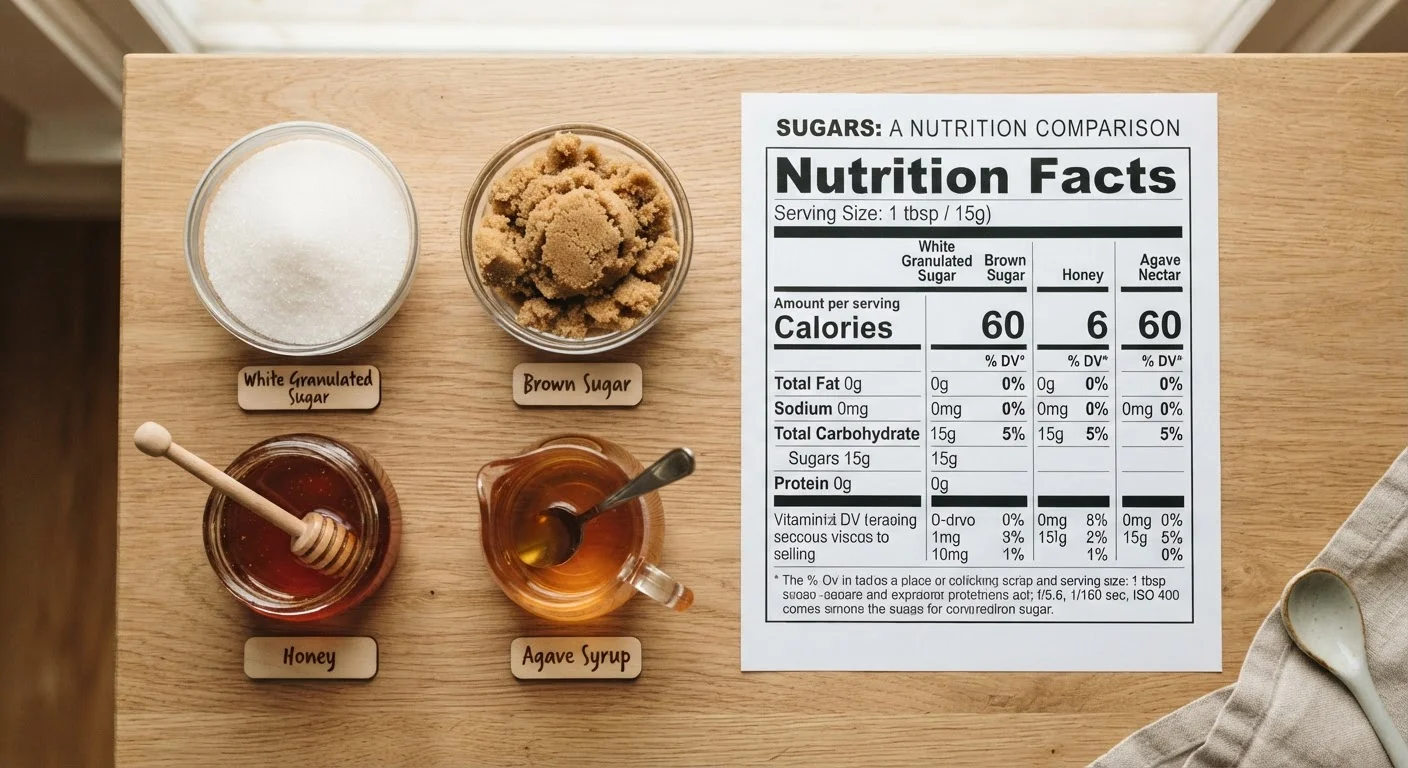
- Nectars and natural sweeteners: Agave nectar, honey, maple syrup. Despite a 'natural' image, these are classified and counted as added sugars.
- Ambiguous names: Evaporated cane juice, dehydrated cane juice, muscovado, turbinado, molasses. These are all forms of sugar derived from sugar cane.
60+
Names for added sugar on ingredient lists
Nutrition researchers have catalogued more than 60 distinct names used for added sugars across packaged food labels in the U.S.
17 tsp
Average daily added sugar intake in the U.S.
According to the CDC, American adults consume an average of about 17 teaspoons of added sugar per day - well above most professional guidance.
50g
FDA daily reference value for added sugars
The FDA sets 50 grams of added sugar as the Daily Reference Value used to calculate the % Daily Value shown on Nutrition Facts labels.
How to Use the Nutrition Facts Label
Since 2020, the updated FDA Nutrition Facts panel has required a dedicated 'Added Sugars' sub-line beneath the total sugars line. This is the most direct tool available. It tells you exactly how many grams of sugar were added - not how much sugar the food contains naturally.
The % Daily Value beside it uses a reference of 50 grams of added sugar per day (based on a 2,000-calorie diet). A bowl of flavored yogurt showing 20% DV for added sugars means that single serving accounts for a fifth of the daily reference amount before anything else you eat.
The American Heart Association's guidance is more conservative: roughly 25 grams per day for women and 36 grams for men. Context matters - those numbers can be reached quickly in a single flavored beverage or a small serving of sweetened cereal.
For a broader look at what every section of a food label is telling you, see our full guide on reading product labels.
Quick Label Scan: A Two-Step Check
First, look at the 'Added Sugars' line on the Nutrition Facts panel and note the gram amount and % Daily Value. Then flip to the ingredient list and scan for any sugar alias within the first five ingredients. If you find multiple aliases anywhere in the list, add them mentally - they represent the same category of ingredient split across different names.
What This Means for Your Diet
Recognizing added sugar on labels doesn't require eliminating it entirely - context and overall dietary pattern matter far more than any single ingredient. The goal is informed choice: knowing when a food marketed as 'wholesome' or 'natural' is delivering a meaningful added sugar load, and deciding whether that fits your overall eating pattern.
Foods that frequently surprise people with high added sugar content include flavored yogurts, granola bars, bottled salad dressings, plant-based milks, pasta sauces, and 'health' cereals. Reading the label takes under a minute and provides far more reliable information than front-of-package claims like 'reduced sugar,' 'lightly sweetened,' or 'made with real fruit.'
If you have specific health conditions - such as diabetes, metabolic syndrome, or heart disease - the appropriate level of added sugar for your individual situation is best discussed with a registered dietitian or your healthcare provider. This article provides general nutritional information, not personalized medical guidance.