

Key Takeaways
Why the Ingredient List Exists - and What It Actually Tells You
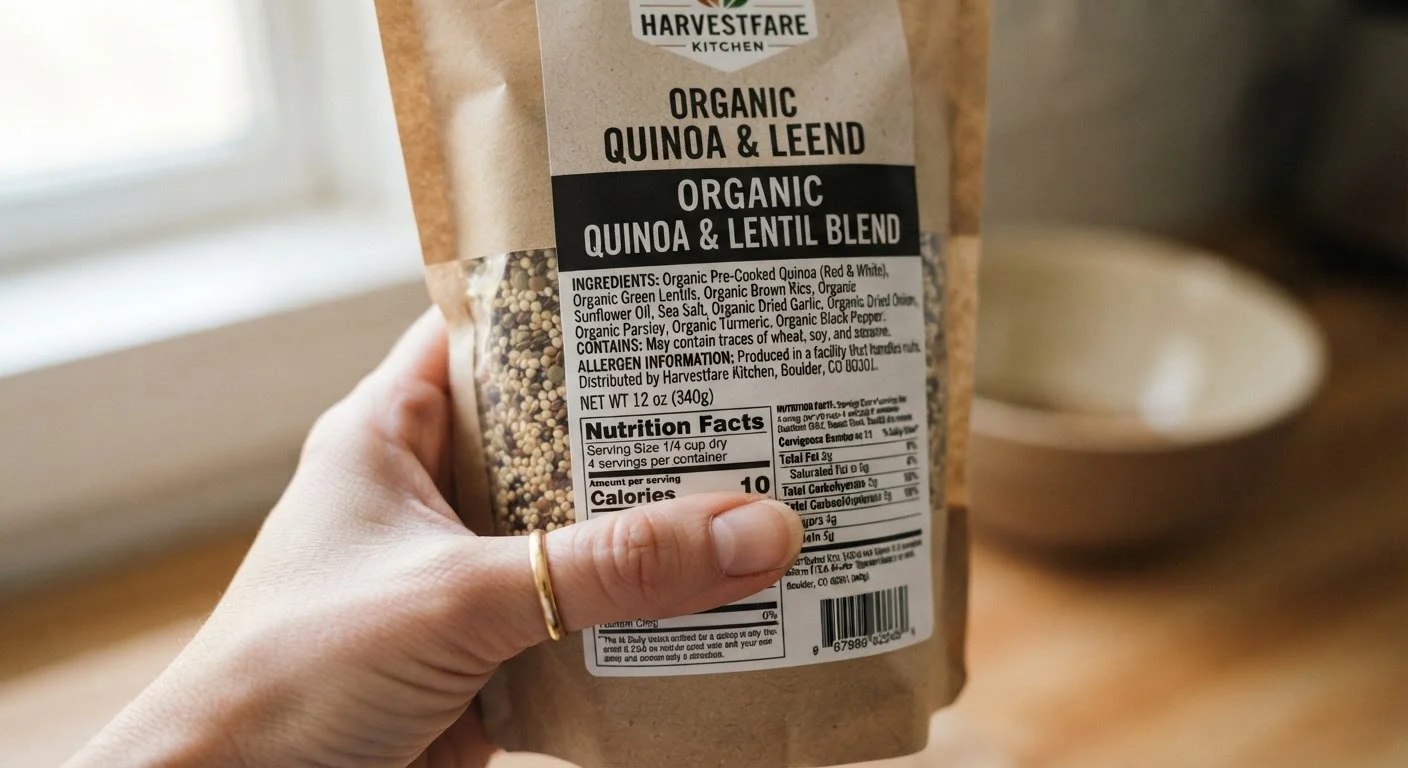
Under U.S. Food and Drug Administration (FDA) regulations, packaged food manufacturers must list every ingredient in descending order by weight. That single rule is the most useful thing to understand: whatever appears first makes up the largest proportion of the product by weight at the time it was mixed or processed.
This means a bread listing whole wheat flour as its first ingredient contains more whole wheat flour than anything else - while one listing enriched wheat flour first is primarily made from refined grain. For a deeper look at what that distinction means nutritionally, see our guide to whole grains vs. refined grains.
The ingredient list doesn't tell you everything - quantities of individual ingredients aren't required unless a food makes a specific claim about them. That's why reading it alongside the Nutrition Facts panel gives you the most complete picture.
What to Actually Look For
Rather than trying to evaluate every ingredient, focus your attention on a few high-signal areas:
The First Three to Five Ingredients
These items constitute the bulk of what you're eating. If whole foods - vegetables, legumes, whole grains, lean proteins - appear near the top, that's a meaningful signal. If refined flours, sugars, or oils dominate, the nutritional profile reflects that.
Added Sugars by Any Name
Sugar is legally required to be broken out on the Nutrition Facts panel, but it can appear scattered throughout the ingredient list under dozens of aliases: sucrose, dextrose, maltose, corn syrup, agave nectar, cane juice, and more. Our article on how added sugar shows up on labels covers the full roster. When multiple sugar variants appear across the list, they collectively may represent a larger proportion than any single name suggests.
Sodium-Containing Compounds
Sodium shows up not only as salt but as sodium benzoate, sodium nitrate, monosodium glutamate (MSG), and other compounds. If you're monitoring sodium intake for health reasons, scanning for these terms matters - though the Nutrition Facts panel will give you the actual milligram total.
Use Ingredient Order Strategically
When comparing two similar products, line up their ingredient lists side by side. The product that lists a whole food first - rather than a refined grain or sweetener - generally has a stronger nutritional foundation. This quick comparison takes seconds and often reveals meaningful differences hidden behind similar front-of-pack marketing.
What You Can Safely Ignore
Ingredient lists can look alarming at first glance, especially when they include multisyllabic chemical names. Here's what generally doesn't warrant concern:
Long Names ≠ Dangerous Ingredients
Many intimidating-sounding ingredients are simply vitamins, minerals, or naturally derived compounds. Pyridoxine hydrochloride is vitamin B6. Ascorbic acid is vitamin C. Tocopherols are a form of vitamin E used as a natural preservative. Our quick-reference guide to vitamins and minerals can help you identify common nutrient names on sight.
Approved Additives and Preservatives
The FDA maintains a list of substances "Generally Recognized As Safe" (GRAS). Most stabilizers, emulsifiers, and preservatives appearing on mainstream food labels fall into this category and have decades of regulatory review behind them. For most people, these ingredients at typical dietary exposure levels are not a concern - though individuals with specific sensitivities should consult a healthcare provider.
Front-of-Pack Marketing Claims
Words like "natural," "wholesome," "artisan," or "clean" on the front of a package have no standardized legal definition in U.S. food law and carry no nutritional guarantee. Flip the package over and read the actual list instead. This connects to broader label-reading skills covered in reading product labels without getting lost in the fine print.
Allergies Require Careful Label Reading
If you or someone in your household has a confirmed food allergy, ingredient scanning is only a starting point. The FDA requires the top nine major allergens (milk, eggs, fish, shellfish, tree nuts, peanuts, wheat, soybeans, and sesame) to be declared clearly - but cross-contamination risks require reading "may contain" advisory statements as well. Always consult an allergist or physician for guidance tailored to a specific allergy.
Step-by-Step: Reading an Ingredient List at the Store
Use the following process each time you pick up a new packaged product. It takes less than a minute once you've practiced it a few times.
What you will need
Flip to the back and find the ingredient list
Ignore front-of-pack claims entirely for now. Locate the ingredient list, which by law must appear on the label of any multi-ingredient packaged food sold in the U.S.
Read the first three to five ingredients
These items make up the majority of the product by weight. Ask yourself: are real, recognizable foods at the top? Or are refined grains, sugars, or oils leading the list?
Scan for added sugar aliases
Look for any of the common sugar names: corn syrup, high-fructose corn syrup, cane juice, dextrose, maltose, fructose, molasses, honey, agave, or similar. Count how many appear and note where each falls in the order.
Note sodium-containing compounds if relevant to you
If you're watching sodium, look for terms ending in "sodium" or "salt" beyond the obvious table salt entry. Then cross-check the actual milligram total on the Nutrition Facts panel for a concrete number.
Look up any unfamiliar names before assuming the worst
If an ingredient sounds alarming, search its name alongside "FDA" or "food additive" before drawing conclusions. Many intimidating names resolve to vitamins, minerals, or well-studied preservatives.
Cross-reference with the Nutrition Facts panel
The ingredient list tells you what's in a product; the Nutrition Facts panel tells you how much of key nutrients it delivers. Use both together for a complete evaluation - neither document alone gives the full picture.
Putting It All Together
Reading an ingredient list well is a skill that compounds over time. The more labels you scan, the faster you'll recognize patterns - which products lead with whole ingredients, which lean heavily on added sugars, and which use long names for perfectly ordinary nutrients.
Ingredient literacy also pairs naturally with other smart shopping habits - like using unit pricing and understanding store-brand versus name-brand differences. Combined with the Nutrition Facts panel, you'll have a reliable, two-part system for evaluating almost any packaged food.
If you manage dietary needs for a pet as well, the same core skills apply: our guide to reading a pet food label walks through how ingredient order and other label elements work in animal nutrition.
This article is for general informational and educational purposes only and does not constitute medical or dietary advice. Individuals with specific health conditions, allergies, or dietary needs should consult a qualified healthcare professional or registered dietitian.