

Key Takeaways
Why Most Grooming Routines Fail Before They Start
The most common reason grooming routines fall apart isn't laziness - it's that they're built backward. People tend to buy products first and build habits second, which creates an unsustainable setup. A collection of ten products with no clear order of use, purpose, or frequency is a routine in name only.
The fix is intentional simplicity. A grooming routine should answer three questions: What does my skin need? What does my hair need? What general hygiene tasks need a consistent home in my schedule? Once those are defined, the routine almost builds itself.
It also helps to recognize that grooming and skincare are related but distinct. The Beauty Basics hub covers the wider landscape if you want to explore skincare, makeup, or personal care in more depth once the fundamentals are in place.
Gentle facial cleanser
Removes oil, dirt, and product buildup without stripping the skin barrier.
Fragrance-free moisturizer
Maintains skin hydration and helps protect against environmental stress.
Broad-spectrum SPF 30+ sunscreen
Daily UV protection - widely considered a non-negotiable step in any skincare routine.
Wide-tooth comb or appropriate hair brush
Detangles without causing unnecessary breakage based on hair type.
Mild shampoo and conditioner
Cleanses the scalp and hydrates hair without harsh sulfates that strip natural oils.
Nail clippers and a nail file
Keeps nails trimmed and shaped - a basic hygiene step that's easy to neglect.
Lip balm
Prevents dryness and chapping, especially in seasonal temperature changes.
Deodorant or antiperspirant
Controls odor and perspiration throughout the day.
What You'll Need to Get Started
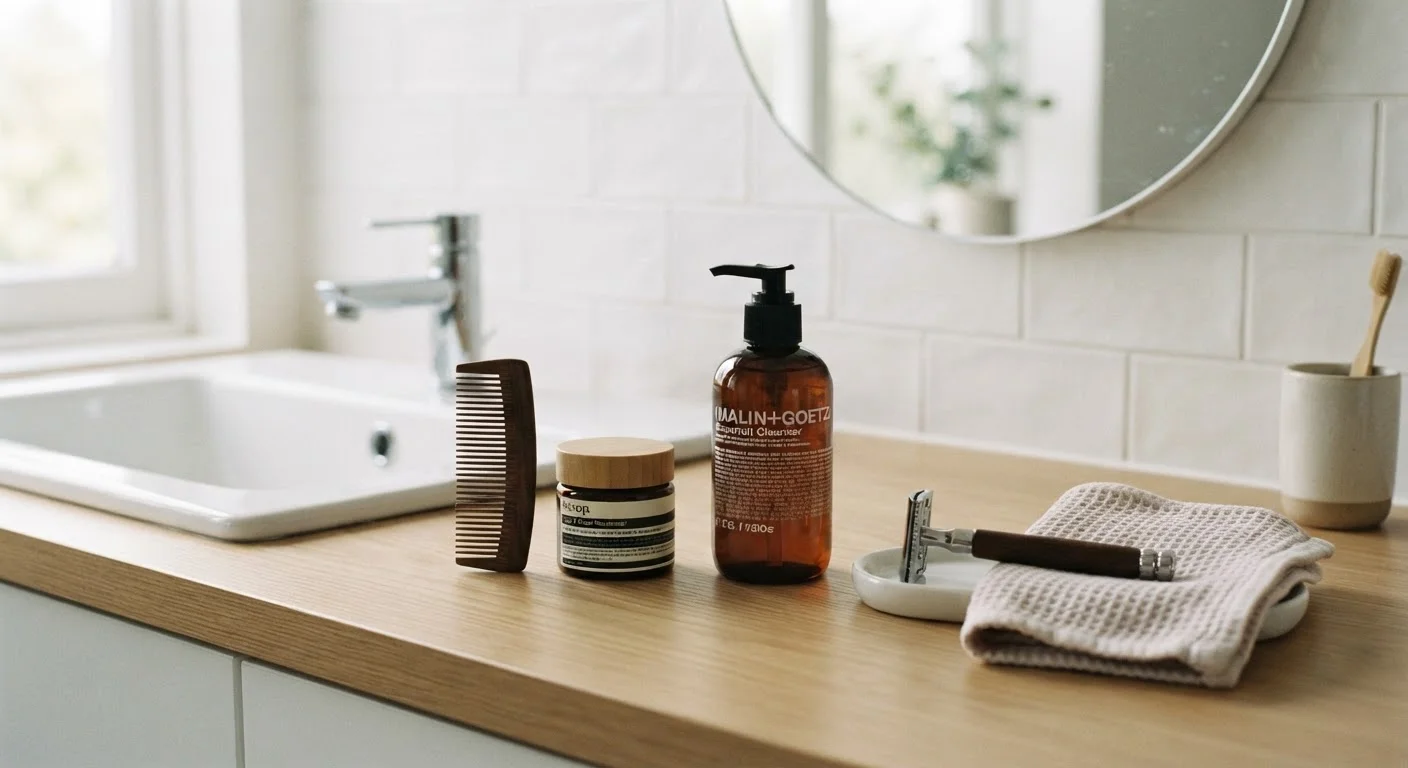
Good grooming doesn't require a large product arsenal. The essentials for most people fit in a single drawer: a cleanser, moisturizer, sunscreen, shampoo, conditioner, a brush or comb, deodorant, and nail clippers. Beyond that, additions should be deliberate responses to specific needs - not impulse buys.
What you will need
Products Aren't One-Size-Fits-All
Skin type, hair texture, and individual health factors vary significantly from person to person. If you experience persistent irritation, breakouts, or scalp issues after introducing a new product, discontinue use and consult a dermatologist. This guide provides general educational information - it is not a substitute for professional skin or medical advice.
For anyone starting from scratch with skincare specifically, skincare routines that actually hold up over time explains the principles behind routines that stay sustainable, which is as relevant for a grooming beginner as for someone rebuilding after years of inconsistency.
Step-by-Step: Building the Routine
Anchor Habits to Existing Ones
Grooming routines stick best when they're attached to something you already do automatically - brushing teeth, making coffee, or showering. This technique, sometimes called habit stacking, reduces the mental effort needed to maintain consistency. Start with two or three steps max and build from there.
Audit What You Already Own
Before buying anything, take stock of what's already in your bathroom. Check expiration dates, consolidate duplicates, and discard anything that's separated, changed color, or smells off. Many people discover they have more than they need - or have products working against each other.
Use the routine audit checklist to methodically evaluate gaps and redundancies before spending a dollar more.
Build Your Morning Routine First
Morning grooming sets your baseline for the day. Keep it functional: cleanse your face with a gentle wash, apply moisturizer, and finish with a broad-spectrum sunscreen. For hair, focus on whatever your type needs to look presentable - that might mean a quick brush, a damp restyle, or a leave-in product. Add deodorant before dressing.
Resist the urge to pile on additional steps. Three to five actions done consistently will always outperform a ten-step routine you abandon by week two.
Establish a Simple Evening Wind-Down
Evening grooming is primarily about removing what accumulated during the day - cleanse the face to clear sunscreen, sweat, and pollutants. Follow with a moisturizer suited for overnight use if your skin tends toward dryness. Evening is also the right time for any targeted treatments (like a retinoid or spot treatment, if your dermatologist has recommended one).
If you're also trying to build a broader pre-sleep habit structure, the personal wind-down routine guide covers how to layer these habits together effectively.
Add Weekly Maintenance Tasks
Some grooming tasks don't need to happen daily. Set a consistent weekly window - Sunday evening works for many - to handle nail trimming, deeper hair conditioning, exfoliation (if appropriate for your skin type), and any shaving or hair removal. Scheduling these in advance means they actually happen instead of getting perpetually postponed.
Evaluate and Adjust Every Four to Six Weeks
Skin and hair needs shift with seasons, stress, diet, and age. Set a reminder every four to six weeks to do a brief check-in: Is your skin feeling balanced? Is your hair responding well? Are there steps you're skipping consistently, suggesting they don't fit your life? A routine that works is one you actually do.
For a deeper look at how lifestyle factors like sleep and hydration interact with skin health, see personal care habits that support skin health.
Don't Overload Your Routine Early On
Introducing multiple new products at once makes it nearly impossible to identify what's helping or causing a reaction. Add one product at a time and give it at least two weeks before evaluating its effect. More products rarely means better results.
Keeping It Realistic Long-Term
A grooming routine is never fully finished - it's a living structure that adjusts as you do. The goal isn't a perfect regimen; it's a dependable one. If a step repeatedly gets skipped, that's useful data. Either the step isn't necessary for you, or it needs to move to a different time of day.
If you're also building out related habits - like a makeup routine - everyday makeup for beginners offers a practical entry point that complements a grooming foundation without overwhelming it.
This article is for general informational and educational purposes only. It does not constitute medical, dermatological, or professional health advice. Consult a qualified healthcare provider for concerns about your skin, scalp, or any reactions to personal care products.