

Key Takeaways
Start here
Why Makeup Feels Overwhelming (And Why It Doesn't Have To)
Next
The Essential Tools Every Beginner Needs
Then
Key Makeup Terms Decoded
Apply it
A Simple Everyday Routine to Start With
Keep going
Building Confidence Over Time
Why Makeup Feels Overwhelming (And Why It Doesn't Have To)
Walk down any beauty aisle and you're instantly met with hundreds of products, overlapping categories, and a vocabulary that reads like a foreign language. It's genuinely a lot - and if you've felt paralyzed before even picking up a brush, you're in good company.
The truth is, most everyday makeup looks rely on just a handful of products applied with basic technique. The beauty industry's wide range of offerings exists because people have different goals, skin types, and preferences - not because you need all of it to get started.
Makeup is also deeply personal. There's no universal routine that works for everyone, and that's actually freeing. This guide strips everything back to the fundamentals so you can build a starting point that's yours - and expand from there only when you want to. If you're also building out your overall personal care habits, building a grooming routine from scratch is a helpful companion read.
The Essential Tools Every Beginner Needs
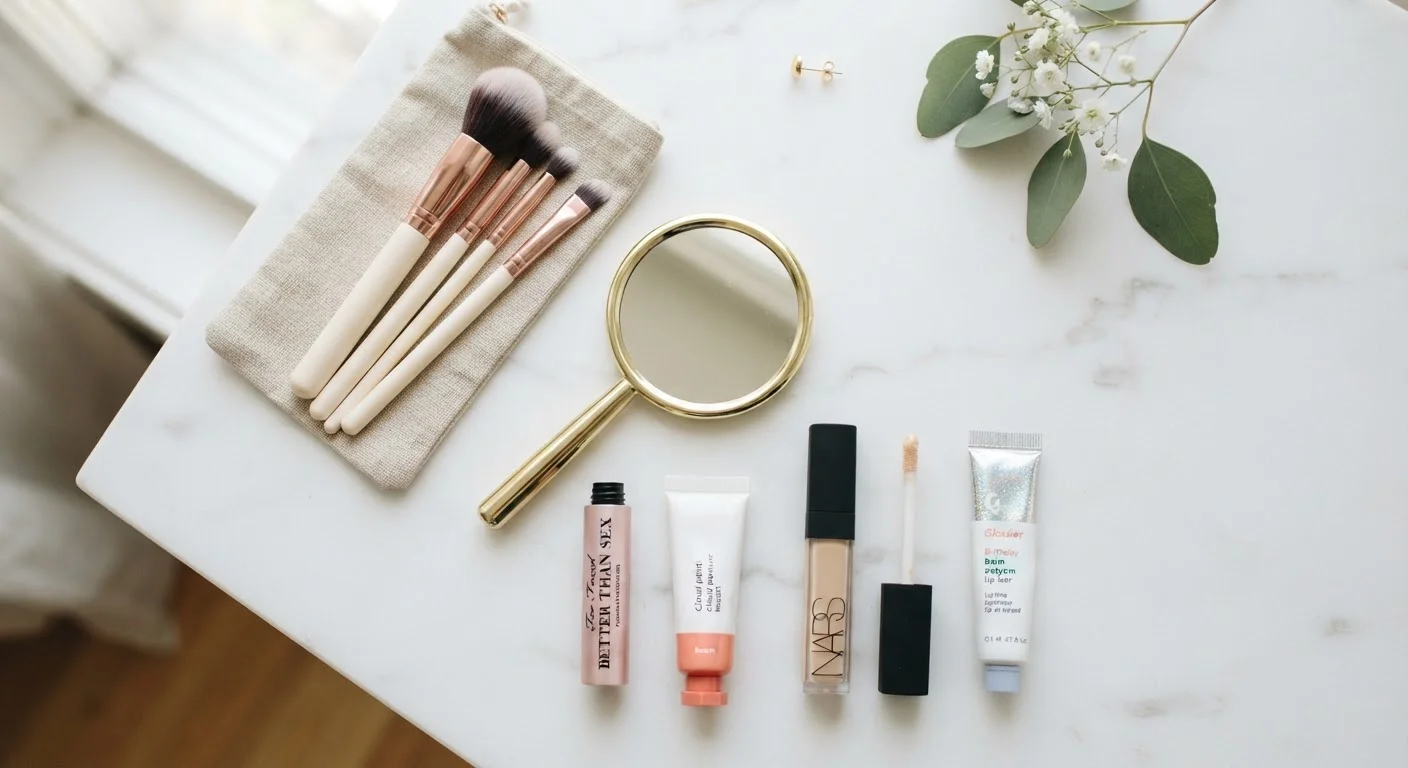
Before products, tools matter. Having even a basic set of the right applicators makes a visible difference in how makeup looks and blends.
Start With Just Three Brushes
If buying a full brush set feels like too much too soon, start with just three: a sponge or flat brush for foundation, a fluffy brush for blending, and a spoolie for brows. These three cover the majority of everyday techniques and won't crowd your bathroom counter.
- Flat foundation brush or sponge: Applies base products evenly. A damp makeup sponge is especially forgiving for beginners because it blends out streaks naturally.
- Fluffy blending brush: Used to buff out concealer, blend eyeshadow, or apply powder. Look for soft, densely packed bristles.
- Small angled brush: Ideal for brows and can double as a liner brush.
- Eyelash curler: A manual curler opens up the eyes before mascara - one of the highest-impact, lowest-effort tools available.
- Spoolie brush: The mascara wand-shaped brush that grooms brows and separates lashes after mascara. Often found on the opposite end of brow pencils.
Synthetic brushes are easy to clean and work well with both cream and powder formulas - a practical choice when you're just starting out.
Key Makeup Terms Decoded
Primer
A product applied to clean, moisturized skin before makeup. It creates a smooth surface that helps foundation and concealer adhere and last longer throughout the day.
Concealer
A pigmented product used to cover dark circles, redness, or blemishes. It typically offers more coverage than foundation and comes in stick, liquid, or pot form.
Setting spray
A fine mist spritzed over finished makeup to help it stay in place longer. It can also give the skin a more natural, skin-like appearance by melding layers together.
Coverage
How much a base product conceals the skin. Sheer coverage lets most of your skin show through; full coverage masks most imperfections. Beginners often find medium coverage the most flattering and easiest to apply.
Blending
The process of working a product into the skin or between colors so there are no harsh lines or visible edges. Patting and circular motions with a brush or sponge are common blending techniques.
BB Cream
Short for 'beauty balm' or 'blemish balm,' a lightweight tinted product that combines skincare benefits (like hydration or SPF) with a touch of coverage. A popular choice for a natural, low-effort look.
Understanding what products actually do removes a huge amount of guesswork. When you read a label or watch a tutorial, these terms come up constantly. Once you know them, product choices get much simpler.
Not sure which type of base product is right for your skin? Our article on foundation, tinted moisturizer, and BB cream compares the options clearly. And if the matte vs. dewy debate has you confused, choosing a finish that matches your skin walks you through it.
A Simple Everyday Routine to Start With
The goal for everyday makeup is a routine you can realistically complete in under 10 minutes. Here's a beginner-friendly sequence:
- Moisturize first. Makeup sits better on hydrated skin. A simple moisturizer - or SPF moisturizer - is all you need. See our guide to building a skincare routine from scratch for more on this step.
- Apply base. A tinted moisturizer or BB cream gives light, natural-looking coverage without the weight of full foundation. Blend with a damp sponge using patting - not dragging - motions.
- Conceal where needed. Dab a small amount of concealer under the eyes or over any spots. Blend the edges gently so there's no harsh line.
- Add a little color. A cream blush swept onto the apples of the cheeks and blended upward adds warmth and dimension. Cream formulas are easier for beginners because they blend naturally into skin.
- Define the brows. Fill in sparse areas lightly with a brow pencil or brow gel. Brows frame the face and make an outsized difference with minimal effort.
- Mascara. Curl lashes first, then apply one or two coats of mascara with a wiggling motion at the root to add volume and length.
- Finish the lips. A tinted balm or sheer lip color keeps things simple and hydrated.
Don't Skip Makeup Removal
Sleeping in makeup - even light coverage - can contribute to clogged pores and skin irritation over time. Make removal a non-negotiable final step, even on tired nights. Micellar water applied with a cotton pad requires almost no effort and works well on most product types.
Building Confidence Over Time
No one gets it perfect on the first try - and that's completely fine. Makeup is a skill, and like any skill, it responds to practice. The more often you do your routine, the faster and more intuitive it becomes.
Once you're comfortable with the basics, you can explore additional techniques like eyeshadow blending, eyeliner, or contouring. Add one new element at a time rather than overhauling everything at once. That way, you always have a reliable fallback routine on days when you're in a hurry.
Personal style and makeup go hand in hand. If you're also figuring out how to express yourself through clothing, finding your aesthetic as a style beginner is a great next step. Likewise, getting dressed without the stress can help tie your whole look together with confidence.
The most important thing? Your routine should feel like something that supports you - not a performance for anyone else. Start simple, be patient with yourself, and build from there.