

Key Takeaways
Start here
What Is a Capsule Wardrobe?
Understand the why
Why Decision Fatigue Is a Real Wardrobe Problem
Build your foundation
The Core Pieces That Make It Work
Take action
How to Audit Your Existing Closet
Go further
Making Your Capsule Work Across Seasons
What Is a Capsule Wardrobe?
A capsule wardrobe is a deliberately small, cohesive collection of clothing designed so that virtually every piece works with every other piece. The term was popularized in the 1970s by London boutique owner Susie Faux, who argued that a handful of well-chosen items outperformed a closet stuffed with rarely-worn options.
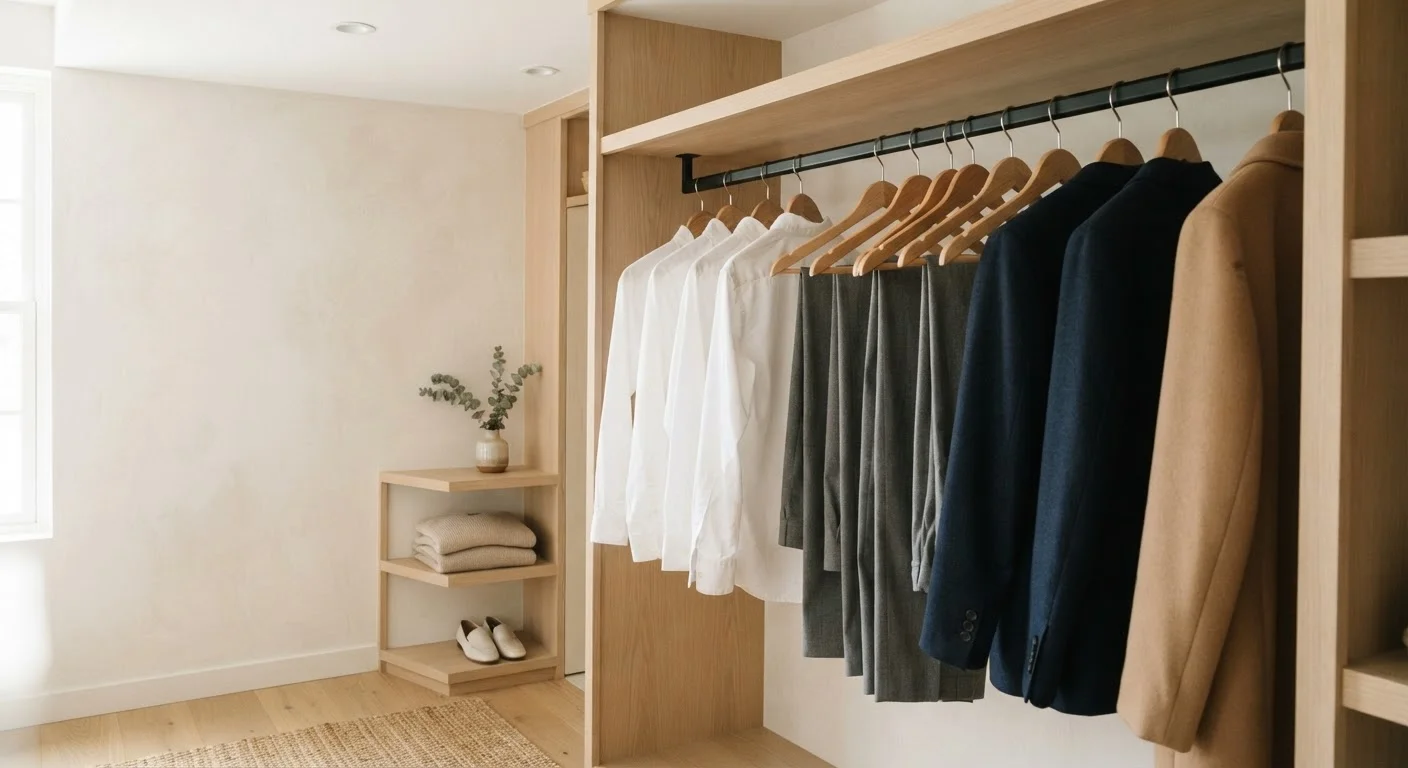
The core idea is intentionality over volume. Instead of accumulating clothes in response to sales, trends, or impulse purchases, you choose pieces that earn their place through versatility and durability. Each item should serve multiple roles - a dark blazer that works over a dress for dinner and over jeans on a weekend, for example.
This approach is explored further within the broader everyday fashion space, where the underlying principle is the same: dress effectively for real life, not for an imaginary one. If you're curious how this philosophy compares to a different but related method, our article on capsule vs. curated wardrobes breaks down both approaches clearly.
Capsule wardrobe
A small, intentional clothing collection where every piece is chosen to work with every other piece, maximizing outfit combinations with minimal items.
Decision fatigue
The mental exhaustion that builds up from making repeated choices, which can reduce the quality of later decisions throughout the day.
Versatility
A garment's ability to work across multiple outfits, occasions, or seasons - the primary criteria for whether something belongs in a capsule.
Wardrobe audit
A deliberate review of everything you own, sorting items by whether they're worn, functional, and genuinely useful to your daily life.
Neutral base
Colors like white, black, grey, navy, and camel that pair easily with almost anything else, forming the most interchangeable foundation for a capsule.
Why Decision Fatigue Is a Real Wardrobe Problem
Decision fatigue is the measurable mental exhaustion that comes from making too many choices - even low-stakes ones. Research in cognitive psychology has consistently shown that willpower and judgment quality decline after repeated decisions. Your morning outfit choice is rarely the only thing draining that resource.
A closet packed with options that don't coordinate forces you into a daily problem-solving exercise before the day has started. The result is either paralysis (staring at a full closet feeling like you have nothing to wear) or autopilot defaults that leave you feeling underdressed or mismatched.
A capsule wardrobe eliminates most of that friction. When every item genuinely goes with everything else, getting dressed becomes a quick, confident process rather than a daily negotiation.
Start with your actual life, not an ideal one
Before selecting capsule pieces, list the contexts you actually dress for each week - not what you wish your life included. If you work remotely and rarely attend formal events, build around that reality. A capsule built for your real schedule will get used; one built for an imaginary version of your life won't.
The Core Pieces That Make It Work
A functional capsule is built around a small set of categories. These aren't rigid rules - your specific lifestyle, climate, and dress codes shape the exact mix - but most working capsules include:
- Neutral-base tops: Two or three well-fitting plain tees, one or two button-front shirts, and a simple knit or sweater in white, grey, navy, or black cover the majority of daily needs.
- Versatile bottoms: Dark or mid-wash jeans, one pair of tailored trousers, and (if relevant to your lifestyle) a simple skirt or chino. These should pair with every top you own.
- A structured layer: A blazer or structured jacket that can elevate casual looks and anchor more formal ones is one of the highest-value items in any capsule.
- A quality outer layer: A coat or jacket suited to your climate that works over everything - not a novelty piece, but one you'll reach for daily.
- Two to three pairs of shoes: Typically a clean sneaker or casual flat, a leather or leather-look shoe for more polished occasions, and optionally a boot that bridges both.
Notice what's missing: trend pieces, duplicates, and anything you only wear once a year. Those belong in a separate category - or outside your closet entirely.
How to Audit Your Existing Closet
Building a capsule doesn't require buying a new wardrobe. It starts with an honest look at what you already own. Pull everything out and sort into three groups: keeps, consider, and remove.
Keeps are items you wear regularly, that fit well, and that work with multiple other things. Consider items are ones you like but haven't worn - ask honestly why. Remove means donating, selling, or discarding pieces that no longer serve you.
Once you've identified your keeps, lay them out and check for actual versatility. How many outfits can you build from them? If the answer is fewer combinations than you expected, that reveals the gaps worth addressing. Our guide on getting more outfits from fewer clothes covers specific mixing strategies once your core is in place.
If your audit reveals genuine gaps and you need to fill them, building a functional wardrobe on a tight budget offers practical guidance for doing so without overspending.
Don't discard items impulsively
Performing a closet audit in one session can trigger an urge to remove everything that isn't perfect. Resist that impulse. Live with your sorted piles for a day or two before permanently removing items - some 'consider' pieces will prove their worth once you see the full picture of what remains.
Making Your Capsule Work Across Seasons
One of the most common misconceptions about capsule wardrobes is that they require a total seasonal overhaul. In practice, a well-built capsule has a permanent core - pieces that work year-round - supplemented by a small rotating layer of weather-appropriate items.
Your core (dark trousers, plain tees, a blazer, neutral shoes) doesn't leave the rotation. What changes are layers: a linen shirt replaces a heavy knit in warm months; a wool coat comes out in winter; lightweight chinos swap in for heavier fabric. The swap is additive, not a full replacement.
For a practical checklist on handling seasonal transitions without turning your bedroom into a sorting operation, see our guide on seasonal wardrobe transitions. The goal throughout is a closet that functions quietly in the background - never a source of stress, always ready when you need it.
The capsule wardrobe concept fits naturally within a broader approach to smart shopping: buying less, buying better, and making intentional choices that deliver long-term value over impulse variety.