

Key Takeaways
Why Pet Nutrition Myths Are So Persistent
Pet owners genuinely want what's best for their animals, which is part of why nutrition myths spread so easily. A neighbor swears their dog has eaten garlic for years without issue. A social media account promotes raw chicken as ancestral wisdom. A well-meaning friend insists cats love milk. These claims feel intuitive - but veterinary science tells a different story.
Understanding where these myths come from, and why they're wrong, can protect your pet from accidental poisoning, nutritional deficiencies, and costly veterinary emergencies. For a broader look at misleading pet health beliefs, see Common Pet Health Myths That Vets Wish Would Go Away.
Myth
Garlic is fine for dogs in small amounts - some people even add it to food as a natural flea repellent.
Fact
Garlic is toxic to dogs and cats at any dose. There is no established safe amount.
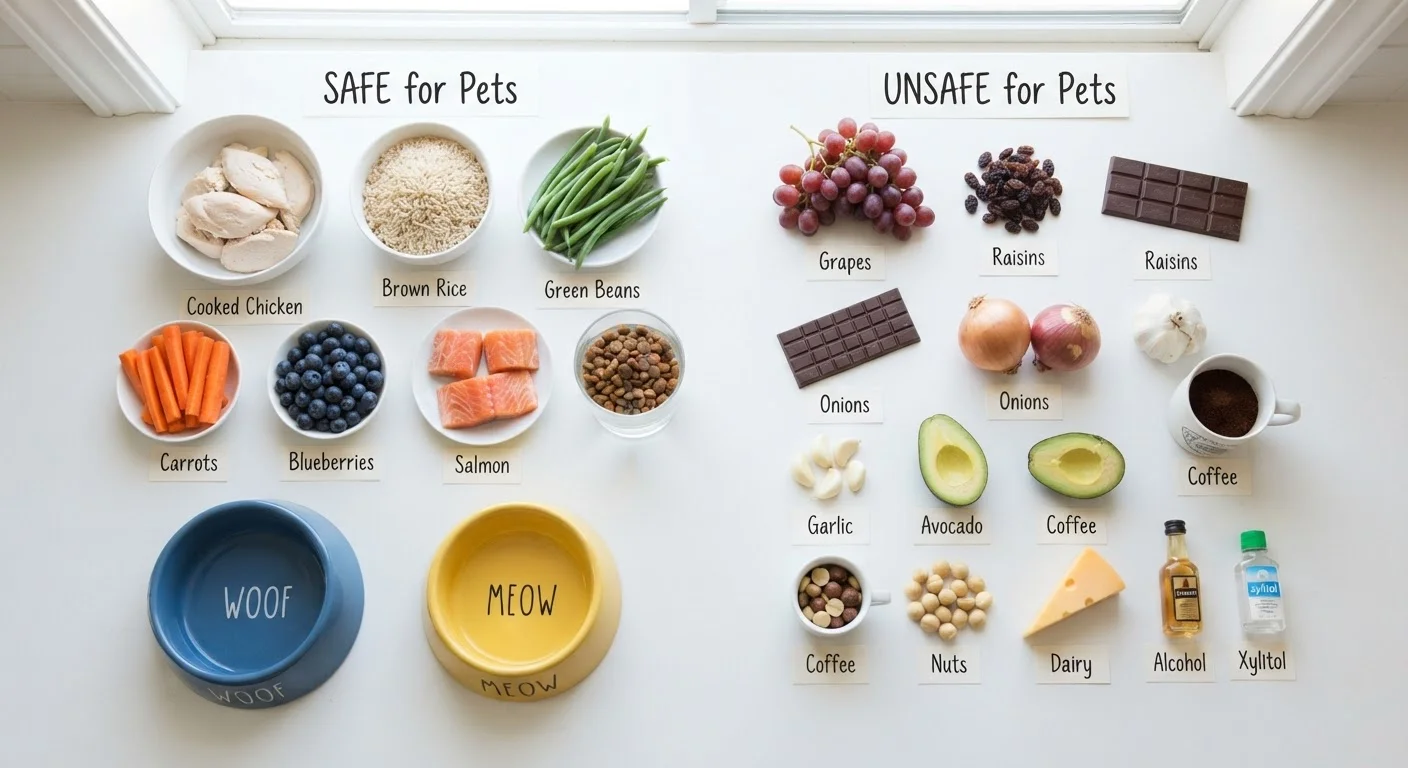
Garlic belongs to the Allium family, which includes onions, leeks, and chives. These plants contain compounds called organosulfoxides that damage red blood cells in dogs and cats, potentially causing hemolytic anemia. Cats are especially sensitive. Toxicity can result from a single large exposure or repeated small amounts over time. The ASPCA Animal Poison Control Center lists garlic as a significant toxin for companion animals. There is no veterinary-endorsed safe threshold, and its purported flea-repellent benefit has no credible scientific support.
Myth
Raw meat diets are more natural and healthier for dogs and cats - their ancestors ate raw food, so it must be better.
Fact
Raw diets carry documented risks of bacterial contamination and nutritional imbalance; they are not inherently superior.
While the evolutionary argument sounds compelling, domestic dogs and cats are not wolves or wild cats. Raw meat - including chicken, beef, and fish - can harbor Salmonella, Listeria, and E. coli, posing risks to pets and to the humans handling the food. The FDA and multiple veterinary organizations, including the American Veterinary Medical Association, advise against raw protein diets due to these contamination risks. Additionally, homemade raw diets are frequently nutritionally incomplete unless carefully formulated with veterinary guidance. "Natural" does not automatically mean safe or balanced.
Myth
Grapes and raisins are only dangerous in large quantities - a few won't hurt a dog.
Fact
Even small amounts of grapes or raisins can cause acute kidney failure in dogs, and no safe dose is known.
Grapes and raisins are among the most unpredictably toxic foods for dogs. Some dogs have experienced kidney failure after eating just a handful; others have tolerated more with no obvious reaction. Because the toxic mechanism is not yet fully understood and individual sensitivity varies enormously, veterinary consensus is that no amount should be considered safe. Symptoms of toxicity include vomiting, lethargy, decreased urination, and loss of appetite. If a dog ingests any amount, contact a veterinarian or animal poison control immediately - do not wait to see if symptoms develop.
Myth
Cats can drink cow's milk - they love it, so it must be good for them.
Fact
Most adult cats are lactose intolerant and cow's milk commonly causes digestive upset.
Kittens produce the enzyme lactase to digest their mother's milk, but most cats lose significant lactase activity as they mature. Offering cow's milk to an adult cat typically results in diarrhea, bloating, and stomach discomfort. While some cats may tolerate small amounts without obvious symptoms, milk provides no nutritional benefit that a complete cat diet doesn't already cover - and the calories can contribute to weight gain. The familiar image of a cat happily lapping up milk is more cultural tradition than nutritional guidance.
Myth
Dogs and cats can eat the same food - pet food is pet food.
Fact
Cats have unique nutritional requirements that dog food does not meet, and feeding cat food to dogs long-term creates a different set of problems.
Cats are obligate carnivores with specific needs that distinguish them sharply from dogs. They require dietary taurine (an amino acid dogs can synthesize but cats cannot), arachidonic acid, and preformed vitamin A - none of which are present in adequate amounts in standard dog food. A cat fed only dog food over time risks developing heart disease (dilated cardiomyopathy), vision problems, and skin disorders. Conversely, cat food is generally too high in protein and fat for regular dog consumption. Species-appropriate food formulated to AAFCO standards is the appropriate baseline for both.
Myth
Xylitol is only a concern in gum - other sweets are fine to share with dogs.
Fact
Xylitol appears in a wide range of products beyond gum and is highly toxic to dogs even in tiny amounts.
Xylitol is a sugar alcohol used as a sweetener in sugar-free gum, candies, baked goods, peanut butter brands, certain vitamins, and oral hygiene products. In dogs, even small quantities trigger a rapid insulin release that can cause severe hypoglycemia (low blood sugar), and higher doses have been linked to acute liver failure. Symptoms can appear within 30 minutes. Always check ingredient labels on any food before sharing with a dog - "sugar-free" is a red flag worth investigating further. Cats appear less susceptible but xylitol-containing foods offer no benefit to them either.
The Real Risks Behind Common Food Assumptions
Many dangerous food myths persist because harmful effects are often delayed or inconsistent - a dog eats a grape and seems fine, so owners conclude grapes must be safe. But dose, individual sensitivity, and cumulative exposure all affect outcomes. The absence of an immediate reaction is not proof of safety.
~232,000
Annual pet poisoning cases reported
The ASPCA Animal Poison Control Center handles roughly 232,000 animal poison exposure cases per year, with food items among the most common causes.
Top 3
Food toxin categories for dogs
Grapes/raisins, xylitol-containing products, and Allium vegetables (garlic, onions) consistently rank among the most reported food toxins in dogs according to veterinary poison control data.
Reading ingredient labels carefully is one of the most practical defenses against accidental exposure. If you want help decoding what's actually in your pet's food, reading a pet food label is a skill worth building. And before adding supplements or food toppers to your pet's diet based on wellness trends, learn what those extras actually do.
Suspected Poisoning Requires Immediate Action
If you believe your pet has eaten a toxic food, do not wait for symptoms to appear. Contact your veterinarian, an emergency animal hospital, or the ASPCA Animal Poison Control Center right away. Time is a critical factor in many food poisoning cases, and early intervention significantly improves outcomes. Never attempt to induce vomiting without direct veterinary guidance - it can make some situations worse.
This article is for general informational purposes only and does not constitute veterinary or dietary advice. Always consult a licensed veterinarian before making significant changes to your pet's diet or if you suspect your pet has ingested something harmful.