

Key Takeaways
Option A
Chemical Sunscreen
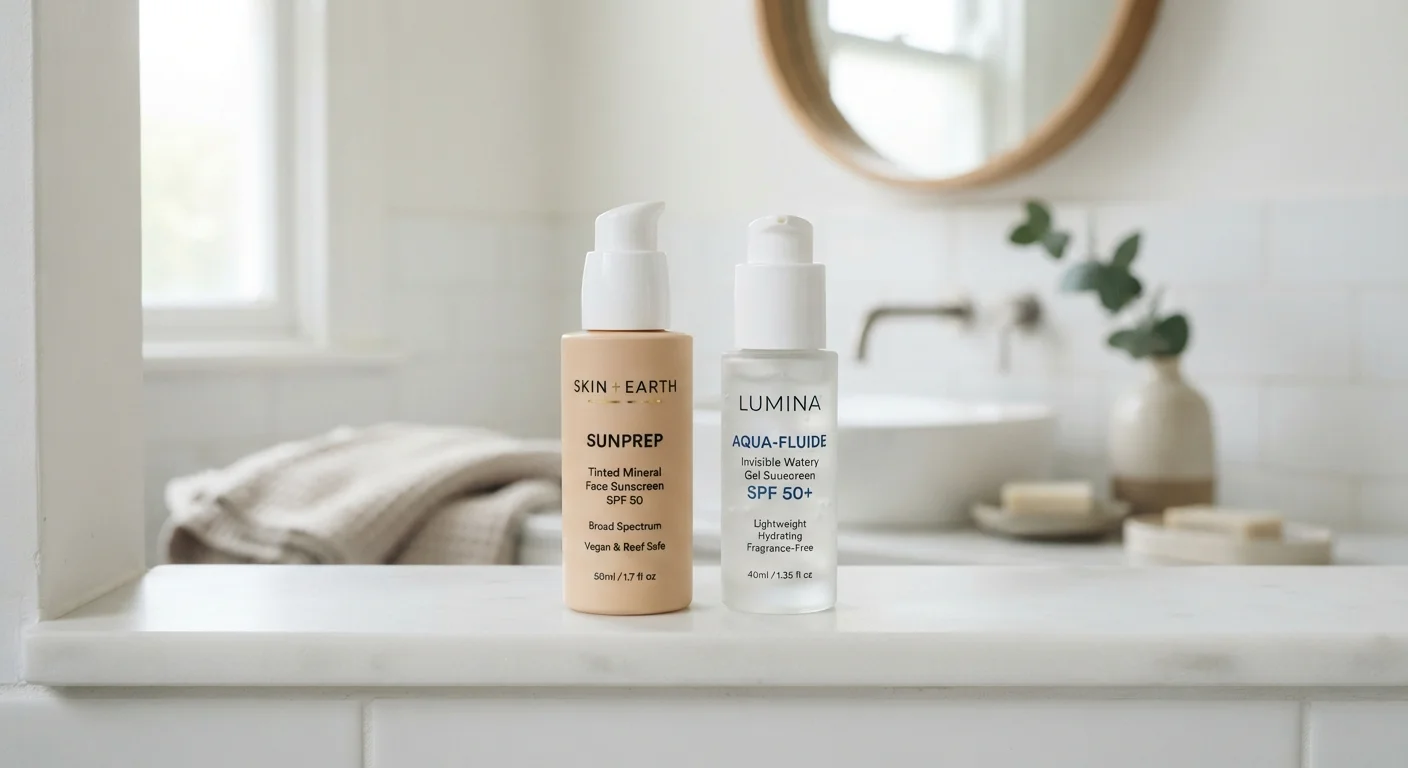
The lightweight, invisible everyday workhorse.
Best for: Those who prefer a sheer, blendable finish and wear makeup on top of SPF daily.
Option B
Physical Sunscreen
The gentle, mineral-based skin protector.
Best for: Those with sensitive or reactive skin who want immediate, straightforward broad-spectrum protection.
If you have sensitive, reactive, or rosacea-prone skin
Physical Sunscreen
Zinc oxide and titanium dioxide are less likely to trigger irritation, making mineral formulas the generally preferred starting point for easily reactive skin types.
If you want a seamless base under makeup
Chemical Sunscreen
Chemical filters absorb into the skin without residue or white cast, making them easier to layer under foundation or tinted moisturizer.
If you prefer straightforward, minimal ingredient lists
Physical Sunscreen
Mineral formulas typically rely on one or two active ingredients, which can be easier to evaluate if you're cautious about certain compounds.
If you're concerned about environmental or reef impact
Physical Sunscreen
Zinc oxide and titanium dioxide are currently classified as reef-safe by most environmental guidelines, whereas some chemical UV filters have raised ecological concerns.
If daily wearability is the biggest barrier to your SPF habit
Chemical Sunscreen
Lighter textures often make chemical sunscreens easier to wear daily, and consistent use matters more than which filter type you choose.
How Each Type Actually Works
The core difference between chemical and physical sunscreens comes down to their mechanism of action - and understanding it makes the rest of the conversation much clearer.
Chemical sunscreens contain organic (carbon-based) UV-absorbing compounds - such as avobenzone, octinoxate, or oxybenzone - that absorb ultraviolet radiation and convert it into a small amount of heat, which then disperses from the skin. They typically need about 15-20 minutes after application to become fully effective.
Physical sunscreens (also called mineral sunscreens) use zinc oxide, titanium dioxide, or a combination of both. These ingredients sit on the surface of the skin and work by scattering and reflecting UV rays before they can penetrate. They're effective immediately upon application. For a deeper look at how daily SPF habits hold up over time, see why dermatologists treat sunscreen as non-negotiable.
| Criterion | Chemical Sunscreen | Physical Sunscreen |
|---|---|---|
| How it works | Absorbs UV, converts to heat | Reflects and scatters UV rays |
| Active ingredients | Avobenzone, oxybenzone, octinoxate | Zinc oxide, titanium dioxide |
| Time to effectiveness | 15-20 minutes after application | Immediate upon application |
| Finish on skin | Sheer, lightweight, invisible | Can leave white cast; thicker feel |
| Sensitivity risk | Higher for reactive skin types | Generally lower irritation potential |
| FDA safety classification | More data pending for some filters | Recognized as GRASE |
| Wears under makeup | Yes, blends easily | Can be tricky; improved formulas help |
Skin Compatibility and Texture Differences
For most people, the practical experience of wearing sunscreen daily matters as much as the science behind it. Texture, finish, and how a formula interacts with your skin type are all legitimate factors worth considering.
Chemical filters tend to produce lighter, more fluid formulas that blend invisibly into the skin - a major plus for deeper skin tones or anyone who wears SPF under makeup. The trade-off is that some chemical UV filters have been linked to irritation, stinging, or breakouts, particularly for sensitive or acne-prone skin. If you've ever had sunscreen sting your eyes on a hot day, a chemical formula was likely the culprit.
Physical sunscreens have historically left a white or ashy cast on medium-to-deep skin tones because zinc oxide and titanium dioxide are inherently opaque. Formulation technology has improved significantly, and many newer mineral sunscreens use micronized particles that reduce the white cast considerably - though it hasn't been eliminated entirely. They also tend to feel slightly thicker, which some people find reassuring and others find heavy.
Those with reactive or compromised skin may find physical formulas gentler to start with. Understanding your skin barrier can also help you recognize when a formula is disrupting rather than protecting it.
Hybrid Formulas Are Common
Many sunscreens on the market combine both chemical and physical filters to balance performance and wearability. A hybrid formula might use zinc oxide for broad-spectrum UVA coverage alongside a chemical filter for a lighter texture. If you're sensitive to a specific ingredient, checking the full active ingredient list - not just the label type - is the clearest approach. Reading ingredient labels can help you spot what's actually in a formula.
What the Science and Safety Conversation Actually Says
In recent years, questions have emerged about the safety profile of some chemical UV filters. The U.S. Food and Drug Administration (FDA) has noted that more data is needed on how certain chemical sunscreen ingredients - like oxybenzone and avobenzone - are absorbed through the skin and what, if any, health implications that may have. Importantly, this does not mean these ingredients are proven harmful; it means the research is still developing.
By contrast, the FDA has affirmed zinc oxide and titanium dioxide as GRASE - generally recognized as safe and effective. This gives many consumers and dermatologists confidence in recommending mineral formulas, particularly for children and pregnant individuals (who should always consult a healthcare provider before making skincare decisions).
2
FDA-recognized GRASE sunscreen ingredients
The FDA currently recognizes only zinc oxide and titanium dioxide as generally recognized as safe and effective among all evaluated UV filters.
15-20 min
Wait time for chemical sunscreens to activate
Most dermatologists recommend applying chemical sunscreen 15 to 20 minutes before sun exposure to allow UV filters to fully bind to skin.
If decoding ingredient lists feels overwhelming, reading a skincare ingredient label without a chemistry degree offers a practical primer on what to look for and what to skip past.