

Key Takeaways
The Logic Behind the List
The good news: you don't need to recognize every word on a skincare label to understand what you're looking at. In the United States, the FDA requires cosmetic products to list ingredients using standardized scientific names - part of a global system called INCI - in descending order by weight. That single rule changes everything about how you approach the list.
Water listed as aqua at the top? The formula is primarily water-based. An oil or butter in position two or three? You're holding a genuinely rich product. The list maps a formula from most to least dominant - read it like a recipe. Most skincare formulas share a recognizable structure: a base layer of water, oils, and humectants; a functional middle tier carrying actives; and a tail end where preservatives, fragrances, and colorants live - all at very low concentrations.
Scientific-sounding names can feel alarming, but they're almost always just standardized chemistry conventions, not warning signs. "Cetearyl alcohol" sounds harsh; it's actually a gentle fatty alcohol used to condition and thicken creams. If you enjoy applying label-reading habits across product categories, the same descending-order logic shows up when reading any ingredient list.
How to Read a Skincare Label
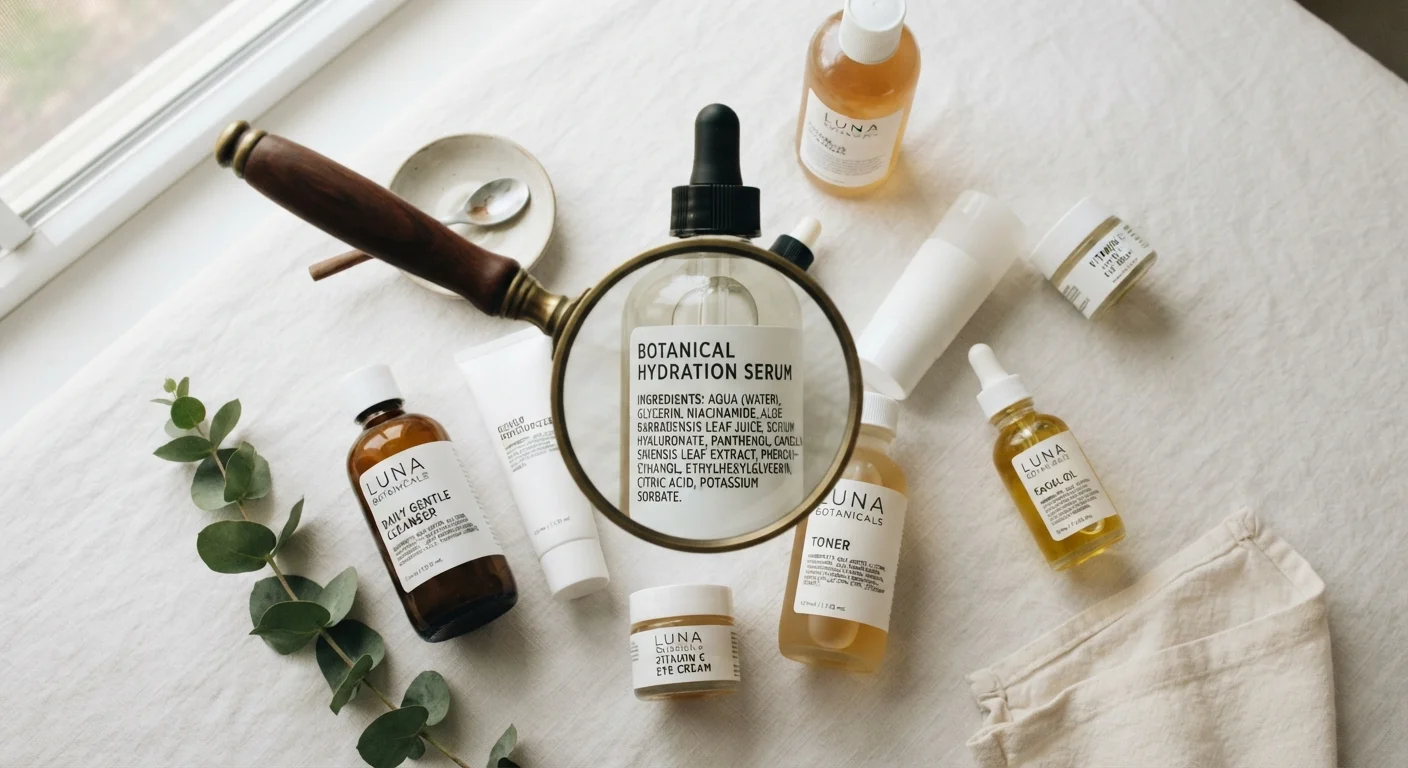
Working through a label in order - rather than scanning randomly - gives you a clear picture of what you're actually applying. The steps below work for any product, from a basic drugstore moisturizer to a layered treatment serum. Grab a product and follow along.
What you will need
Locate the full ingredient list
Look for the word "Ingredients:" on the product's back or bottom panel. FDA regulations require every cosmetic sold in the US to display this list. If a product is classified as both a cosmetic and a drug - sunscreen, dandruff shampoo, or acne treatments, for example - it will show "Active Ingredients" separately at the top, followed by "Inactive Ingredients." Read both sections; the split is a regulatory distinction, not a quality judgment.
Read from the top down - not at random
Ingredients appear from highest to lowest concentration by weight. The first ingredient listed is the most abundant component in the product. Resist the urge to jump to a name you recognize - working through the list in sequence is the whole point, because the order is the information.
Focus closely on the first five to seven entries
This upper tier accounts for the substantial majority of the formula by weight. Identify the base: is it water-forward, oil-rich, or anchored by a specific humectant like glycerin? Any active ingredient appearing here is present in a meaningful concentration and doing real work in the formula.
Identify actives in the mid-list
Targeted actives - hyaluronic acid, niacinamide, ascorbic acid (vitamin C), retinol - often appear in the middle section of the list. A lower position doesn't automatically mean ineffective; some actives deliver results at very low concentrations. Cross-check what you actually see listed against the benefits claimed on the front of the product.
Scan the tail end for preservatives and fragrance
The final stretch of the list typically holds preservatives, colorants, and fragrance at concentrations generally below 1%. Common preservatives include phenoxyethanol and sodium benzoate. Pay attention to the entries "fragrance," "parfum," or "aroma" - these are legally protected umbrella terms. If you have sensitive skin or a history of reactions, this section deserves the most careful look.
Look up unfamiliar names before dismissing them
When a name looks alarming, search its exact INCI name rather than an abbreviated version. Tocopheryl acetate is a stable form of vitamin E. Sodium PCA is a naturally occurring skin humectant. Many compounds that appear intimidating at a glance are common, well-studied ingredients. The Cosmetic Ingredient Review (CIR) publishes publicly available safety assessments that are a reliable starting point for deeper research.
What to Do With What You Find
Label literacy pays off most when you're building a skincare routine from scratch - you'll be able to evaluate whether a product's marketing actually matches its formula. A moisturizer that leads with humectants and beneficial oils is doing something genuinely different from one that leads with water and film-forming thickeners, even if both claim deep hydration on the front panel.
You don't need to memorize every compound. Focus on the top tier, note the actives you're targeting - hyaluronic acid for hydration, niacinamide for even tone, retinol for cell turnover - and flag anything in the tail end that has previously caused a reaction. For a deeper look at how chemical actives function within a formula, our guide to exfoliation acids is a natural companion. For sun-protective ingredients specifically, our SPF explainer breaks down what to look for on sunscreen labels.
The more labels you scan, the faster pattern recognition develops - and the easier it becomes to spot what's actually different between two similar-looking products.
The 1% Threshold Worth Knowing
Cosmetic chemists commonly refer to a practical dividing line: ingredients used at concentrations of 1% or less can be listed in any order after the higher-concentration entries. This means everything in the tail end of a long ingredient list is present in very small amounts. It's a useful mental benchmark - even though it isn't marked visibly on the label - when assessing how much weight to give a trailing ingredient.
'Fragrance' Conceals More Than It Reveals
In the United States, 'fragrance' (or 'parfum') on a cosmetic label is a legally permitted umbrella term that can represent a blend of dozens of undisclosed chemical compounds, protected as a trade secret. This single word can mask ingredients that are common sensitizers for some people. If you have sensitive skin, fragrance allergies, or a history of contact dermatitis, treat any 'fragrance' entry with extra care and look for products that either disclose fragrance components individually or carry a verified 'fragrance-free' designation.
This article is for general informational purposes only and does not constitute medical or dermatological advice. If you have skin concerns, known allergies, or questions about a specific ingredient, consult a qualified dermatologist or healthcare professional.