

Key Takeaways
Why Most People Already Have What They Need
The idea that building a signature look requires a wardrobe overhaul is one of the most persistent myths in personal style. In reality, most people's existing closets contain the raw material for a genuinely cohesive aesthetic - the challenge is learning to see it clearly.
A signature look is less about owning specific items and more about understanding the visual language your choices already speak. Once you can read that language, you can amplify it intentionally. This process - auditing, identifying anchors, editing, and gap-filling - is something you can do today with what you already own.
For broader context on how every dimension of personal style fits together, the complete personal style framework is a useful companion to the steps below.
What you will need
The Tools and Mindset You'll Need
The physical tools for this process are minimal - a mirror, something to write in, and your wardrobe. But the most important ingredient is a genuinely non-judgmental mindset. Resist the urge to evaluate your past choices as good or bad. You're not auditing your taste history; you're extracting useful data from it.
Full-length mirror
Lets you assess silhouette and overall proportion when trying on and editing outfits.
Style journal or notes app
Used to record style anchors, outfit observations, and gap-filling intentions.
Mood board (physical or digital)
Helps you visualize and cross-reference the aesthetic direction you're building toward.
Avoid the 'Fresh Start' Spending Trap
Clearing out your entire wardrobe and shopping from scratch is rarely necessary and often leads to regret. Most people find that 70-80% of what they already own can anchor a refined aesthetic with a few intentional additions. Resist the urge to purge before you audit.
Step-by-Step: Defining and Refining Your Look
Follow these steps in order. Each one builds on the last, and skipping ahead (especially to the gap-filling step) is where most people accidentally undermine their own progress.
Keep a Style Journal
Snap a quick photo of every outfit you wear for two weeks. Patterns will emerge fast - you'll see the same colors, silhouettes, and pieces showing up repeatedly. Those repeats are your style anchors hiding in plain sight.
Audit your wardrobe without judgment
Pull everything out - or at minimum, make everything visible. Group items loosely by category (tops, bottoms, layers, shoes, accessories). As you do, set aside anything that genuinely doesn't fit or that you haven't touched in over a year. Don't discard yet; just separate.
The goal here is visibility, not elimination. You're looking for the honest picture of what you actually own.
Identify your style anchors
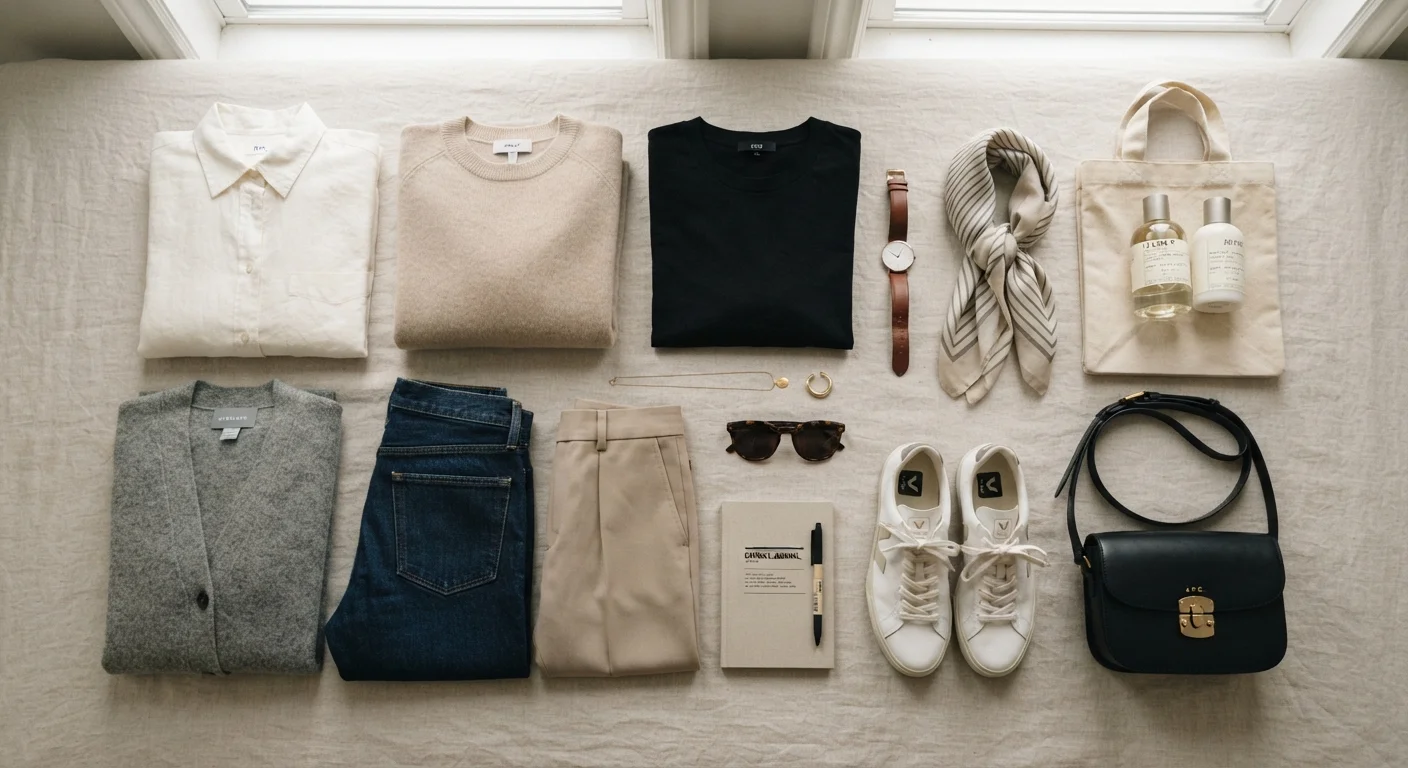
Look at the items you wear most and feel best in. Write down what they share. Are they structured or relaxed? Dark or light? Textured or smooth? Do they lean minimal or expressive? These recurring qualities are your style anchors - the non-negotiables your aesthetic is built on.
Most people find they have 3-5 anchors: a dominant color family, a preferred silhouette, and one or two texture or pattern tendencies. Understanding these gives you a filter for every future decision.
Edit with intention, not aggression
Now return to your separated pile. For each piece, ask: does this align with even one of my style anchors? If yes, it earns a place - even if it's not your favorite item. If it conflicts with all your anchors and you never reach for it, let it go.
This edit is about coherence, not minimalism. A wardrobe of 60 pieces that speaks the same visual language is far more useful than 20 pieces with no connective thread.
Map your gaps - don't just shop them
With your anchors defined and your wardrobe edited, identify genuine gaps: pieces that would complete multiple outfits or extend your range within your existing aesthetic. Write these down specifically (e.g., "a lightweight layer in my neutral palette" rather than "a jacket").
Specificity prevents impulse purchases that look appealing in a store but drift away from your actual look at home.
Build outfit formulas from what you have
A signature look isn't just the individual pieces - it's a reliable formula you can repeat in variations. Experiment with combining your anchors into 5-7 repeatable outfit structures (e.g., fitted base + relaxed layer + one statement accessory). Document what works.
These formulas become your personal style shorthand: the combinations that always feel right, always photograph well, and always communicate your aesthetic without effort.
Revisit and refine every season
A signature look isn't static - it evolves as you do. Set a recurring reminder to run a lighter version of this audit each season: Does anything feel off? Have new anchors emerged? Are there gaps worth filling? Incremental refinement keeps your look sharp without the exhaustion of starting over.
For a deeper look at keeping your aesthetic alive over time, see why personal style fades and how to prevent it.
Style Is Personal, Not Prescriptive
There is no single correct aesthetic, and no external standard your wardrobe needs to meet. The goal of building a signature look is self-expression and ease - feeling like yourself every morning, not performing a trend. Let your own preferences lead every decision in this process.
Keeping Your Signature Look Cohesive Over Time
Once your look has a clear shape, the main threat isn't boredom - it's drift. Drift happens when purchases stop being filtered through your anchors, when seasonal trends pull you in directions that don't connect to your core aesthetic, or when life changes shift what you need from your wardrobe without a corresponding intentional update.
The antidote is consistency of process, not consistency of outfit. Run your seasonal check-in, keep your gap list specific, and use your outfit formulas as a grounding reference. Style that feels effortless is almost always the product of a little quiet maintenance running in the background. For more on the habits that sustain a strong personal aesthetic, explore the common reasons personal style fades and what actually keeps it alive.