

Key Takeaways
What Personal Style Actually Means
Personal style is often mistaken for fashion - but the two are fundamentally different. Fashion is a cultural moment; style is a personal statement. Fashion changes every season, while your style is a continuous, evolving narrative about who you are, what you value, and how you want to move through the world.
Researchers and psychologists who study clothing behavior have long noted that what we wear affects how we perceive ourselves and how others read us. The idea of enclothed cognition - the mental shifts that come with wearing certain clothes - suggests that dressing intentionally isn't vanity; it's self-expression with real psychological weight.
For everyday consumers, the practical takeaway is this: developing a personal style isn't about owning the most clothes or following trends. It's about building a visual language that feels authentically yours. Explore more foundational ideas over at our Style & Beauty hub, where accessible, real-life fashion guidance is always on offer.
The Self-Discovery Phase: Understanding Your Aesthetic Instincts
Before you can build anything, you need raw material - and in this case, that material is self-knowledge. Style self-discovery doesn't require a stylist or a big budget. It requires honest reflection.
Practical Self-Discovery Tools
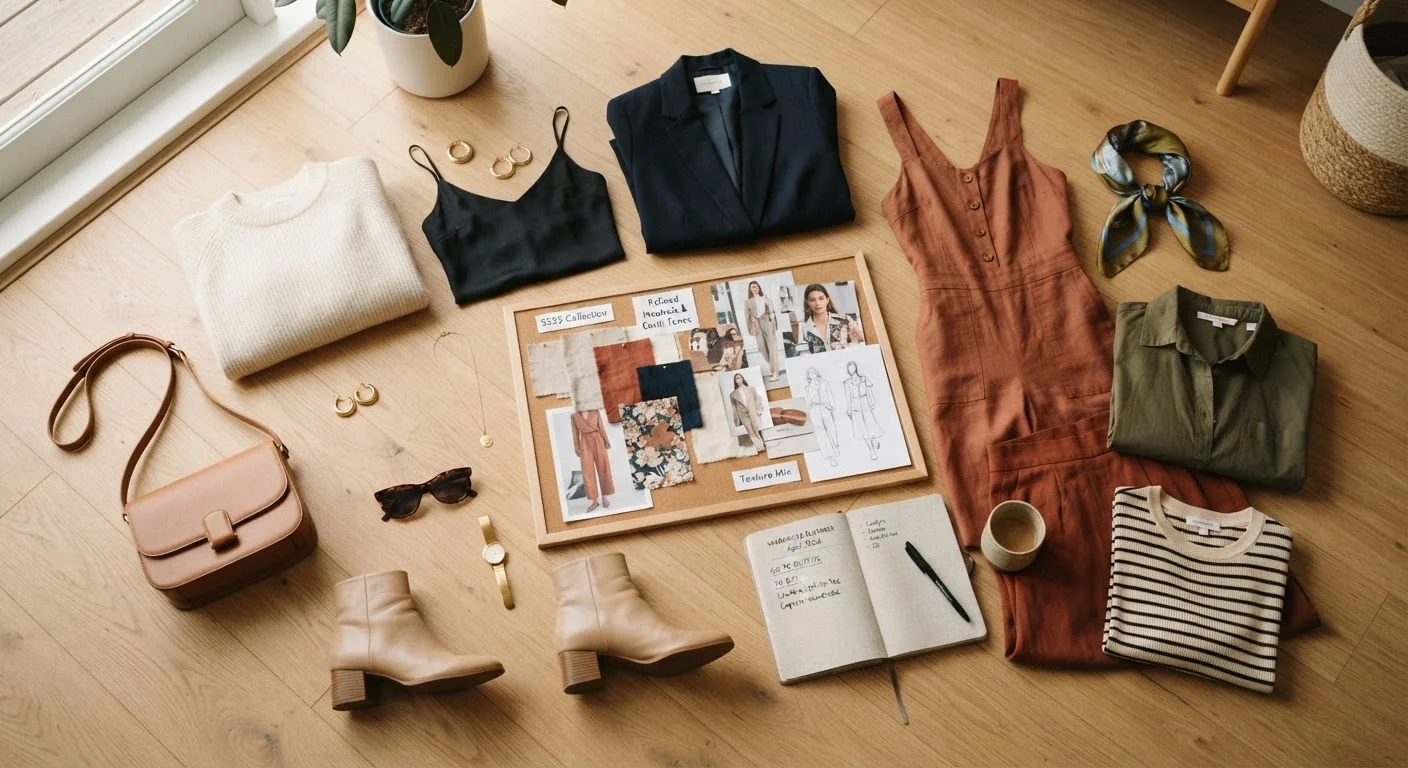
- Mood boarding: Collect images - from magazines, social media saves, or print - that genuinely attract you. Patterns in color, silhouette, and occasion will emerge. This isn't about copying looks; it's about mapping instincts.
- Closet audit: Pull out every item you reach for consistently. What do they have in common? Texture, fit, color palette, versatility? Those commonalities are your style DNA.
- The wear-test journal: For two weeks, note how you feel in each outfit - confident, uncomfortable, unseen, powerful. Clothing that consistently makes you feel strong is worth understanding deeply.
When mood boarding, save images for at least two weeks before analyzing them - initial saves reveal gut reactions, but patterns only emerge with volume and time.
Immediate preferences can be influenced by passing trends; a larger sample surfaces deeper, more durable aesthetic instincts.
Before adding anything new to your wardrobe, mentally pair it with at least three items you already own. If you can't easily do that, it likely won't get worn.
Versatility is the primary driver of cost-per-wear value and helps maintain a cohesive, easy-to-navigate closet.
The self-awareness you build through style work often spills into other areas of life. If you're interested in deeper self-reflection practices, structured journaling approaches can be a powerful complement to style discovery.
Building a Wardrobe That Reflects Who You Are
Once you've mapped your aesthetic instincts, it's time to translate them into an actual wardrobe. The goal here is coherence - a closet where most pieces work together and serve your daily life - not volume.
Start With What You Already Love
The most effective wardrobe isn't built from scratch - it's built outward from the pieces you already reach for instinctively. Before purchasing anything new, spend time understanding why those items work: is it the fit, the fabric, the color, the occasion? Those answers are your style blueprint.
The Core Wardrobe Framework
- Identify your style anchors: These are 3-5 words that describe the vibe you want to project consistently (e.g., relaxed-tailored, minimalist-warm, bold-practical). Use them as a filter when evaluating any new addition.
- Prioritize versatility: Pieces that work across multiple contexts - work, weekend, evening - offer more value per wear than hyper-specific items.
- Mind your color story: A loose palette of 2-3 neutrals plus 1-2 accent colors makes getting dressed easier and ensures most pieces interact well.
- Leave room for personality: Anchors and neutrals are the foundation, but your wardrobe should also include a few pieces that feel purely, joyfully you - even if they're harder to style.
For day-to-day dressing inspiration grounded in real-life contexts, our Everyday Fashion section has practical guidance that complements any style direction.
~30%
Of wardrobe items never worn after purchase
Consumer research and wardrobe psychology studies consistently estimate that a significant share of purchased clothing is rarely or never worn, pointing to the cost of impulse-driven buying.
2-3 min
Average daily decision time saved with a curated closet
Wardrobe consultants and behavioral researchers note that reduced choice overload - via a more intentional closet - measurably cuts morning decision time.
Dressing for Your Life, Not Just Your Aspirations
One of the most common wardrobe pitfalls is building a closet for a life you wish you had rather than the one you actually live. The result: a closet full of clothes and nothing to wear.
Audit your actual schedule. If 70% of your week is casual - errands, school drop-offs, remote work - then 70% of your wardrobe should serve that context well. Aspirational pieces are fine in moderation, but a wardrobe that doesn't fit your life creates daily friction instead of ease.
Avoid the 'Aspirational Wardrobe' Trap
Buying clothes for the life you want rather than the one you have is one of the most common - and costly - style mistakes. If you're not honest about how you actually spend your days, you'll end up with a closet full of unworn pieces and a constant feeling that you have nothing to wear. Audit your actual weekly schedule before making any wardrobe decisions.
This doesn't mean abandoning ambition in your style. It means being honest about context. A person who loves structured suiting but works from home every day might incorporate that aesthetic through tailored trousers paired with comfortable tops - style language without impractical costume.
How Style Evolves - and How to Let It
Style is not a destination. It's a practice that naturally shifts as you age, change careers, move through life stages, or simply grow more confident in your own skin. Resisting that evolution - clinging to a look that no longer fits who you are - creates a disconnect between your inner and outer self.
Permission to evolve is one of the most empowering gifts you can give yourself as a style-conscious person. Signs that your style is ready for a refresh include: consistently skipping certain items in your closet, feeling uninspired when getting dressed, or noticing a gap between how you look and how you want to feel.
Evolution doesn't require a full overhaul. It might mean experimenting with one new silhouette, introducing a color you've never worn, or simply retiring pieces that no longer resonate. Small, intentional shifts compound over time into a look that genuinely reflects your current self.
For readers curious about how self-awareness and identity intersect beyond the wardrobe, exploring mental wellness frameworks can offer valuable perspective on how internal shifts often drive external ones.
Putting It All Together: Your Style Action Plan
Defining and evolving personal style is an ongoing practice, not a single project. But having a clear action framework makes the process feel manageable rather than overwhelming.
Your 4-Step Style Roadmap
- Step 1: Discover
- Complete a closet audit and build a mood board. Identify 3-5 style anchor words.
- Step 2: Edit
- Remove pieces that consistently go unworn or feel misaligned with your anchors. Create physical and mental space for clarity.
- Step 3: Build Intentionally
- Fill genuine gaps (not whims) using your color story and versatility criteria as filters.
- Step 4: Revisit Seasonally
- Every few months, reassess. What's working? What's shifted? Style should feel alive, not static.
The goal isn't perfection - it's alignment. A wardrobe that consistently reflects who you are reduces decision fatigue, boosts confidence, and makes getting dressed feel like self-expression rather than a chore. That's a return on investment no price tag can fully capture.
“Style is a way to say who you are without having to speak.”
— Rachel Zoe, Fashion designer and stylist