

Key Takeaways
Why Skipping Maintenance Snowballs Into Bigger Problems
Every vehicle is engineered with specific service intervals because components wear in predictable ways. When those intervals are ignored, wear doesn't pause - it accelerates, and one neglected system often stresses adjacent ones. A low coolant level raises engine temperature; chronic heat degrades oil faster; degraded oil accelerates bearing wear. The cascade is well-documented by mechanics and automotive engineers alike.
Understanding why each service matters - not just that it's on a schedule - helps drivers make genuinely informed decisions. For a clear breakdown of what each milestone actually covers, see your car's maintenance schedule explained.
Engine Damage Can Be Irreversible
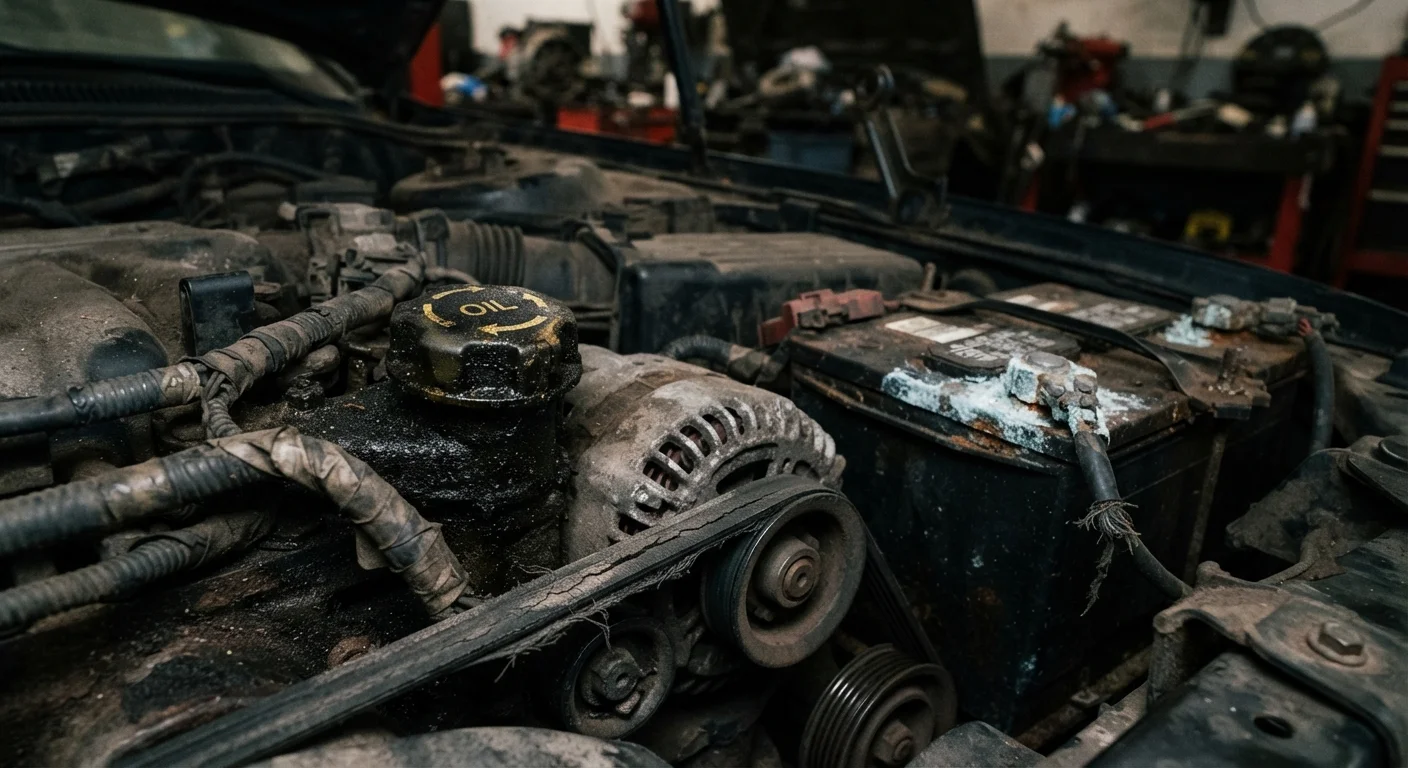
Running an engine on degraded or low oil can cause metal-on-metal contact that scores cylinder walls and damages bearings permanently. Unlike most repairs, internal engine damage often means replacement - not a rebuild - at a cost that can exceed the vehicle's market value. This is not a recoverable situation with a simple fluid top-off.
The Most Consequential Mistakes Drivers Make
The mistakes below aren't rare edge cases - they're the most common reasons vehicles end up in shops with avoidable, expensive damage. Each follows a recognizable pattern: a gradual problem, an easy rationalization, and a costly outcome.
Delaying or skipping oil changes beyond the manufacturer's recommended interval.
Why it happens: Modern engines often go longer between changes, and drivers assume a little extra time won't matter. Oil degradation is invisible, so there's no obvious warning until damage is done.
Ignoring worn brake pads until grinding or squealing becomes impossible to dismiss.
Why it happens: Brake wear is gradual, and early warning squealer tabs are easy to rationalize away as road noise or a temporary quirk.
Never flushing the coolant, assuming the reservoir looks full enough.
Why it happens: Coolant appears unchanged in color for years, and its protective additives deplete long before it looks visibly dirty. Most drivers simply don't think about it.
Letting tire pressure drift without checking it regularly.
Why it happens: Tires lose pressure slowly - about one PSI per month in normal conditions - so the change is imperceptible day-to-day until handling or fuel economy visibly suffers.
Ignoring transmission fluid service because the vehicle seems to shift fine.
Why it happens: Transmission problems develop slowly, and many drivers are unaware their vehicle has a service interval for fluid at all - especially in models marketed as having 'lifetime' fluid.
Brake Neglect Is a Safety Emergency
Worn brake pads that reach metal-on-metal contact do not just generate noise - they can cause brake fade, longer stopping distances, and in extreme cases, brake failure. If you hear persistent grinding when braking, have the system inspected by a qualified mechanic immediately. Do not delay this service.
The Real Cost of Waiting
$4,000+
Average cost of engine replacement
Engine repair or replacement from oil-related failures is commonly cited by automotive repair associations as one of the most expensive single repairs a vehicle owner faces.
1 PSI/month
Average tire pressure loss in normal conditions
The U.S. Department of Transportation notes that tires naturally lose approximately one PSI per month, and more rapidly when temperatures drop.
3x
Cost multiplier of rotor vs. pad replacement
Industry repair data consistently shows that replacing rotors and pads together costs roughly three times more than replacing pads alone at the recommended interval.
The financial argument for staying current on maintenance is straightforward: preventive service costs are predictable and modest; repair costs are unpredictable and often severe. Drivers who build consistent maintenance habits tend to spend significantly less over a vehicle's lifetime - and keep their vehicles longer. The habits that support high-mileage reliability are explored in depth in keeping a car well past 100,000 miles.
It's also worth separating genuine maintenance requirements from outdated advice that wastes money. Some services are pushed more aggressively than the evidence supports. Car maintenance myths that could be costing you addresses the most common ones. For a broader view of how maintenance fits into total ownership costs, smart habits that reduce the long-term cost of car ownership offers practical perspective.
This article provides general automotive information for educational purposes. For diagnosis, repair, or safety-related concerns, consult a qualified mechanic.