

Key Takeaways
Vehicle Maintenance Schedule
A vehicle maintenance schedule is a manufacturer-recommended timeline of service tasks designed to keep your car running safely and efficiently. It specifies which components need inspection, replacement, or servicing - and how often, measured in miles, months, or both. Following it helps prevent breakdowns and preserves your vehicle's longevity.
Most modern vehicles use either a fixed interval schedule or a flexible oil-life monitoring system that adjusts service reminders based on actual driving conditions and engine sensor data.
What a Maintenance Schedule Actually Is
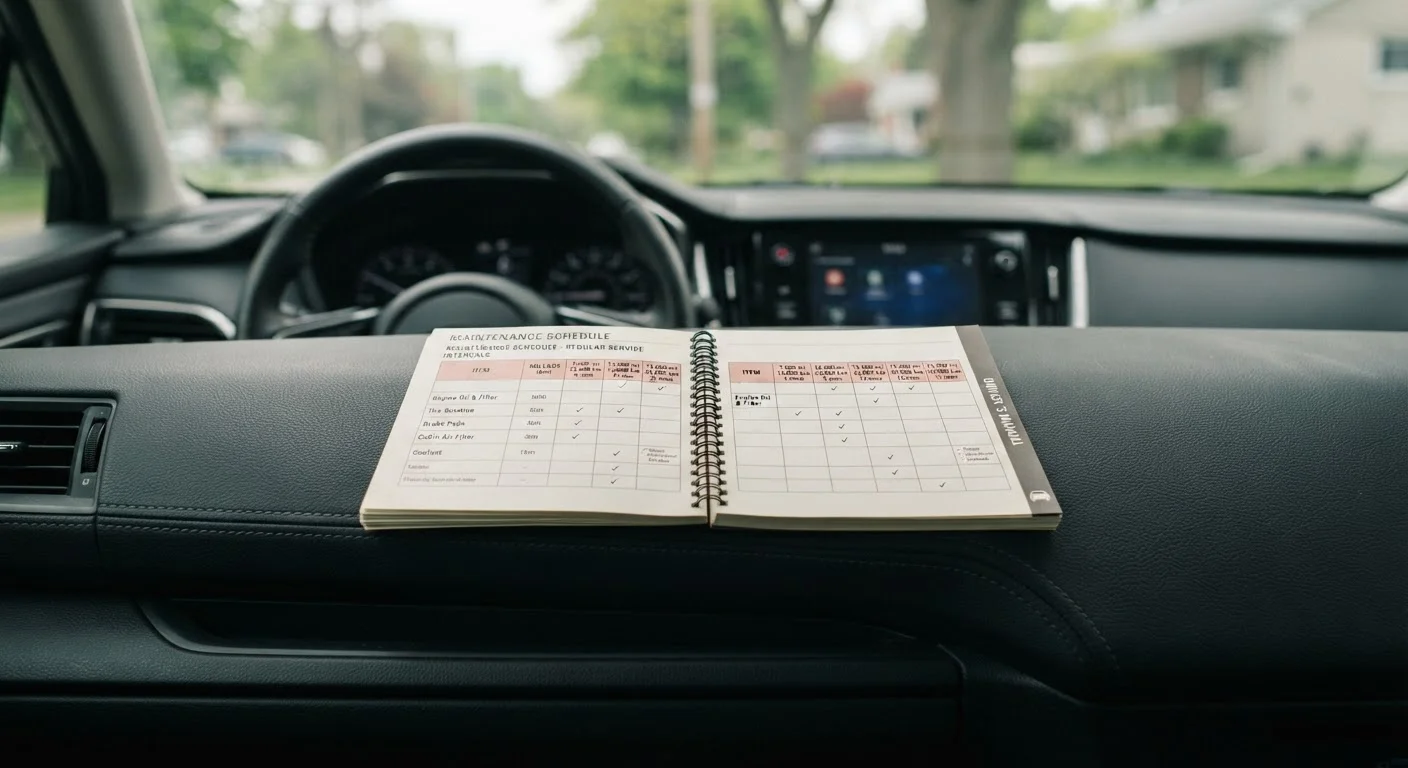
Every new vehicle comes with a manufacturer-issued maintenance schedule - a structured list of service tasks tied to specific mileage or time intervals. Think of it as a preventive care roadmap: it tells you what needs attention, and when, before a problem develops.
The schedule lives in your owner's manual, often in a dedicated section near the back. Some automakers also provide a separate maintenance booklet. Digital versions are usually available through the manufacturer's website if your manual is missing.
Schedules are expressed in two ways: mileage (e.g., every 5,000 miles) and elapsed time (e.g., every 6 months). The rule of thumb is simple - whichever threshold arrives first is when service is due. A car driven very little still ages mechanically; fluids degrade, seals dry out, and rubber components harden over time regardless of how few miles are on the odometer.
Mileage and Time Both Matter
A common misunderstanding is that maintenance intervals only apply once you hit a certain mileage. In fact, time-based intervals apply even to low-mileage vehicles. Engine oil, coolant, and brake fluid degrade chemically over time regardless of how often the car is driven. If your car sits for months between uses, check elapsed time as well as odometer readings when scheduling service.
Key Service Milestones and What They Cover
While every vehicle differs, most maintenance schedules share a common structure of recurring service points:
- Every 3,000-10,000 miles: Oil and filter change. Interval varies by oil type (conventional vs. synthetic) and engine design. Check your manual - many modern vehicles run significantly longer between changes than older guidance suggested.
- Every 15,000-30,000 miles: Air filter inspection and replacement, tire rotation, brake inspection, battery check, and cabin air filter replacement.
- Every 30,000-60,000 miles: Spark plug replacement (though some iridium plugs last 100,000+ miles), transmission fluid, coolant flush, and power steering fluid check.
- Every 60,000-100,000 miles: Timing belt replacement (if applicable - not all engines have one), differential fluid, and a comprehensive inspection of belts and hoses.
These are general benchmarks. Your specific vehicle may have different intervals, and following the manufacturer's guidance over any generic chart is important. For a complementary seasonal perspective, see the seasonal car maintenance checklist that maps these tasks to weather and driving conditions throughout the year.
~$100B
Annual US spending on vehicle maintenance and repairs
The Auto Care Association estimates that Americans spend roughly $100 billion per year maintaining and repairing their vehicles, underscoring how significant routine upkeep is as an ownership cost.
7,500-10,000 mi
Typical full synthetic oil change interval
Many modern vehicles running full synthetic oil can safely go 7,500 to 10,000 miles between oil changes, according to manufacturer guidelines - well beyond the old 3,000-mile conventional wisdom.
30%
Of vehicle breakdowns linked to neglected maintenance
Industry research has consistently found that a substantial share of roadside breakdowns can be traced to deferred or missed scheduled maintenance, particularly for fluids, belts, and tires.
Normal vs. Severe Driving Conditions
Most maintenance schedules include two tracks: normal and severe service. Many drivers assume they fall into the normal category, but the reality is that a significant portion of American driving qualifies as severe by manufacturer definitions.
Severe conditions typically include:
- Frequent trips under five miles (the engine never fully warms up)
- Driving in extreme heat or cold
- Stop-and-go urban commuting
- Towing trailers or carrying heavy loads regularly
- Driving on dusty, unpaved roads
Under severe conditions, manufacturers recommend shortening service intervals - sometimes by half. If your commute involves daily highway stop-and-go or you regularly tow a boat on weekends, you likely fall into the severe category and should adjust your schedule accordingly.
Check Your Driving Pattern Honestly
Before assuming you fall under normal service intervals, review the severe-condition criteria in your owner's manual. Many urban commuters, part-time towers, and drivers in extreme climates qualify for more frequent service than they realize. Identifying your category early prevents under-maintaining your vehicle.
The Cost Angle: Why Staying on Schedule Saves Money
Routine maintenance is one of the most reliable ways to control long-term vehicle ownership costs. A timely oil change costs far less than addressing the engine damage that can result from running degraded oil for too long. Similarly, replacing worn brake pads at the scheduled interval is significantly cheaper than replacing rotors that have been damaged by neglected pads.
Deferred maintenance also carries warranty implications. Many manufacturer and extended warranties require documented service compliance. Skipping scheduled services can give an insurer or automaker grounds to deny a claim on a related component failure.
For a broader view of how maintenance fits into the full cost of owning a vehicle, the vehicle ownership costs reference guide offers a plain-English breakdown of every major expense category. And if you want to build habits that reduce costs over time, smart habits for reducing car ownership costs is a practical next step.
DIY vs. Professional Service
Not every item on a maintenance schedule requires a shop visit. Tasks like checking tire pressure, inspecting wiper blades, topping off windshield washer fluid, and replacing a cabin air filter are genuinely manageable for most drivers with basic tools and a few minutes. Doing these yourself reduces costs and keeps you familiar with your vehicle's condition.
Other jobs - timing belt replacement, transmission service, brake system work - carry enough complexity and safety consequence that professional service is the right call for most owners. Incorrect execution can cause injury or significant vehicle damage.
Knowing where the line falls is valuable. The DIY car maintenance vs. shop guide walks through which tasks are realistic for a capable home mechanic and which ones genuinely warrant a professional. If your dashboard warning lights are part of the picture, understanding your check engine light explains what those signals actually mean.
This article is for general informational purposes only. Always consult your vehicle's owner's manual and a qualified mechanic for advice specific to your car's make, model, and condition.