

Key Takeaways
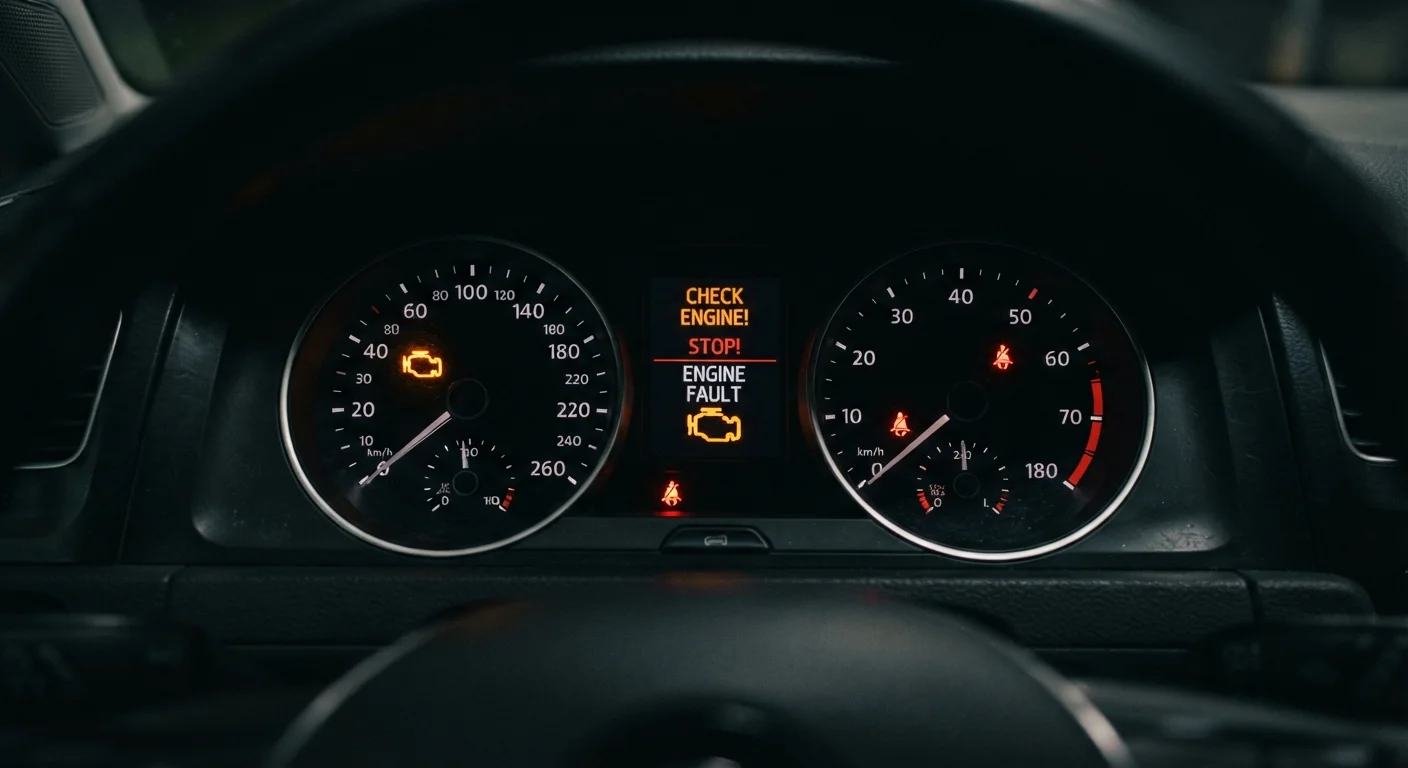
Check Engine Light (CEL)
The check engine light - sometimes labeled "Service Engine Soon" - is part of your vehicle's onboard diagnostics system (OBD-II). It illuminates when a sensor detects a condition outside the normal operating range, storing a fault code that a technician or scanner can read. The light covers a wide spectrum of issues, from a loose gas cap to a failing catalytic converter.
All US-sold vehicles from 1996 onward are equipped with OBD-II, a standardized system that stores diagnostic trouble codes (DTCs) accessible via a scan tool plugged into the 16-pin data port typically located under the dashboard.
What the Check Engine Light Is Actually Telling You
Your car's OBD-II system continuously monitors dozens of sensors - from exhaust oxygen levels to engine timing - and flags any reading that falls outside acceptable parameters. When a sensor trips, the system stores a diagnostic trouble code (DTC) and turns on the check engine light. The light itself doesn't tell you which system failed; it's an alert that something needs a closer look.
The critical distinction every driver should know: steady light vs. flashing light. A solid, unblinking light means a fault has been logged and you should schedule a diagnosis soon. A flashing light means the engine is actively misfiring - unburned fuel is entering the exhaust and can rapidly destroy your catalytic converter. Pull over safely, and if possible, avoid driving until the vehicle has been inspected.
For a broader look at what your dashboard symbols mean, see Under-Hood Symbols and Dashboard Warnings: A Quick Reference.
~10%
US vehicles on the road with a check engine light on
Industry estimates suggest roughly one in ten vehicles in service at any given time has an active check engine light, according to data cited by automotive research organizations.
P0420
Most commonly retrieved OBD-II fault code
Catalytic converter efficiency codes consistently rank among the most frequently read codes at auto parts stores and service centers across the United States.
1996
Year OBD-II became mandatory in all US vehicles
The EPA mandated OBD-II compliance for all passenger cars and light trucks sold in the United States beginning with model year 1996, standardizing diagnostic access.
The Most Common Check Engine Light Triggers
Fault codes span hundreds of possible conditions, but the majority of check engine lights trace back to a short list of common culprits:
- Loose or damaged gas cap: Allows fuel vapors to escape, triggering an evaporative emission system fault. Often the simplest fix.
- Oxygen (O2) sensor failure: O2 sensors measure exhaust gas composition to help regulate fuel delivery. A failing sensor hurts fuel economy and can stress other components.
- Catalytic converter degradation: The converter reduces harmful emissions; it typically fails gradually, often as a downstream consequence of neglected O2 sensors or misfires.
- Mass airflow (MAF) sensor fault: The MAF sensor measures incoming air to calculate the correct fuel mixture. Dirt buildup or sensor failure causes rough running and reduced efficiency.
- Spark plugs or ignition coils: Worn plugs or failing coils cause misfires, which trigger codes and - if left unchecked - can escalate to catalytic converter damage.
- Evaporative emission (EVAP) system leak: A small leak anywhere in the fuel vapor recovery system - often just a cracked hose - can trigger a code without any noticeable driving symptoms.
Staying current with scheduled services catches many of these issues before they trigger a warning. Your Car's Maintenance Schedule, Explained walks through what each service interval actually involves.
Get the Code Before You Visit a Shop
Knowing your fault code ahead of time helps you have a more informed conversation with a mechanic and reduces the chance of paying for unnecessary diagnostics. Many national auto parts chains offer free OBD-II code reads in their parking lots - no appointment needed. Just write the code down; don't ask staff to interpret it as a definitive repair recommendation.
How to Respond: A Practical Step-by-Step
When the light comes on, resist the impulse to either panic or ignore it. Follow these steps:
- Note the light's behavior. Steady means schedule a diagnosis; flashing means act immediately.
- Check the obvious first. Make sure your gas cap is tightly secured. If it was loose, drive normally for a few cycles and see if the light clears.
- Get the code read. An OBD-II scanner - available for purchase at most auto parts stores, or offered free at many of them - will display the DTC. Write it down. A code like P0420 (catalyst efficiency below threshold) or P0171 (system too lean) gives a mechanic a precise starting point and gives you context before you walk in.
- Assess urgency. Codes related to misfires, transmission, or oil pressure warrant immediate attention. Emission-related codes with no drivability symptoms can usually wait a few days.
- Consult a qualified mechanic for diagnosis and repair. Codes identify the circuit or system flagged, not necessarily the specific failed part. Proper diagnosis by a trained technician avoids misdiagnosis and unnecessary parts replacement.
If you're weighing what to handle yourself versus what to hand off, DIY Car Maintenance vs. Taking It to a Shop lays out where the practical line sits for most drivers.
Why You Shouldn't Put It Off
Modern engines are tightly integrated systems. A fault in one area - say, a misfiring cylinder - places stress on related components like the catalytic converter and oxygen sensors. What begins as a $50 spark plug replacement can become a $1,500 catalytic converter job if misfires run unchecked for weeks.
There's also a practical consideration for drivers in states with mandatory emissions testing: a stored fault code will cause your vehicle to fail an OBD-II emissions inspection, even if the car runs and drives normally. Addressing the underlying issue is the only path to a passing result.
Routine attention is the best prevention. Keeping up with fluid checks, filter changes, and ignition system maintenance significantly reduces the likelihood of unplanned warning lights. The Seasonal Car Maintenance Checklist Every Driver Should Run is a practical place to start building that habit.
This article is for general informational purposes only. For diagnosis and repair of your specific vehicle, consult a qualified automotive technician.