

Health & Wellness

Weekly Meal Planning: A Practical Checklist for Nutritional Balance

Share
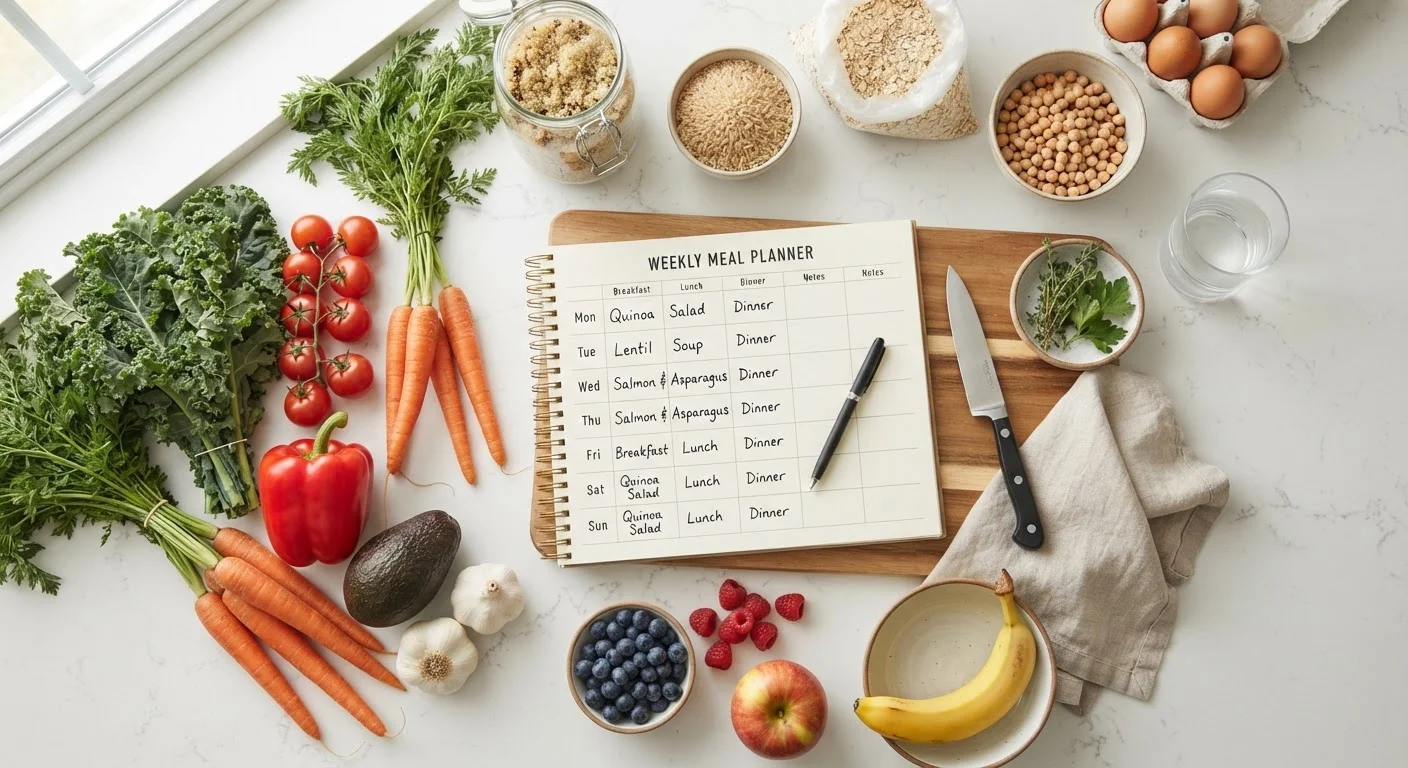
Weekly meal planner notebook surrounded by colorful fresh vegetables, fruits, and whole grains on a white kitchen counter.

Key Takeaways

Planning meals in advance reduces nutritional gaps and limits reliance on convenience foods.
A balanced week of eating covers all major food groups across multiple meals, not just single dishes.
Batch cooking and smart storage dramatically cut mid-week decision fatigue.
Nutritional variety — not perfection at every meal — is the realistic goal.
Aligning your grocery list with your meal plan reduces food waste and spending.
30–60 min

Summary

22 items · 30–60 minutes per week

Why a Weekly Meal Plan Is Worth Your Time

Most people don't eat poorly because they lack motivation — they eat poorly because they run out of time and options. A weekly meal plan removes the daily question of "what's for dinner?" and replaces reactive, often less nutritious choices with deliberate ones.

Research consistently links meal planning to higher diet quality and lower rates of food waste. When you know what you're eating on Wednesday before Sunday is over, you're far less likely to reach for ultra-processed alternatives under pressure. And contrary to popular assumption, structured meal planning doesn't require hours in the kitchen or a nutrition degree.

This checklist walks you through every stage — from assessing your nutritional baseline to finalizing your shopping list — so you can build a week of eating that is both balanced and actually realistic for your schedule. If budget is a concern alongside nutrition, see our strategies for eating well on a tight budget for complementary guidance.

Assess Your Starting Point

Review last week's meals to identify any food groups or nutrients that were consistently missing. Must
Note your schedule constraints for the coming week — late nights, travel, or high-activity days that affect cooking time. Must
Check your pantry, fridge, and freezer before planning to avoid buying duplicates and to use items approaching their best-by date. Must
Identify any dietary needs or preferences in your household — allergies, intolerances, or eating patterns — that must be accommodated. Must

Build Nutritional Coverage

Ensure at least one source of quality protein (legumes, fish, poultry, eggs, tofu, or lean meat) appears at each main meal across the week. Must
Plan for a variety of colorful vegetables across the week — aim to rotate colors, as different pigments indicate different micronutrient profiles. Must
Include whole grains (oats, brown rice, quinoa, whole-wheat bread) in the majority of grain-based meals rather than refined alternatives. Should
Incorporate at least two servings of fruit daily, distributed through breakfast or snacks rather than treated as an afterthought. Should
Confirm that healthy fat sources — such as nuts, seeds, avocado, or olive oil — appear several times throughout the week. Should
Add a calcium-rich food (dairy or fortified non-dairy alternatives, leafy greens, canned fish with bones) to each day's plan. Should
Flag any nutrient gaps you cannot easily fill through food and note them as topics to discuss with a healthcare provider. Nice to have

Meal Mapping and Variety

Draft meals for all three daily eating occasions — breakfast, lunch, and dinner — rather than planning dinner alone. Must
Avoid repeating the same main protein or grain on back-to-back days to maintain variety and broader micronutrient coverage. Should
Plan at least one plant-forward dinner per week that relies on legumes or vegetables as the primary protein source. Should
Schedule one "flexible" meal slot — a pantry meal or intentional leftover night — to reduce waste and ease workload. Should
Note healthy snack options for each day to prevent arriving at meals excessively hungry. Nice to have

Grocery List and Prep

Compile a consolidated grocery list directly from your meal plan, organized by store section (produce, proteins, grains, dairy/alternatives, pantry). Must
Cross-reference the list against what you already have at home to avoid food waste and unnecessary spending. Must
Identify two or three ingredients that can be prepped in bulk at the start of the week — cooked grains, roasted vegetables, or portioned proteins — to speed up weekday cooking. Should
Store prepped ingredients in labeled, airtight containers with the prep date to maintain freshness and food safety. Should
Review your plan one final time before shopping to confirm it reflects your actual schedule and adjust any overly ambitious cooking days. Nice to have

Tools That Make the Process Easier

You don't need specialized software to plan meals effectively. A few basic tools will make every stage of this checklist faster and more consistent week over week.

Required

Weekly planner template (paper or digital)

Provides a structured grid to map every meal and snack across all seven days at a glance.

Required

Pantry inventory list

Tracks what staples are already on hand so your grocery list only covers genuine gaps.

Required

Airtight meal-prep containers

Store batch-cooked grains, proteins, and vegetables safely for use throughout the week.

Optional

Kitchen scale

Helps portion proteins and grains consistently, which is useful when cooking large batches.

Optional

Nutrition reference guide

Provides a quick lookup for food group recommendations and major nutrient sources when building your plan.

For a deeper understanding of which nutrients your plan should prioritize, our quick-reference guide to key vitamins and minerals is a useful companion resource.

Putting the Plan Into Practice

A completed checklist is only useful if it translates into action. Once your meals are mapped out, spend 30 minutes on your planning day — Sunday works for most households — batch-prepping the items that take longest: cook whole grains, roast a tray of vegetables, and portion proteins. These small upfront investments prevent the mid-week backslide toward takeout.

Don't Over-Optimize on Day One

Attempting to plan a nutritionally perfect week from scratch is a common reason people abandon meal planning entirely. Start by covering the basics — one protein, one vegetable, one grain per meal — before layering in greater variety. A sustainable imperfect plan delivers far more benefit over time than an ideal one you give up after two weeks.

Avoid the perfectionism trap: a plan that covers five of seven dinners is far better than an ideal plan that collapses by Tuesday. Build in at least one flexible "pantry meal" slot each week using whatever is already on hand. This also helps address the common problem of fresh food spoiling before it gets used — a topic explored in depth in our article on why your grocery haul keeps going to waste.

Meal planning pairs naturally with other weekly routines. If you're also working on your fitness habits, building a weekly exercise schedule offers a parallel framework for structuring physical activity alongside your nutrition goals.

This article is for general informational and educational purposes only and does not constitute medical or dietary advice. Individual nutritional needs vary. Consult a registered dietitian or qualified healthcare professional for guidance tailored to your personal health circumstances.

Health & Wellness Editorial Team is the collective byline for our editorial team and contributor network. Articles published under this byline or an editorial pen name are researched, written, and reviewed according to our editorial standards for clarity, consistency, and independence before publication.

View all articles by Health & Wellness Editorial Team →
Disclaimer: The content on this site is for informational purposes only and is not a substitute for professional advice. Always consult a qualified professional for guidance specific to your situation.