

Key Takeaways
Why Budget Eating Gets a Bad Reputation
A persistent myth holds that eating nutritiously requires premium grocery bills. Research consistently challenges this assumption. Studies from institutions like the USDA's Economic Research Service have found that many nutrient-dense foods - including legumes, whole grains, and frozen produce - rank among the least expensive per edible portion. The real culprit behind poor-quality budget diets is often a lack of planning, not a lack of funds.
That said, food insecurity is a genuine and serious challenge for many households, and no strategy eliminates every barrier. What evidence-backed practices can do is help stretch available dollars further without trading nutritional quality for cost savings. For a broader look at how spending misconceptions affect everyday decisions, see common budgeting myths worth reconsidering.
“The cheapest diets in America are not the least nutritious ones - the problem is that people don't know which low-cost foods are actually nutrient-dense.”
— Adam Drewnowski, Professor of Epidemiology and Director of the Center for Public Health Nutrition, University of Washington
Core Practices for Eating Well on Less
The following strategies are grounded in nutritional research and practical household economics. Together, they form a sustainable approach - not a set of short-term restrictions.
Build meals around affordable, nutrient-dense staples rather than expensive centerpieces.
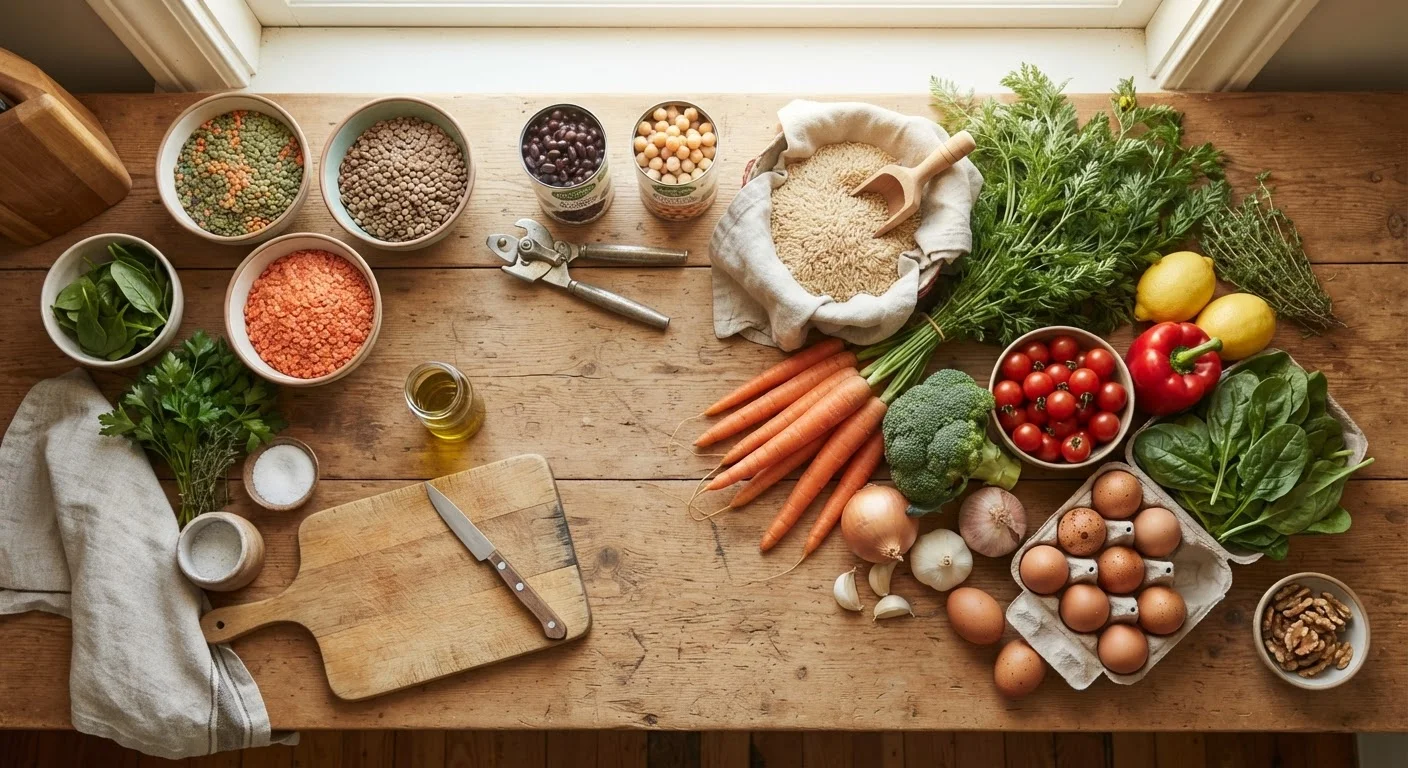
Staples like lentils, eggs, oats, canned beans, and frozen vegetables deliver strong nutritional value at low cost. Structuring meals around these ingredients - rather than treating protein or fresh produce as expensive add-ons - keeps costs predictable while meeting basic macro and micronutrient needs.
Plan meals for the week before writing a grocery list.
Unplanned shopping trips lead to redundant purchases, impulse buys, and produce that spoils unused. A written plan tied directly to a shopping list reduces waste, prevents over-buying, and makes it easier to identify what's already in the pantry.
Cook in batches and repurpose ingredients across multiple meals.
Batch cooking a single ingredient - a pot of grains, a tray of roasted vegetables, a batch of cooked beans - creates flexible building blocks for several different meals. This cuts cooking time and reduces the temptation to order takeout on busy nights.
Choose frozen and canned produce strategically to extend variety without cost spikes.
Fresh seasonal produce is ideal when affordable, but frozen and canned alternatives preserve most nutrients and dramatically extend shelf life. This reduces waste and allows access to a wider nutritional range regardless of season or local availability.
Compare cost per serving - not just sticker price - when evaluating grocery options.
A larger package may appear more expensive upfront but cost significantly less per portion. Dry goods, legumes, and grains bought in larger quantities almost always reduce per-serving cost, especially for households that will realistically use the volume.
Plan Before You Shop
Shopping without a plan is one of the fastest ways to overspend and under-nourish. A weekly meal plan allows you to buy only what you'll use, reduces impulse purchases, and makes it easier to build nutritionally balanced meals across the week. Our weekly meal planning checklist walks through how to structure meals for variety and key nutrient coverage without overcomplicating the process.
Food waste is a closely related problem. If fresh produce regularly spoils before it's used, the issue is usually planning and storage - not the grocery haul itself. Addressing those gaps directly lowers effective food costs. See why groceries go to waste before the week ends for practical fixes.
Nutritional Value: Where Your Dollar Goes Furthest
Not all affordable foods are created equal in nutritional terms. Some consistently stand out as high-value options:
- Dried and canned legumes (lentils, black beans, chickpeas): rich in protein, fiber, iron, and folate. Canned varieties add convenience with minimal nutritional trade-off.
- Eggs: one of the most complete protein sources available and among the least expensive per gram of protein.
- Frozen vegetables: frozen at peak ripeness, these often retain comparable - and in some cases superior - nutrient levels to fresh produce that has been stored for days.
- Oats and whole grains: excellent sources of fiber and sustained energy at very low cost per serving.
- Canned fish (sardines, tuna, salmon): high in omega-3 fatty acids and protein, and far less expensive than fresh fish.
Fiber is one nutrient that deserves particular attention on a budget diet, since most Americans already fall short. Legumes, oats, and vegetables cover this gap effectively. Learn more in our guide on fiber and why most Americans aren't getting enough.
$0.25
Average cost per serving of cooked dried lentils
USDA Economic Research Service data consistently places dried legumes among the lowest-cost protein and fiber sources available in U.S. grocery stores.
90%+
Nutrient retention in most frozen vegetables
Research published in the Journal of Food Composition and Analysis found that frozen vegetables retain the majority of their vitamins, often comparable to fresh produce stored for several days.
This article is for general informational and educational purposes only. It is not a substitute for personalized dietary advice from a qualified healthcare provider or registered dietitian.