

Key Takeaways
Why the Scalp Deserves Its Own Routine
Most people approach hair care from the ends up - focusing on frizz, shine, or split ends - while the scalp gets treated as an afterthought. But the scalp is skin, and like the skin on your face, it has follicles, sebaceous glands, and a microbiome that can fall out of balance. When it does, the effects show up in your hair: dullness, excessive shedding, buildup at the roots, or persistent itching.
This isn't about adding complexity to your routine. It's about understanding that hair care without scalp care is incomplete. For a broader look at how these concepts connect, see our hair care fundamentals guide, which covers scalp health alongside porosity and damage in a single reference.
Match your washing frequency to your scalp type, not a general rule
Overwashing strips natural oils and can trigger compensatory sebum production; underwashing allows buildup that clogs follicles and creates an environment for irritation. The right frequency is the one that keeps your scalp balanced - neither greasy nor tight and itchy.
Rinse thoroughly - longer than feels necessary
Shampoo and conditioner residue left at the roots is one of the most common and overlooked causes of scalp buildup, itching, and clogged follicles. Most people rinse for about half the time needed to fully remove product.
Incorporate a scalp exfoliant once a week
Dead skin cells, styling product residue, and excess sebum accumulate between washes. A gentle scalp scrub or exfoliating shampoo removes this buildup and allows follicles to function more freely without over-stripping.
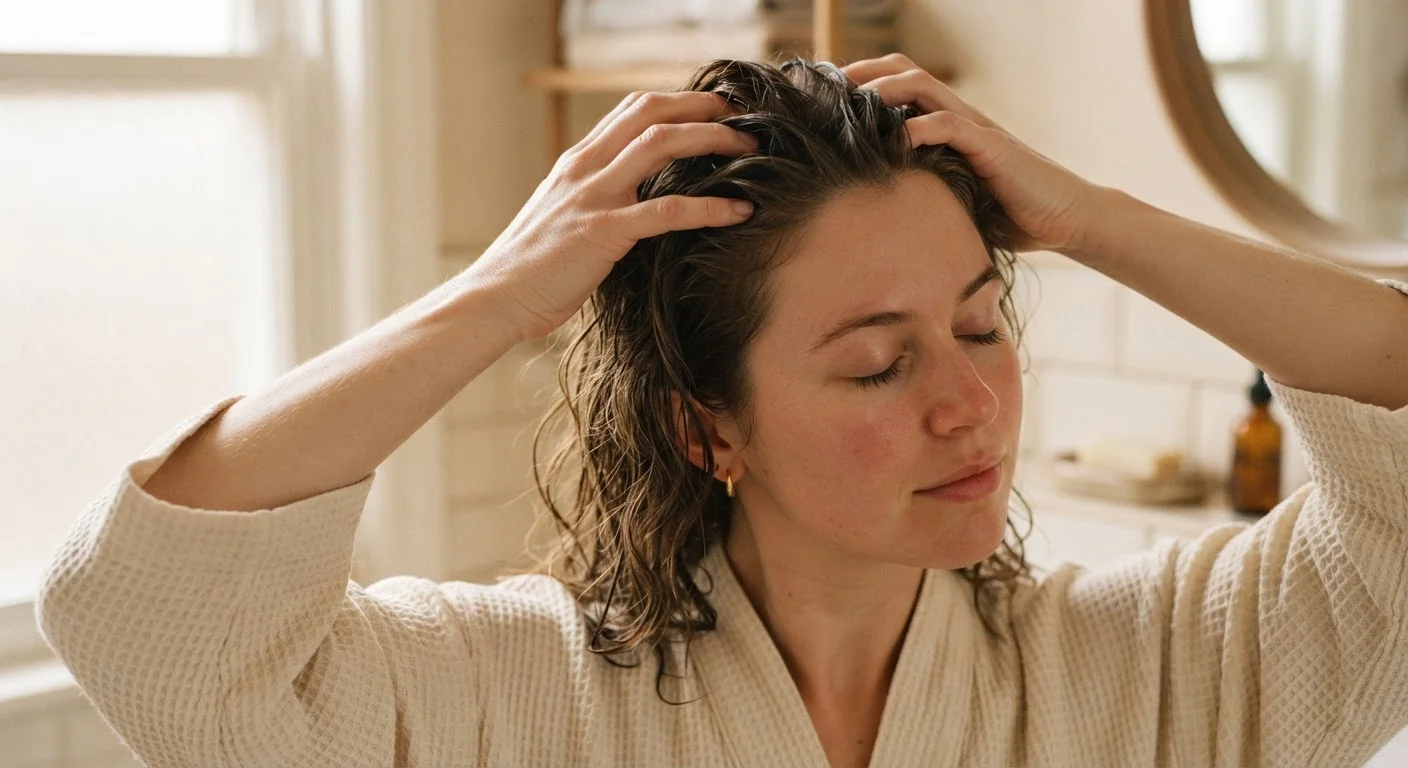
Use scalp massage intentionally during washing
Massaging the scalp with fingertips (not nails) during cleansing improves blood circulation to follicles, helps dislodge buildup, and distributes product more effectively. Some small studies suggest consistent scalp massage may support hair thickness over time, though more research is needed.
Keep heat styling away from the scalp
Direct heat from blow dryers held too close can dry out and irritate the scalp's skin barrier, worsening sensitivity and flaking. The hair shaft tolerates heat better than the scalp skin beneath it.
Common Scalp Conditions and What They Signal
Before establishing a scalp care routine, it helps to recognize what's actually happening on your scalp. Three patterns come up most often:
- Dryness and flaking: Can stem from environmental factors (low humidity, hard water), overwashing, or sensitivity to certain ingredients like sulfates or fragrances. Flakes from a dry scalp tend to be small and white; they're distinct from dandruff.
- Excess sebum (oil): The scalp's sebaceous glands can overproduce oil in response to hormonal shifts, humidity, or - counterintuitively - being stripped too often by harsh cleansers, which triggers the glands to compensate.
- Dandruff (seborrheic dermatitis): A common condition linked to an overgrowth of a naturally occurring yeast called Malassezia. Flakes are typically larger and oilier than those from dryness. Medicated shampoos containing zinc pyrithione, selenium sulfide, or ketoconazole are commonly used to manage it.
If you're unsure which category applies to you, or if symptoms are persistent or severe, a dermatologist can provide a proper assessment. General consumer information is not a substitute for professional evaluation.
When to See a Dermatologist
Persistent itching, significant hair shedding, painful or inflamed patches, or symptoms that don't respond to over-the-counter products warrant a professional evaluation. Conditions like psoriasis, alopecia areata, or fungal infections require diagnosis and treatment beyond consumer scalp care. General self-care practices are not a replacement for medical assessment.
Practical Habits That Support Scalp Health
Scalp health improves most consistently through repeatable, low-effort habits - not one-time treatments. The practices below are grounded in general dermatological guidance and are appropriate for most adults without active scalp conditions.
Lifestyle factors also play a real role. Chronic stress can disrupt the hair growth cycle, and inadequate hydration affects skin barrier function across the body - including the scalp. Our article on personal care habits that support skin health explores how sleep, stress, and hydration influence skin and scalp outcomes beyond what products alone can address.
If you color your hair, note that scalp health also affects how long color holds. A compromised scalp barrier can speed up fade - something our piece on why hair color fades faster than it should covers in detail.
Start With One Change at a Time
When adjusting a scalp routine, change one variable at a time - frequency, product, or technique. Making multiple changes simultaneously makes it impossible to identify what's actually working. Give any single change at least three to four weeks before evaluating its effect.
Fitting Scalp Care Into a Realistic Routine
Scalp care doesn't require separate products for every step. For most people, adjusting how they use what they already have - cleansing more deliberately, rinsing more thoroughly, or adding a weekly exfoliation - produces noticeable results within a few weeks.
If you're starting a grooming routine from scratch and want a structured place to begin, our guide to building a personal grooming routine offers a practical framework covering skin, hair, and general upkeep without overcomplication.
The scalp is a system. Tend to it consistently, and your hair benefits automatically - no elaborate product lineup required.
This article is for general informational purposes only and is not medical or dermatological advice. If you are experiencing persistent scalp symptoms, consult a qualified healthcare professional.