

Key Takeaways
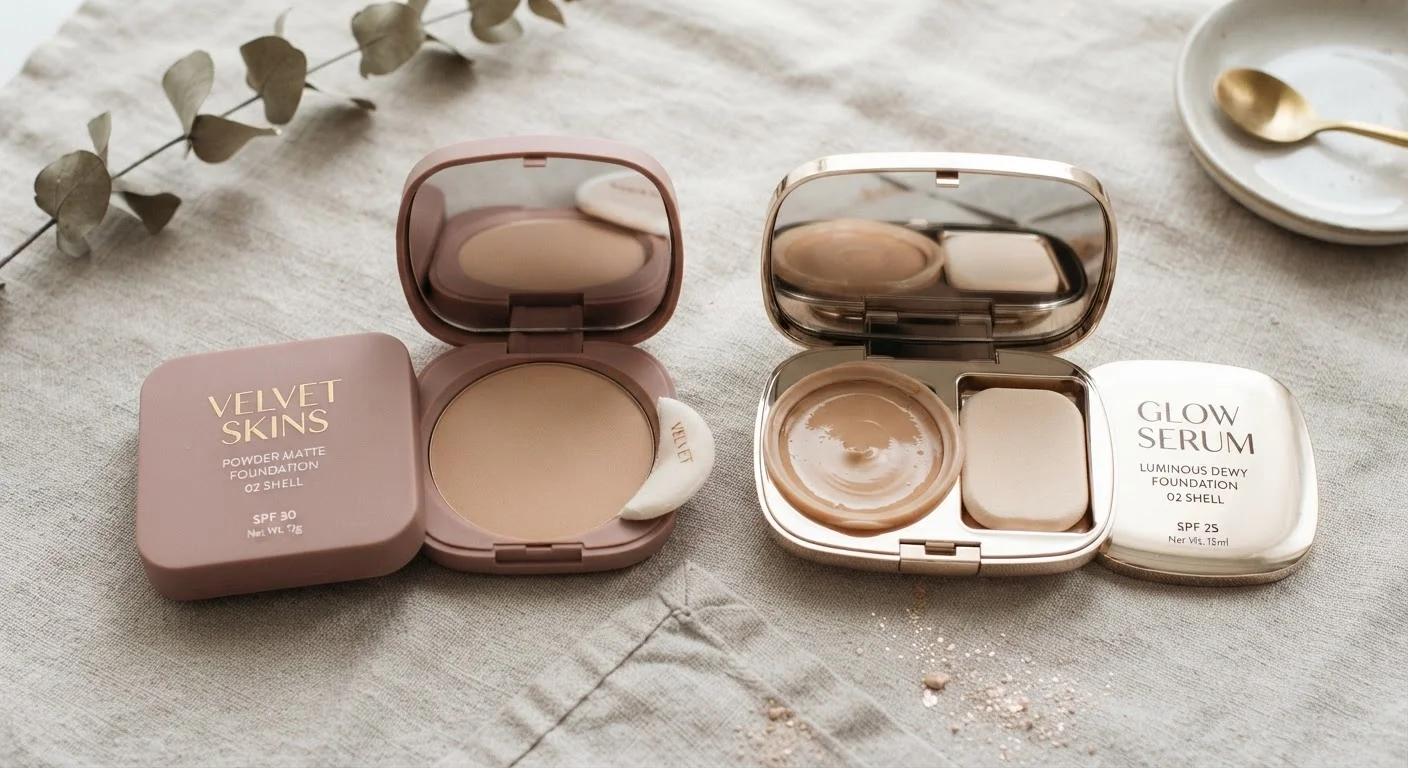
Option A
Matte Foundation
The shine-controlling, long-wear workhorse.
Best for: Best for oily or combination skin types, humid climates, or anyone who wants a polished, camera-ready look that lasts.
Option B
Dewy Foundation
The skin-like, radiance-boosting alternative.
Best for: Best for dry, mature, or dull skin types that benefit from added luminosity and a naturally hydrated appearance.
If your skin produces noticeable oil by midday
Matte Foundation
Matte formulas are designed to absorb sebum and keep shine in check for longer stretches without requiring touch-ups.
If your skin feels tight, flaky, or dull
Dewy Foundation
The light-reflecting properties in dewy formulas can make dry skin look more comfortable and naturally radiant.
If you're getting professional photos taken or working under bright lighting
Matte Foundation
Dewy finishes can appear overly shiny or washed out under flash photography, while matte finishes photograph more evenly.
If you want a natural, skin-like finish for everyday wear
Dewy Foundation
Dewy foundations mimic the look of healthy, well-moisturized skin without appearing heavy or mask-like.
If you have combination skin and want the most flexibility
Matte Foundation
A light-to-medium matte formula can be blended with a moisturizing primer on drier areas to balance both zones.
What the Finish Actually Means
Foundation finish refers to the sheen level your skin shows once the product has set. It's not just a cosmetic preference - it's a functional characteristic that affects how your makeup interacts with your skin's natural oil production, texture, and how it holds up over time.
Matte foundations are formulated to minimize light reflection, giving skin a flat, non-shiny appearance. They typically contain oil-absorbing ingredients like silica or kaolin clay. Dewy foundations are designed to add luminosity - they contain hydrating or light-reflecting ingredients that make skin appear plump and glowing.
Understanding these mechanics helps you match the product to your skin, rather than chasing a trend. For a broader look at how foundations differ from other face bases, see this comparison of foundation, tinted moisturizer, and BB cream.
| Criterion | Matte Foundation | Dewy Foundation |
|---|---|---|
| Finish appearance | Flat, non-reflective | Luminous, light-reflecting |
| Best skin type | Oily, combination | Dry, dull, mature |
| Oil control | Strong - absorbs sebum | Minimal - adds moisture |
| Performance in humidity | More stable overall | Can break down faster |
| Photography performance | Photographs evenly | May appear shiny under flash |
| Fine line appearance | Can settle into lines | Generally more forgiving |
| Typical wear time | Longer on oily skin | Longer on dry skin |
Skin Type and Finish: The Core Match
Your skin's baseline behavior - how much oil it produces and how hydrated it tends to be - is the most reliable indicator of which finish will serve you.
Oily skin already produces excess sebum, and adding a dewy formula can tip the balance into unwanted greasiness by afternoon. A matte or semi-matte formula helps keep that in check. Dry skin often looks dull or flaky, and a dewy finish restores some of that healthy, reflective quality that moisture provides. Combination skin - oily through the T-zone but drier on the cheeks - is the trickiest case. Many people with combination skin find a light matte formula workable if they prep drier areas with a richer moisturizer first.
Mature skin often benefits from dewy finishes because matte formulas can settle into fine lines, making them more noticeable. That said, individual results vary, and skin type can shift with age, season, or hormonal changes - what works in winter may not work in summer.
~54%
Adults with combination or oily skin
Surveys on skin type distribution consistently find that a majority of adults report some degree of oiliness, particularly through the T-zone.
6-8 hrs
Typical foundation wear time
Wear time varies by formula and skin type, but most foundations are designed to perform for roughly a full workday under normal conditions.
How Setting, Climate, and Occasion Factor In
Even if your skin type points clearly toward one finish, your environment and the occasion can shift the equation. High humidity accelerates oil production, which can cause a dewy foundation to break down quickly on most skin types. In those conditions, a matte or semi-matte option - possibly layered with a setting powder - tends to be more reliable.
Conversely, dry indoor environments (heated offices, air-conditioned rooms) can exaggerate the dryness that matte formulas sometimes bring. If you're spending a full day in a controlled office setting with dry air, a dewy formula or a matte one paired with a hydrating primer may be more comfortable.
For formal events, professional settings, or photography, matte finishes generally photograph better. Dewy finishes under flash can appear shiny or uneven. For casual, everyday wear, either finish can work depending on your comfort and skin needs.
If you're newer to building a makeup routine, this beginner's overview of makeup tools and terms covers foundational concepts that make product choices easier.
Semi-Matte and Satin Finishes Exist Too
Many foundations fall between the two extremes - labeled as 'natural,' 'satin,' or 'semi-matte.' These middle-ground formulas aim to balance shine control with some luminosity, and they can work well for combination skin or anyone who finds both extremes too pronounced. If you're uncertain where to start, a satin finish is often a lower-risk choice to experiment with.
Skin Prep Changes Everything
The finish you see on your skin isn't determined by the foundation alone - it's also shaped by everything underneath it. A hydrating primer under a matte foundation can prevent it from looking powdery or emphasizing texture. A mattifying primer under a dewy formula can temper the shine on oilier zones without eliminating the glow on drier areas.
Moisturizer matters too. Skipping moisturizer under a matte foundation on dry skin is one of the most common mistakes that leads to a cakey, uncomfortable result. A well-hydrated skin surface allows even matte formulas to blend more smoothly.
Finally, foundation shade and undertone are separate from finish but equally important to get right. If your foundation never quite looks like your skin regardless of finish, understanding your skin undertone is a useful next step.
This article is for general informational and educational purposes only. Individual results with any cosmetic product vary based on skin type, formulation, and application technique. Consult a dermatologist if you have skin concerns that affect your product choices.