

Key Takeaways
Feline Aggression
Feline aggression refers to threatening or harmful behaviors a cat directs toward people, other animals, or objects - including hissing, swatting, biting, and scratching. It is not random misbehavior but rather a form of communication rooted in fear, pain, overstimulation, or territorial instinct. Understanding why a cat acts aggressively is the first step toward a safer, calmer relationship.
Veterinary behaviorists categorize feline aggression into distinct types - such as fear-based, redirected, play, pain-induced, and territorial - each with different triggers and recommended management strategies.
Why Cats Become Aggressive
Aggression in cats is rarely about dominance or spite. More often, it is a survival response - a cat communicating that something in its environment feels threatening, painful, or unmanageable. Recognizing this distinction shifts owners from frustration to problem-solving.
The most common triggers include:
- Fear: A cat that feels cornered or unable to escape may attack defensively. This is especially common in new environments or when approached by unfamiliar people or animals.
- Overstimulation: Petting-induced aggression occurs when physical contact exceeds a cat's tolerance threshold. What felt pleasant moments earlier can become unbearable, leading to a swift bite or swat.
- Pain or illness: A cat in discomfort may lash out when touched near an injury or sore area. Sudden behavioral changes in an otherwise calm cat often have a medical explanation.
- Territorial instinct: Cats are naturally territorial, and the introduction of a new pet or person into the home can trigger defensive or offensive aggression.
- Redirected aggression: A cat aroused by an outdoor cat through a window, for example, may redirect that charged energy onto a nearby person or pet who had nothing to do with the original trigger.
Understanding which type of aggression is occurring guides the appropriate response. Our guide to cat body language covers the pre-aggression warning signs every owner should know.
Aggression vs. Rough Play in Kittens
Kittens explore the world with their mouths and claws, which can look like aggression but is usually normal play behavior. The distinction matters: true aggression involves defensive posturing, hissing, or fear signals, while play is typically loose and bouncy. Redirecting play biting toward appropriate toys - rather than hands - establishes healthy habits early.
Reading the Warning Signs Before a Strike
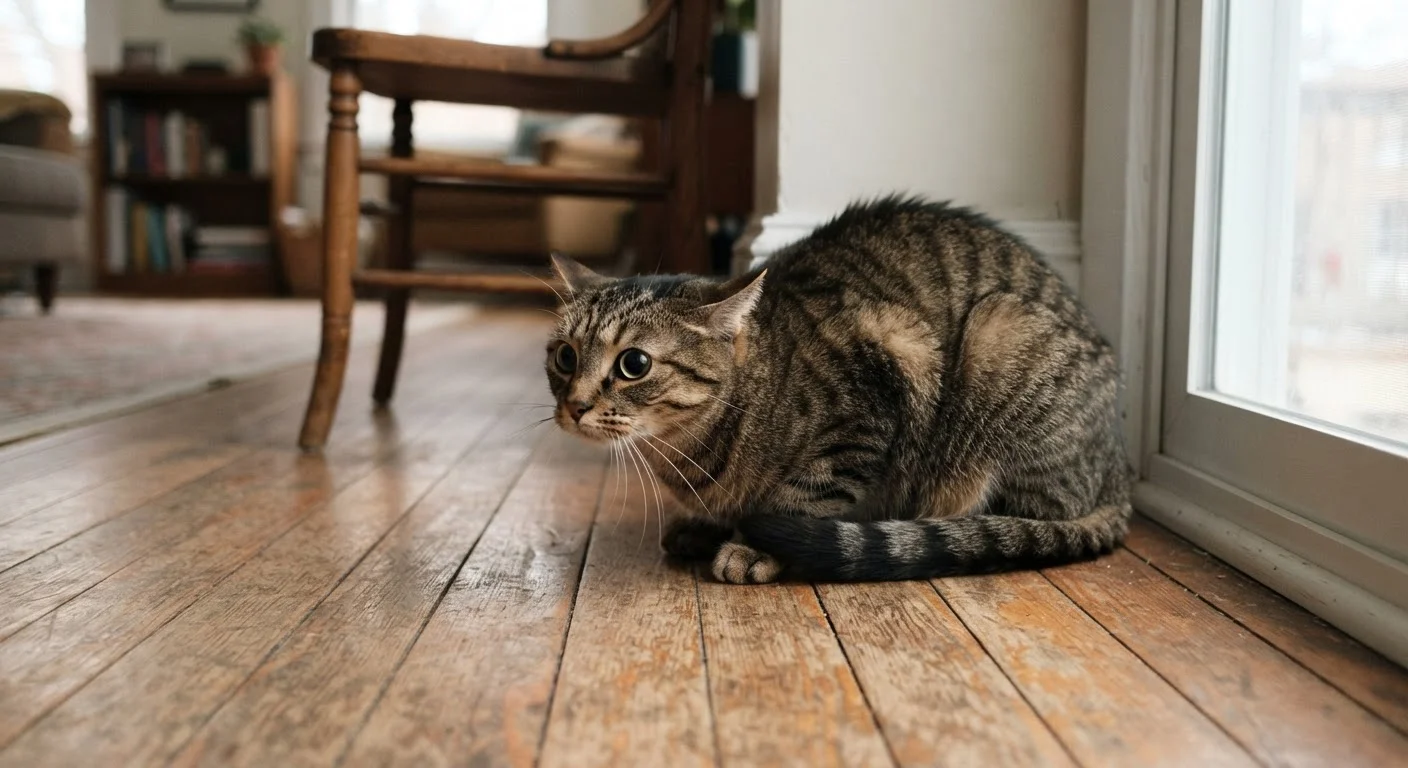
Cats almost always signal discomfort before acting. The challenge is that these signals are brief and easy to miss - especially for owners who are not yet fluent in feline communication.
Watch for these escalating cues:
- Tail movement: A slowly lashing or thumping tail is a sign of irritation, not happiness. This is distinct from the loose, upright tail of a relaxed cat.
- Ear position: Ears that rotate sideways or flatten against the skull signal fear or aggression.
- Skin rippling: Visible muscle rippling along the back is a strong signal that overstimulation or agitation has reached a tipping point.
- Dilated pupils: Wide pupils in bright light indicate heightened arousal, whether from fear or predatory excitement.
- Vocalization: Low growls, hissing, or spitting are explicit warnings - the cat is communicating discomfort clearly.
Stopping an interaction at the first sign of discomfort - before the cat feels compelled to escalate - is the most effective prevention strategy. Many bite incidents happen because humans misread or dismiss early signals.
How to Respond Safely in the Moment
If a cat is already in an aggressive state, the priority is de-escalation and safety - not correction or control.
Do:
- Stop all interaction immediately and move slowly and calmly away from the cat.
- Give the cat space and an escape route - a cornered cat will almost always escalate.
- Avoid direct eye contact, which cats may interpret as a challenge.
- Allow the cat to retreat to a quiet, familiar space without interference.
Do not:
- Yell, swat, or use a spray bottle - punishment increases fear and rarely changes behavior long-term.
- Try to restrain or hold down the cat during an aggressive episode.
- Introduce another pet or person into the situation.
If you are scratched or bitten, clean the wound immediately and monitor it for signs of infection. Cat bites in particular can introduce bacteria deep into tissue; consult a healthcare provider if there is swelling, redness, or warmth around the wound.
Create a Safe Retreat Space
Every cat benefits from having a designated quiet zone - a high perch, a covered bed, or a room where it can decompress undisturbed. When tension rises, redirecting the cat toward its retreat space (rather than pursuing it) gives it the autonomy to self-regulate. Cats that have a reliable escape option are less likely to resort to aggression.
Longer-Term Management and Prevention
Responding safely in the moment matters, but reducing the frequency of aggressive episodes requires addressing root causes over time.
Environmental enrichment is often underestimated as a behavioral tool. Indoor cats with insufficient outlets for predatory play can accumulate frustration that surfaces as aggression. Structured daily play using wand toys mimics hunting sequences and provides a healthy discharge for that energy. Our article on building a daily enrichment routine offers practical structure for this approach.
Multi-cat household tension is a frequent driver of aggression. Cats in the same home may never fully share resources comfortably, and providing separate feeding stations, litter boxes, and resting spots reduces competition-driven tension. For background on how lifestyle shapes behavior, see indoor vs. outdoor cat behavioral differences.
Rule out medical causes first. Before committing to any behavioral modification plan, a full veterinary checkup is essential. Pain-induced aggression cannot be trained away - it requires medical treatment. Conditions like arthritis, dental disease, or hyperthyroidism are known to increase irritability in cats.
For cats showing compulsive or repetitive behaviors alongside aggression, our piece on compulsive behaviors in pets may offer additional context. In persistent or severe cases, a referral to a board-certified veterinary behaviorist provides the most targeted intervention available.
This article provides general information about feline behavior and is not a substitute for professional veterinary or behavioral advice. If your cat is showing aggression, consult a licensed veterinarian to rule out medical causes before pursuing behavioral interventions.