

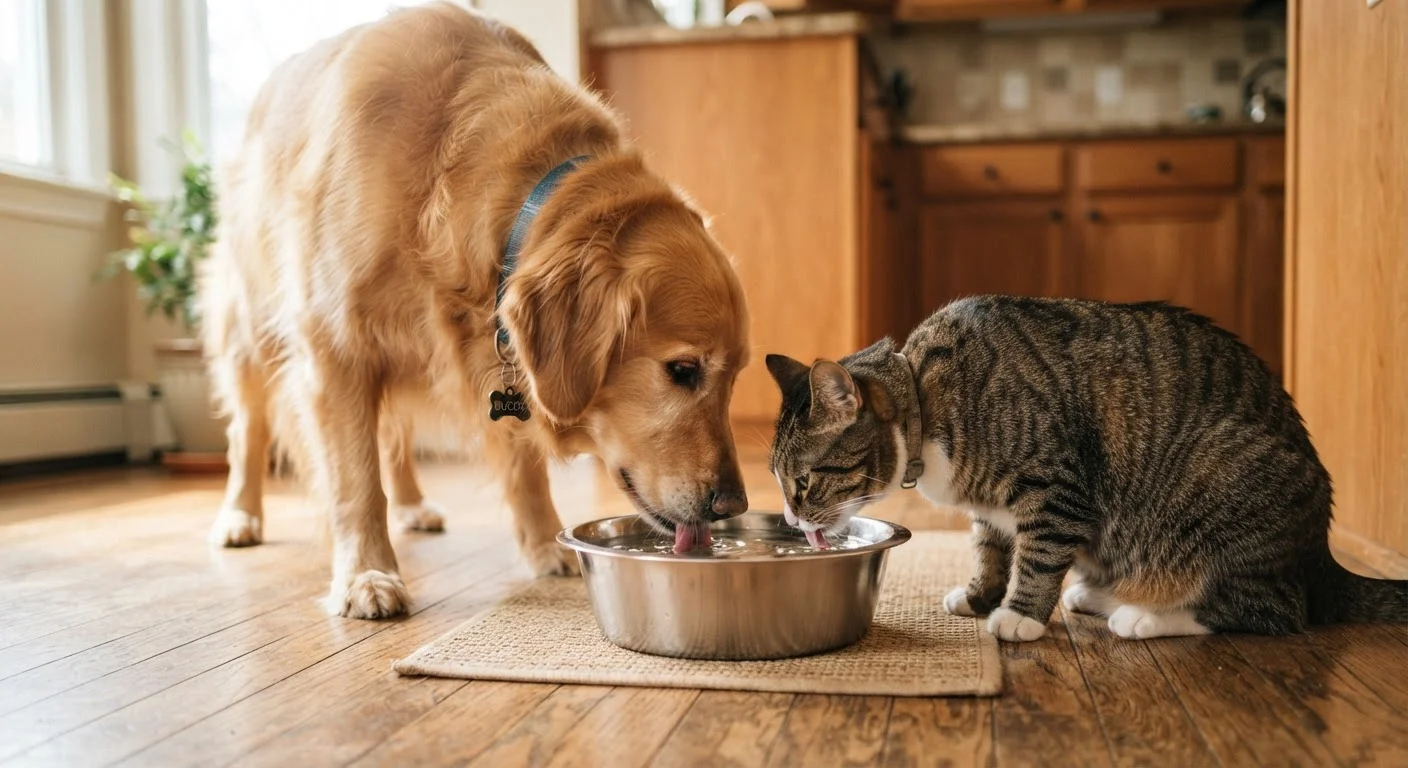
Key Takeaways
Pet Hydration
Pet hydration refers to the balance of water intake and fluid loss in dogs and cats. Every major bodily function - from digestion and circulation to temperature regulation and joint lubrication - depends on adequate fluid levels. When a pet doesn't consume enough water to meet its physiological needs, dehydration sets in, often before any visible symptoms appear.
Intracellular and extracellular fluid balance is regulated by the kidneys, adrenal glands, and hypothalamus. Disruptions to this balance can impair organ function rapidly, particularly in small-bodied animals.
Why Water Is the Foundation of Pet Health
Water is involved in nearly every biological process your pet's body performs. It transports nutrients through the bloodstream, regulates core body temperature, cushions joints, flushes waste through the kidneys, and supports healthy digestion. Without adequate hydration, these systems begin to falter - sometimes before owners notice anything is wrong.
Dehydration in pets doesn't always look dramatic. A pet can be meaningfully fluid-deficient while still appearing mostly normal. That's what makes monitoring water intake an active responsibility rather than a passive one. Owners who assume their pet will simply drink when thirsty - especially cat owners - may be unaware that their animal is running a consistent fluid deficit.
For a broader foundation on pet health essentials, the first-time owner's health guide covers hydration alongside vaccinations, nutrition, and preventive care habits.
~70-80%
Moisture content in wet pet food
Veterinary nutritionists note that wet food contributes substantially to a pet's total daily fluid intake, far exceeding the roughly 10% moisture found in dry kibble.
1 oz/lb
General daily water guideline for dogs
This widely cited veterinary rule of thumb provides a baseline; actual needs vary based on activity, climate, and diet composition.
Up to 80%
Of a pet's body weight that is water
Water makes up a large proportion of mammalian body mass, underscoring why even moderate dehydration can impair organ function in dogs and cats.
How Much Water Do Dogs and Cats Actually Need?
The standard guideline for dogs is approximately 1 ounce of water per pound of body weight per day. A 30-pound dog needs roughly 30 ounces; a large 80-pound breed may need well over half a gallon. This baseline shifts with exercise, ambient temperature, and diet composition.
Cats present a different challenge. Their ancestral biology - adapted to arid environments - means they have a blunted thirst response compared to dogs. Domestic cats fed dry kibble exclusively often drink only a fraction of the water they need. Veterinary nutritionists generally suggest cats need about 3.5-4.5 ounces of water per 5 pounds of body weight daily, from all sources combined including food.
Diet composition matters enormously here. Wet food typically contains 70-80% moisture, while dry kibble contains around 10%. A cat eating only dry food must compensate almost entirely through drinking - something their physiology doesn't naturally drive them to do reliably. This connection between diet format and hydration is explored further in our guide on dry kibble vs. wet food trade-offs.
Simple Test: Track Bowl Levels Daily
Fill your pet's water bowl to the same level each morning and check how much has been consumed by evening. This gives you a rough but useful baseline for your pet's typical intake. Sudden drops or spikes over multiple days are worth discussing with your veterinarian.
Recognizing Dehydration - Before It Becomes a Crisis
The classic field test for dehydration is the skin tent test: gently pinch and lift the skin at the back of your pet's neck, then release. In a well-hydrated animal, the skin snaps back immediately. Delayed return - the skin "tenting" - suggests dehydration. This is a general screening indicator, not a diagnostic tool, and results vary with age and body condition.
Other signs to watch for include:
- Dry, tacky, or pale gums (gums should feel moist and be pink)
- Sunken or dull-looking eyes
- Reduced energy or unusual lethargy
- Decreased urination or darker-than-normal urine
- In cats specifically: constipation or hard, dry stools
It's worth noting that changes in water intake can also signal broader health issues. Pets that suddenly stop eating may also reduce their water consumption, compounding the risk. Our article on what to do when a pet stops eating covers the warning signs owners should not dismiss.
If your pet shows signs of dehydration or has a notable change in drinking habits, contact your veterinarian promptly. This article provides general information only and is not a substitute for professional veterinary advice.
Dehydration Is Not the Only Concern
While insufficient water intake is the more common issue, drinking significantly more than usual can also signal a medical problem. Conditions like kidney disease, diabetes, and hyperthyroidism - particularly in cats - often present with increased thirst as an early symptom. Regular wellness exams help catch these changes before they escalate. Good oral health also plays a role: painful dental disease can discourage eating and drinking. Our article on overlooked pet dental health covers this connection.
Practical Ways to Improve Your Pet's Water Intake
Encouraging adequate hydration doesn't require expensive interventions. Several practical strategies are supported by veterinary guidance:
- Use multiple water stations. Placing bowls in several locations - particularly for cats - increases the likelihood of spontaneous drinking throughout the day.
- Try a pet water fountain. Many cats and some dogs are attracted to moving water. Fountains can meaningfully increase intake for reluctant drinkers.
- Keep bowls clean. Pets can be sensitive to odors and biofilm buildup. Washing bowls daily encourages more consistent drinking.
- Add wet food to the diet. Even partially replacing dry kibble with wet food improves daily moisture intake without requiring the pet to drink more.
- Experiment with bowl materials. Some pets avoid plastic bowls due to taste or smell. Stainless steel or ceramic alternatives may be preferred.
Consistent daily routines also matter. Pets with predictable feeding and watering schedules tend to have more regulated intake patterns overall. Our article on why feeding schedule consistency matters explains how routine supports digestion and behavioral stability.
For pet owners interested in how diet affects hydration more broadly - including for humans - the concepts explored in hydration and dietary balance offer useful parallel context.