

Key Takeaways
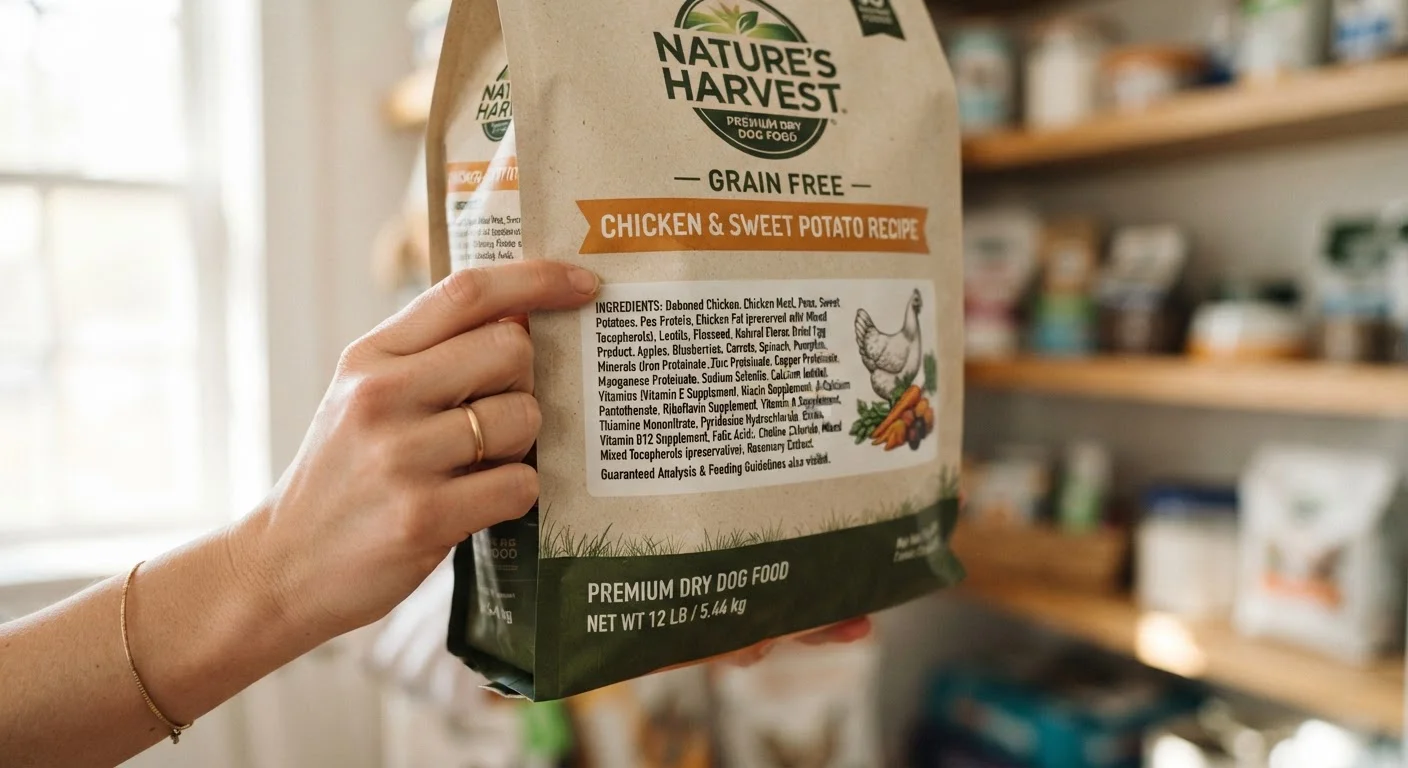
Pet Food Ingredient List
A pet food ingredient list is the section on a package that names every component in the food, ranked from heaviest to lightest by weight before cooking. It tells you what your pet is actually eating, though weight alone doesn't tell the full nutritional story. Understanding the list alongside other label sections gives you a clearer picture of overall diet quality.
Ingredient weights are measured before processing (pre-cooked), which means moisture-rich ingredients like fresh chicken may appear higher on the list than their post-processing contribution warrants - a concept known as ingredient splitting and moisture dilution.
How the Ingredients List Is Organized
Every pet food sold in the United States must list ingredients in descending order by weight - measured before processing. This is the same basic principle used on human food labels, which you can explore further in our guide on what the Nutrition Facts label is actually telling you.
The key nuance: raw, whole ingredients like fresh chicken contain significant moisture. When weighed before cooking, fresh chicken may rank first on the list - but once processed, its actual contribution to the finished food may be smaller than it appears. Conversely, a dry ingredient like chicken meal (a concentrated, moisture-removed protein source) may appear lower but deliver more protein per gram in the final product.
This is why a single-ingredient focus can mislead. Instead, scan the first several ingredients as a group to understand the protein and carbohydrate foundation of the diet.
Ingredient Splitting: A Label-Reading Pitfall
Some manufacturers list a single ingredient - like peas - under multiple names (pea protein, pea flour, pea fiber) to keep each entry lower on the list. Individually they appear minor; combined, they may represent a significant portion of the diet. Scanning for repeated base ingredients helps you spot this pattern.
Decoding Ingredient Names and Definitions
AAFCO - the Association of American Feed Control Officials - provides standardized definitions for ingredient names used on pet food labels. These definitions matter because they determine what a manufacturer is legally permitted to call something.
- Chicken: Clean, slaughtered poultry flesh with or without skin, but without feathers, heads, feet, or organs.
- Chicken meal: Rendered chicken from which moisture has been removed. It is a concentrated protein source.
- Chicken by-product meal: Rendered parts other than skeletal muscle - including organs like liver and kidney, which are nutrient-rich.
- Meat and bone meal: A generic rendered product from mammalian tissue. The lack of species specificity is worth noting.
The word "meal" is not a red flag - it simply means the ingredient has been rendered and dried. Many veterinary nutritionists consider named meals (chicken meal, salmon meal) to be reliable protein sources. What matters more is whether the overall diet is nutritionally complete.
Look Past the Front-of-Bag Claims
Terms like 'holistic,' 'premium,' and 'human-grade' have no standardized legal definition in U.S. pet food regulation and carry no nutritional guarantee. Always flip to the back panel and check the AAFCO statement and ingredient list before drawing conclusions about quality.
The Guaranteed Analysis Panel
Beneath or beside the ingredients list, you'll find the guaranteed analysis - a regulatory requirement that shows crude protein (minimum), crude fat (minimum), crude fiber (maximum), and moisture (maximum). Some manufacturers voluntarily include additional values like omega fatty acids or ash.
These are not precise measurements; they are thresholds. A food showing 26% crude protein meets or exceeds that level but could contain more. Comparing guaranteed analysis figures across wet and dry foods also requires a conversion called dry-matter basis - because wet foods contain far more moisture, their nutrient percentages look lower until you account for water content.
For a broader look at how nutrient panels work on labels designed for humans, see reading an ingredient list: what to look for and what to ignore.
The AAFCO Statement: The Label's Most Important Line
Often overlooked, the AAFCO nutritional adequacy statement is arguably the most useful line on the entire bag. It appears in small print and takes one of two forms:
- Formulated to meet AAFCO nutrient profiles - meaning the recipe was designed to hit minimum and maximum nutrient levels on paper.
- Animal feeding tests using AAFCO procedures - meaning the food was actually fed to animals and met standards during a feeding trial.
The statement also specifies the intended life stage: growth (puppies/kittens), adult maintenance, reproduction, or all life stages. A food labeled for adult maintenance only should not be a puppy's sole diet.
If a bag says "for supplemental or intermittent feeding only," the food is not nutritionally complete on its own - it's meant to be a topper or treat, not a primary diet. For guidance on how extras like toppers and supplements fit into your pet's overall nutrition, see treats, toppers, and supplements explained.
For further context on pet health fundamentals, the Pet Health hub covers a wide range of care topics.
This article is for general informational purposes only and is not a substitute for personalized veterinary advice. Consult a licensed veterinarian regarding your pet's specific dietary needs.