

Key Takeaways
Protection from traffic and outdoor predators
Vehicle collisions and attacks from dogs or wildlife are among the leading causes of premature death in cats. Indoor living removes these hazards almost entirely.
Lower risk of infectious disease
Diseases such as FeLV and FIV spread through contact with infected cats. Indoor cats have far less exposure and correspondingly lower infection rates.
Reduced parasite burden
Fleas, ticks, ear mites, and intestinal parasites are significantly less common in cats without outdoor access, reducing discomfort and associated health complications.
Easier health monitoring for owners
Indoor cats are observed daily in a controlled environment, making it easier to notice behavioral changes, appetite shifts, or physical symptoms early.
No risk of accidental poisoning
Outdoor environments may expose cats to lawn chemicals, antifreeze, toxic plants, and rodenticides - risks that are effectively eliminated indoors.
Higher risk of obesity and related disease
Indoor cats typically move less than outdoor cats, making weight management a genuine challenge. Obesity is linked to diabetes, arthritis, and reduced lifespan in cats.
Boredom and psychological stress
Without structured enrichment, indoor cats may develop anxiety, destructive behaviors, or compulsive habits driven by understimulation of their natural hunting instincts.
Limited opportunity for natural behaviors
Climbing, stalking, and territorial exploration are core feline needs. Indoor environments require deliberate effort to provide meaningful substitutes.
Dependency on owner for all stimulation
An indoor cat's quality of life is entirely contingent on the enrichment its owner provides - an uneven burden that not all households can consistently meet.
Our Verdict
Neither lifestyle is inherently superior - each involves genuine trade-offs that depend on the individual cat's health, temperament, and environment. Indoor living offers meaningful protection from the most serious physical threats, while outdoor access supports natural behavioral needs that indoor environments must actively compensate for. The best outcome for any cat depends on how thoughtfully an owner manages the risks specific to that lifestyle.
Owners willing to invest in structured indoor enrichment will often find indoor living the safer long-term choice, while those with safe outdoor spaces and access to supervised options may find a managed hybrid approach works well for active, confident cats.
What the Lifespan Data Actually Tells Us
Veterinary and animal welfare organizations consistently report that indoor cats tend to live longer than their outdoor counterparts. Estimates vary, but indoor cats are often reported to live into their mid-to-late teens, while free-roaming outdoor cats may average significantly fewer years - with outdoor hazards cited as a primary reason.
That gap is driven by concrete, measurable risks: vehicle collisions, attacks from dogs or wildlife, exposure to infectious diseases such as feline leukemia virus (FeLV) and feline immunodeficiency virus (FIV), and accidental poisoning from pesticides or antifreeze. These are not theoretical dangers. They represent the leading causes of premature death in free-roaming cats.
Still, lifespan alone is not the whole picture. A longer life lived in chronic boredom or frustration is its own welfare concern - one that conscientious indoor cat owners need to take seriously. For more on this, see common pet health myths that can mislead owners into thinking indoor cats are automatically thriving.
The Real Advantages of Keeping Cats Indoors
Protection from traffic and outdoor predators
Vehicle collisions and attacks from dogs or wildlife are among the leading causes of premature death in cats. Indoor living removes these hazards almost entirely.
Lower risk of infectious disease
Diseases such as FeLV and FIV spread through contact with infected cats. Indoor cats have far less exposure and correspondingly lower infection rates.
Reduced parasite burden
Fleas, ticks, ear mites, and intestinal parasites are significantly less common in cats without outdoor access, reducing discomfort and associated health complications.
Easier health monitoring for owners
Indoor cats are observed daily in a controlled environment, making it easier to notice behavioral changes, appetite shifts, or physical symptoms early.
No risk of accidental poisoning
Outdoor environments may expose cats to lawn chemicals, antifreeze, toxic plants, and rodenticides - risks that are effectively eliminated indoors.
Indoor living removes a cat from its most statistically dangerous threats. It also makes it far easier for owners to monitor changes in appetite, litter box habits - which can be early indicators of illness - and behavior. Cats who live indoors are also less likely to bring parasites like fleas, ticks, or intestinal worms into the home.
Owners who notice shifts in litter box use should review litter box avoidance causes, since health and stress signals often appear there first.
The Real Risks of the Indoor Life
Higher risk of obesity and related disease
Indoor cats typically move less than outdoor cats, making weight management a genuine challenge. Obesity is linked to diabetes, arthritis, and reduced lifespan in cats.
Boredom and psychological stress
Without structured enrichment, indoor cats may develop anxiety, destructive behaviors, or compulsive habits driven by understimulation of their natural hunting instincts.
Limited opportunity for natural behaviors
Climbing, stalking, and territorial exploration are core feline needs. Indoor environments require deliberate effort to provide meaningful substitutes.
Dependency on owner for all stimulation
An indoor cat's quality of life is entirely contingent on the enrichment its owner provides - an uneven burden that not all households can consistently meet.
The risks of indoor living are less dramatic than outdoor hazards but no less real. Sedentary indoor cats are significantly more prone to weight gain, and excess weight is directly linked to diabetes, joint disease, and a shortened lifespan. See how excess weight affects cats for a fuller picture of what this means in practice.
Mental health matters too. Cats are predators with strong instincts for hunting, climbing, and territory. Without structured stimulation, indoor cats may develop anxiety, aggression, or compulsive behaviors. Building a daily enrichment routine is not optional - it is a core part of responsible indoor cat ownership.
Outdoor Access: Benefits, Hazards, and the Middle Ground
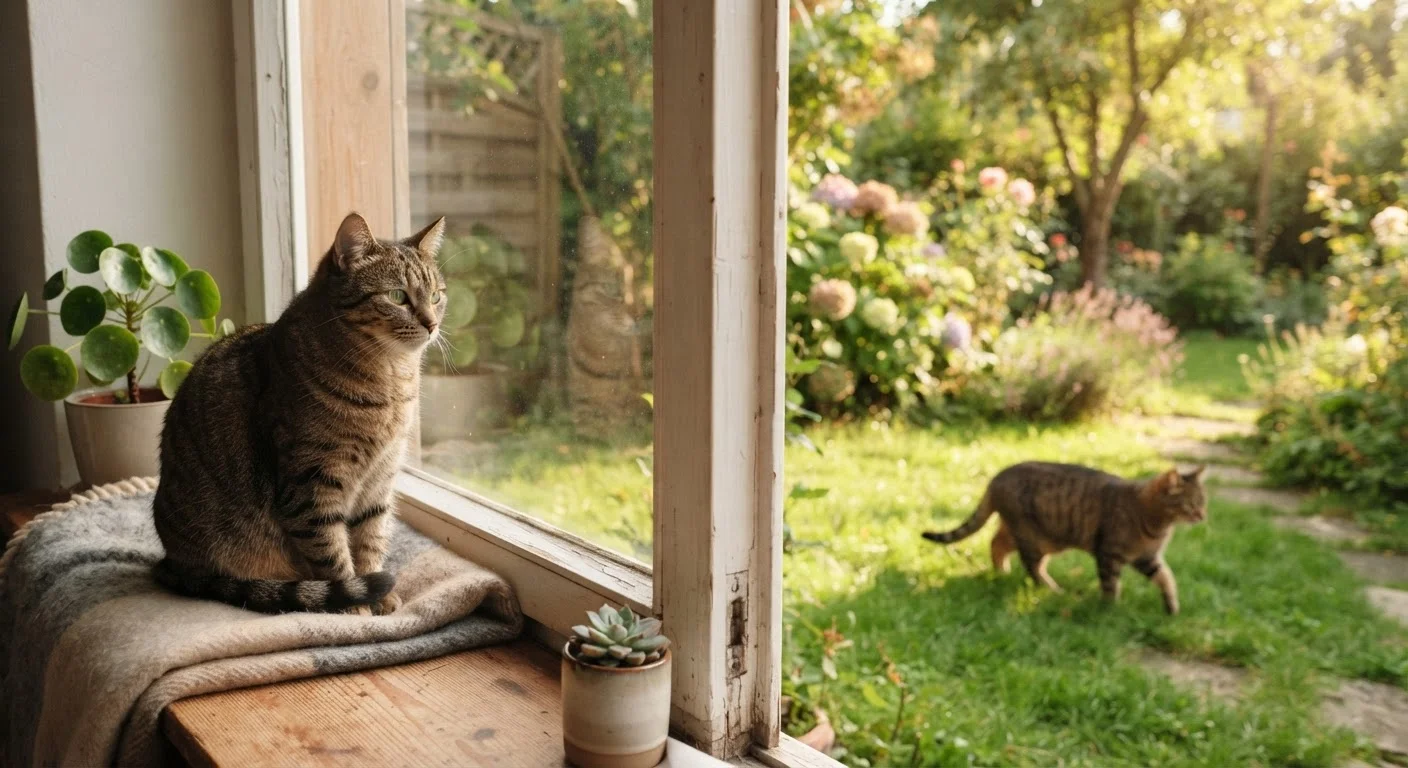
Cats with outdoor access do tend to be more physically active, exhibit fewer boredom-related behaviors, and engage in natural movement patterns - stalking, climbing, running - that are genuinely difficult to replicate indoors. For some cats, particularly those who were raised outdoors, restricted indoor living can be a source of chronic stress.
10-15 yrs
Typical indoor cat lifespan estimate
Veterinary sources commonly cite the indoor cat lifespan as ranging from roughly 10 to 15 years or more, compared to significantly lower averages for free-roaming outdoor cats.
~13x
Higher FIV risk in outdoor vs. indoor cats
Research published in veterinary literature has found that outdoor or indoor-outdoor cats face substantially higher rates of FIV infection compared to exclusively indoor cats.
The hazards, however, are not minor. Outdoor cats encounter other cats and thus face higher risk of FeLV, FIV, and upper respiratory infections. They are also more likely to sustain wounds from territorial fights, which can become serious abscesses. Parasites are a near-constant concern.
A structured middle ground - enclosed outdoor spaces known as "catios," leash-trained outdoor walks, or fully supervised garden time - can meaningfully reduce risk while preserving behavioral benefits. This approach is increasingly recommended by veterinary behaviorists as a pragmatic compromise for owners and cats who are good candidates.
The Catio and Supervised Access Option
Enclosed outdoor structures (catios) and leash-trained walks are growing in popularity as a middle-ground approach. They allow cats to experience fresh air, sunlight, and sensory stimulation while remaining protected from traffic, predators, and contact with roaming cats. Not every cat adapts readily to a harness, and not every home has space for an enclosure, but these options are worth exploring for owners who want to reduce risk without full confinement.
Regardless of lifestyle, spaying or neutering is an important health decision for most cats. Understanding the difference between spaying and neutering helps owners make informed choices about their cat's long-term care.
Making the Best Decision for Your Cat
There is no universally correct answer, but there are factors that should shape the decision. A cat's age, health status, temperament, prior history, and the physical environment available all matter. A nervous rescue cat may thrive indoors; a confident, active cat raised with outdoor access may struggle without it.
Routine veterinary care is non-negotiable in either scenario. A consistent daily care routine supports long-term health monitoring and helps owners catch problems early, whether a cat is living inside full-time or spending time outdoors. Nutrition also plays a major role - understanding food trade-offs can help owners match diet to their cat's activity level and weight needs.
This article is for general informational purposes only and does not constitute veterinary advice. Always consult a licensed veterinarian for guidance specific to your cat's health and circumstances.