

Key Takeaways
Exfoliation
Exfoliation is the process of removing dead skin cells from the surface of your skin. Your skin naturally sheds these cells on its own, but that process slows with age, stress, and environmental factors. Exfoliating helps speed it up, which can leave skin looking brighter, feeling smoother, and absorbing other skincare products more effectively.
Exfoliation targets the stratum corneum - the outermost layer of the epidermis - either through mechanical abrasion (physical) or by breaking down the chemical bonds holding dead cells together (chemical).
Physical Exfoliants: Scrubs, Brushes, and Texture
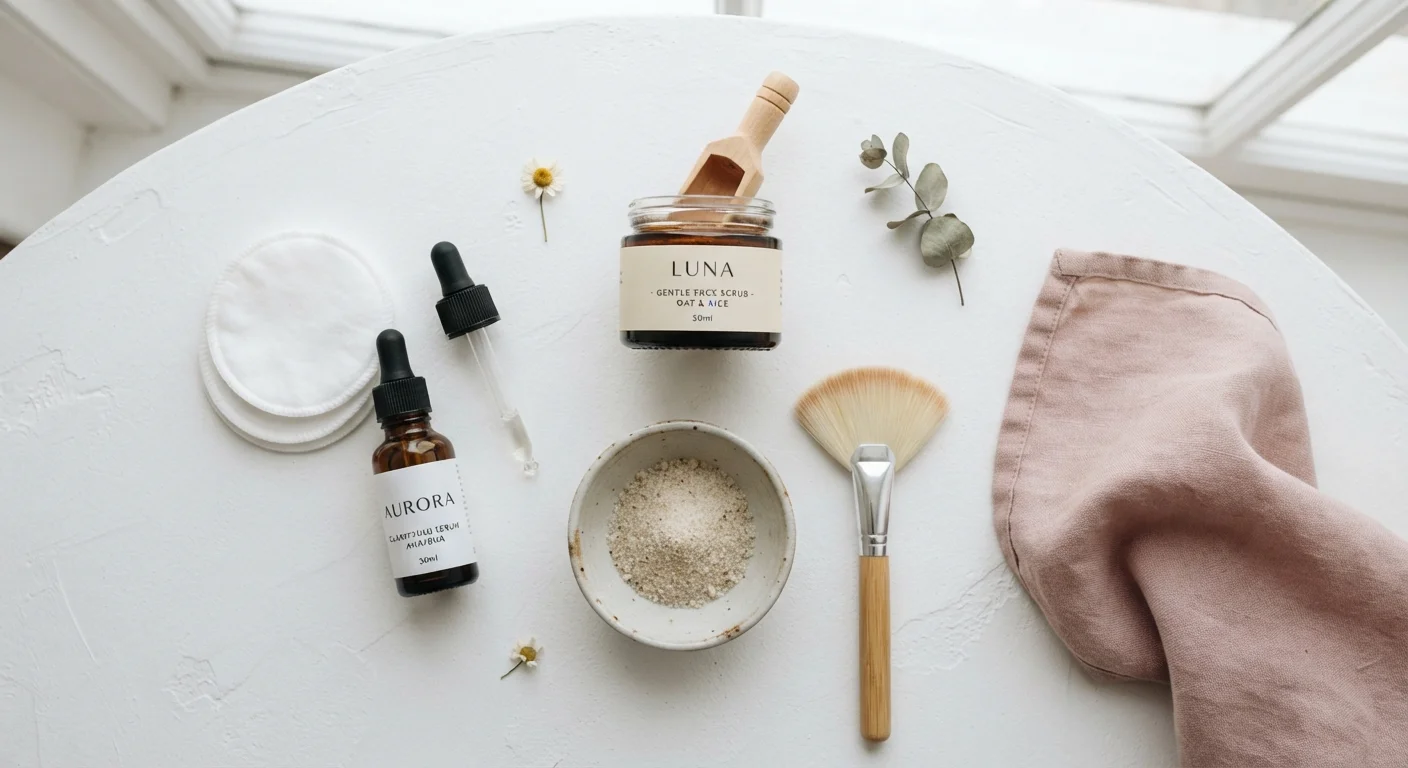
Physical exfoliation is exactly what it sounds like: you're using something with texture or friction to manually buff dead skin cells off the surface. This category includes facial scrubs with fine particles, dry brushes, washcloths, and cleansing devices with rotating bristles.
The main appeal of physical exfoliants is immediacy - your skin often feels smoother right away. They're also widely available and easy to incorporate into a routine you already have. If you're just building a skincare routine from scratch, a gentle scrub a couple of times a week is a simple entry point.
The downside? Texture can be unpredictable. Coarser or unevenly shaped particles can create micro-abrasions in the skin, which is especially problematic if you have active breakouts or compromised skin. Technique matters enormously here - scrubbing hard doesn't mean scrubbing better. Light, circular pressure is always the approach to use.
Go Gentle: Less Pressure, Better Results
With physical exfoliants, pressure is the enemy - more scrubbing does not equal better results and can cause small tears in the skin surface. Use the lightest touch you can and let the product's texture do the work. If your skin looks red immediately after a scrub, that's a sign to dial back either frequency or pressure, or to try a finer-textured formula.
Chemical Exfoliants: Acids and Enzymes That Do the Work for You
Chemical exfoliants skip the manual friction entirely. Instead, they rely on active ingredients - most commonly alpha hydroxy acids (AHAs), beta hydroxy acids (BHAs), or fruit-derived enzymes - to dissolve the bonds between dead skin cells so they naturally shed away.
- AHAs (glycolic acid, lactic acid, mandelic acid): Water-soluble acids that work primarily on the skin's surface. Glycolic acid has the smallest molecule size and penetrates deepest, making it highly effective but also more likely to cause sensitivity. Lactic acid is gentler and also has mild hydrating properties. AHAs are particularly useful for dullness, uneven texture, and mild hyperpigmentation.
- BHAs (salicylic acid): Oil-soluble, meaning they can penetrate into pores. That makes BHAs especially effective for oily or acne-prone skin, where clogged pores are a primary concern.
- Enzymes (papain from papaya, bromelain from pineapple): Generally the mildest option, working on the surface without acid activity. A popular starting point for sensitive skin.
Learning to read a skincare ingredient label can help you identify which acids are present and at what concentration - useful context when you're comparing formulas.
~28 days
Average skin cell turnover cycle
Dermatologists generally cite a roughly four-week cycle for skin cell renewal in younger adults, with turnover slowing progressively with age.
2-3x/week
Typical recommended exfoliation frequency
Most skincare guidelines and dermatology sources suggest exfoliating no more than two to three times per week for most skin types to avoid barrier disruption.
45+ days
Skin turnover cycle in older adults
Research suggests the cell renewal cycle can extend to six weeks or longer in older adults, which is part of why skin can appear duller and benefit more noticeably from exfoliation.
Matching Your Exfoliation Method to Your Skin Type
No single method works best for everyone, and skin type is the most useful filter for figuring out your approach.
A few general principles hold across most skin types: always apply SPF the morning after any exfoliation, since freshly exfoliated skin is more vulnerable to UV damage. This connects to a broader point - understanding how sunscreen works is a smart companion habit to any active exfoliation routine. And regardless of method, follow up with a good moisturizer to support barrier repair.
It's also worth remembering that great skin isn't built by products alone. Lifestyle factors like sleep and hydration have a real impact on how your skin responds to any routine.
This article is for general informational purposes only and is not a substitute for professional skincare or medical advice. If you have a skin condition, persistent irritation, or specific concerns, consult a licensed dermatologist.