

Key Takeaways
Start here
Why Getting Dressed Feels So Hard
Foundation
The Capsule Mindset: Less Choosing, More Wearing
Apply it
Building Your Outfit Formula
Shop smarter
Shopping with Purpose, Not Impulse
Daily practice
Making It Work Every Day
Why Getting Dressed Feels So Hard
Most people assume a stressful morning closet moment means they don't have enough clothes or enough style instinct. Neither is usually true. What's actually happening is decision fatigue - the mental drain that comes from too many unrelated choices with no clear framework for making them.
Research in behavioral psychology consistently shows that the more decisions we face early in a day, the harder each one becomes. Your wardrobe shouldn't add to that load. When a closet is full of items that don't coordinate with each other, getting dressed becomes a daily puzzle with no reliable solution.
The fix isn't a complete wardrobe overhaul or a shopping spree - it's building a smarter system. For a deeper look at the intentional side of this, see our piece on dressing with intention.
Decision fatigue
The mental exhaustion that comes from making too many choices in a row, which makes each subsequent decision harder and less satisfying.
Capsule wardrobe
A curated collection of clothing items that coordinate well with each other, so you can create many outfits from a smaller number of pieces.
Outfit formula
A repeatable structure for building outfits - like combining a bottom, a top, and a layer - that takes the guesswork out of getting dressed each day.
Versatile basics
Clothing pieces in neutral or flexible colors and simple silhouettes that can be worn in many different outfit combinations and occasions.
Three-outfit test
A quick mental check before buying: can you name at least three existing outfits this new piece would work in? If not, it's likely an impulse purchase.
The Capsule Mindset: Less Choosing, More Wearing
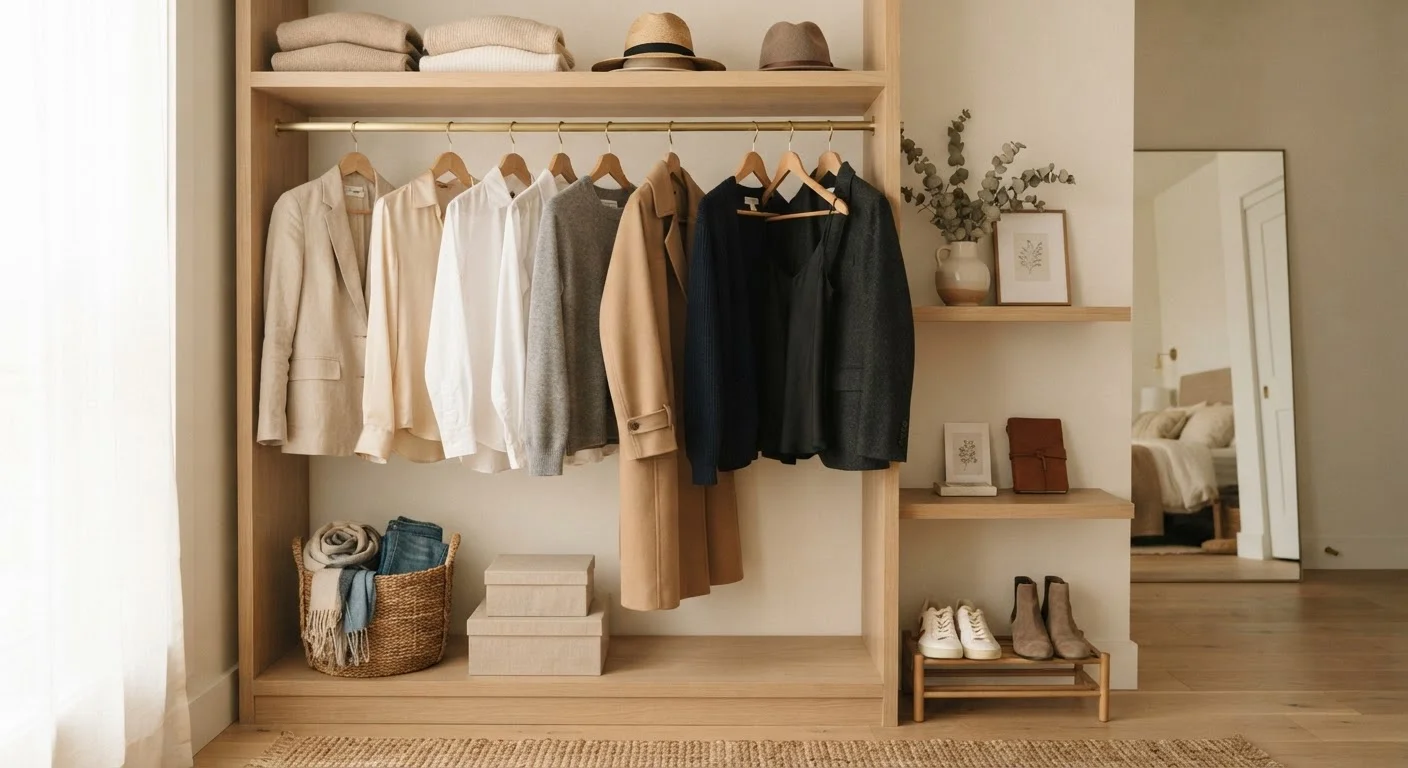
A capsule wardrobe isn't about owning as little as possible - it's about owning pieces that actually work together. The idea is straightforward: choose a cohesive color palette, prioritize versatility over novelty, and make sure most items in your closet can pair with most other items.
You don't have to commit to a minimalist aesthetic to benefit from this thinking. Even if your style leans eclectic or colorful, building around a consistent foundation - neutral basics you can dress up or down - gives you a reliable starting point every morning.
Start a simple audit: pull out everything you haven't worn in the past three months. If you can't imagine a specific occasion where you'd reach for it, it probably isn't earning its closet space. For a comprehensive framework that covers every stage of this process, explore our complete personal style guide.
Try a 15-Minute Closet Audit
Set a timer and pull out five items you haven't worn recently. For each one, ask: does it fit well right now, and does it go with at least two other things I already own? If the answer to either question is no, it's a candidate to donate or restyle. You don't need to tackle the whole closet at once - consistent small audits add up fast.
Building Your Outfit Formula
An outfit formula is a repeatable structure you can apply to different pieces without having to reinvent your look from scratch. Think of it as a recipe: once you know the ratio, you can swap ingredients freely.
A reliable everyday formula: one bottom + one top + one layer + one shoe. The layer (a cardigan, blazer, or jacket) is what takes an outfit from flat to finished, and it's the element most beginners skip. Once you have two or three go-to formulas that fit your life - work, weekend, running errands - getting dressed becomes automatic rather than anxious.
Want to push your formula further? Styling techniques like monochrome dressing and pattern mixing are more approachable than they look. Our guide on pattern mixing, monochrome, and layering breaks each one down in plain terms.
Shopping with Purpose, Not Impulse
The average American closet contains dozens of items that rarely or never get worn - often because they were purchased without a clear outfit context in mind. Purposeful shopping flips that pattern.
Before buying anything new, identify the gap it fills: What does this work with? What will I wear it to? If you can't answer both questions confidently, the item probably belongs back on the rack. This single habit - sometimes called the "three-outfit test" - dramatically reduces buyer's remorse and wardrobe clutter over time.
Budget matters too, and dressing well doesn't require a high one. For practical strategies that stretch clothing dollars without sacrificing versatility, our guide on building a functional wardrobe on a tight budget is a natural next read.
Trends Are a Tool, Not a Requirement
Chasing trends can quietly drain your budget and fill your closet with items that feel dated within a season. It's completely fine to be inspired by what's current, but the most cost-effective wardrobe decisions are rooted in what you'll actually reach for month after month. Build the foundation first; add trend-forward pieces occasionally and intentionally.
Making It Work Every Day
The best wardrobe system is the one you actually stick with. That means keeping it realistic: lay out your outfit the night before if mornings are rushed, photograph combinations you like so you can repeat them without remembering every detail, and resist the urge to chase every new trend.
Style isn't a destination - it's an ongoing, low-pressure experiment. Most people's taste evolves gradually, and that's a feature, not a problem. If you're still working out what you actually like to wear, our guide on finding your aesthetic is a grounded starting point with no pressure attached.
Getting dressed without the stress is less about owning the perfect wardrobe and more about building a system that removes unnecessary friction. Start with one small change - a capsule audit, a three-outfit shopping rule, or a single reliable formula - and build from there.
Finding Your Aesthetic: A Starting Point for Style Beginners
Not sure what your style actually is? This guide walks through the foundational steps of discovering what you genuinely like to wear and why - no prior style knowledge needed.
Building a Functional Wardrobe on a Tight Budget
Practical strategies for putting together a versatile, everyday wardrobe without overspending - focused on smart choices over big budgets.
Pattern Mixing, Monochrome, and Layering: Everyday Style Techniques
Once you have the basics down, this guide helps you experiment with styling approaches that make simple outfits look more considered and intentional.