

| Most common workplace code | Business Casual |
| Dress code spectrum levels | Casual → Business Casual → Smart Casual → Cocktail → Black Tie → White Tie |
| Most misunderstood code | Smart Casual (Widely reported by etiquette and fashion writers) |
| Safest default when unsure | Dress one level more formal than you think |
| Most versatile wardrobe piece | A well-fitted blazer |
Why Dress Codes Are So Confusing
Invitations love vague dress codes. "Smart casual" can mean a crisp blazer and dark jeans to one host - and a cocktail dress to another. The terminology evolved informally over decades, so there's no single authority that defines every term. What does exist is a general spectrum from relaxed to formal, and understanding where each code lands on that spectrum is enough to get dressed with confidence.
Whether you're building a versatile wardrobe or just decoding a single event, this reference covers the most common dress codes Americans encounter - and what they realistically mean for your closet. For a broader look at expressing individuality within these boundaries, see dressing for your body shape vs. personality.
| Most common workplace code | Business Casual |
| Dress code spectrum levels | Casual → Business Casual → Smart Casual → Cocktail → Black Tie → White Tie |
| Most misunderstood code | Smart Casual (Widely reported by etiquette and fashion writers) |
| Safest default when unsure | Dress one level more formal than you think |
| Most versatile wardrobe piece | A well-fitted blazer |
The Core Dress Codes, Explained
Business Casual
A workplace-oriented dress code that balances professionalism with comfort. It typically includes neat trousers, button-downs, blouses, and closed-toe shoes, stopping short of formal suits or ties.
Smart Casual
A social dress code that is polished and intentional but not formal. It blends elevated basics - think fitted trousers, blazers, or neat dresses - with a relaxed, approachable feel.
Cocktail Attire
An evening social code calling for dressy, stylish clothing. Knee-to-midi dresses or tailored suits are standard; it is more formal than smart casual but less so than black tie.
Black Tie
A formal evening dress code requiring tuxedos or formal dinner suits for men and floor-length or formal cocktail gowns for women. Common at upscale galas and formal weddings.
White Tie
The most formal Western dress code, involving tailcoats and white bow ties for men and full-length formal gowns for women. Encountered at very rare ceremonial or diplomatic events.
Dress Code Spectrum
The informal sliding scale from casual to white tie that organizes formality expectations. Understanding where a given code falls on this spectrum is the most practical way to interpret dress code invitations.
Casual
Casual means comfortable and relaxed - think clean jeans, t-shirts, sneakers, or sundresses. "Casual" does not mean sloppy; clean, well-fitting clothes still matter. Reserve ripped jeans and athletic wear for truly informal settings unless the event specifically signals those are welcome.
Business Casual
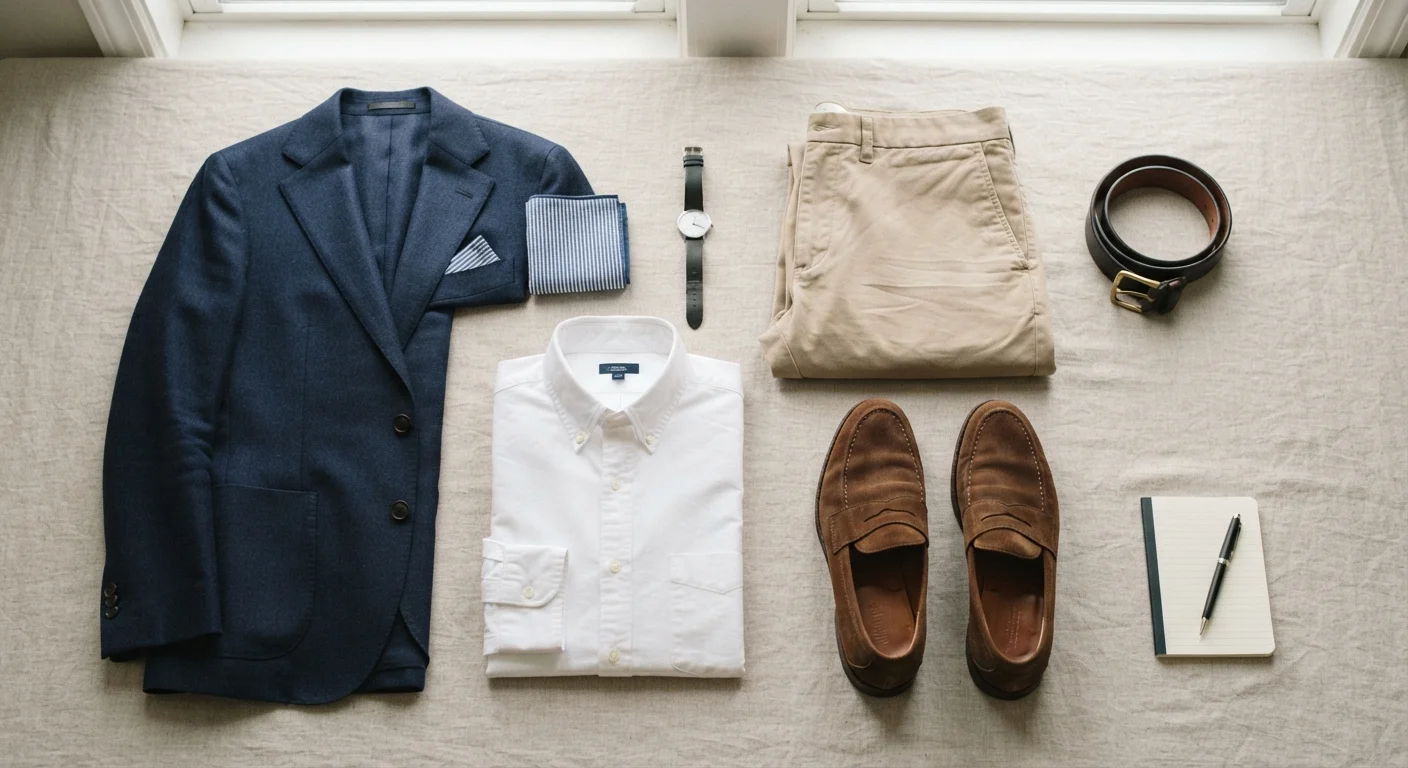
One of the most misunderstood codes, business casual sits between professional and relaxed. For most workplaces, it means neat trousers or chinos, button-down shirts or blouses, sweaters, and closed-toe shoes. Jeans can work if they're dark and unripped, but check your specific office culture first. Sneakers are increasingly accepted in creative industries but remain a gray area elsewhere.
Smart Casual
Smart casual is slightly dressier than business casual and appears most often at social events, dinners, and weekend brunches. Think well-fitted trousers or dark jeans, a polished top or blazer, and neat shoes like loafers, ankle boots, or heeled sandals. The goal is put-together but not formal - a step up from your everyday look without a tie or cocktail dress required.
Cocktail Attire
Cocktail attire is a social evening code - weddings, charity events, gallery openings. Women typically wear knee-to-midi length dresses or dressy separates; men wear a suit and tie. Bold color, interesting fabric, and accessories are encouraged. Full-length gowns are usually too formal; jeans are too casual.
Black Tie and White Tie
Black tie calls for tuxedos or formal dinner suits and floor-length gowns. White tie is the most formal code in common use - tailcoats and white bow ties for men, full-length formal gowns for women. Most Americans will encounter black tie at weddings or charity galas; white tie is rare outside diplomatic or very formal ceremonial events. For a deeper breakdown of these top-tier codes, explore our full dress code reference.
Building a Wardrobe That Covers Every Code
The good news: a handful of versatile pieces can move across multiple dress codes with simple styling shifts. A well-fitted blazer can elevate dark jeans to smart casual or pair with trousers for cocktail-adjacent looks. A clean white button-down works for business casual, under a suit, or tucked into a midi skirt for an evening out.
Reliable outfit formulas take the guesswork out of applying these codes to real-life situations. Once you understand the spectrum, you can also experiment with styling techniques - pattern mixing, monochrome dressing, and layering are great tools for making dress-code-appropriate looks feel distinctly yours.
Context Always Matters
Industry, region, and host culture all influence how a dress code is interpreted in practice. A tech startup's "business casual" often looks very different from a law firm's version. When possible, ask the host or check with someone who has attended a similar event before. There's no shame in clarifying - it shows you're paying attention.
When in doubt, err slightly more formal than you think necessary. It's far easier to remove a blazer than to wish you'd brought one.