

Key Takeaways
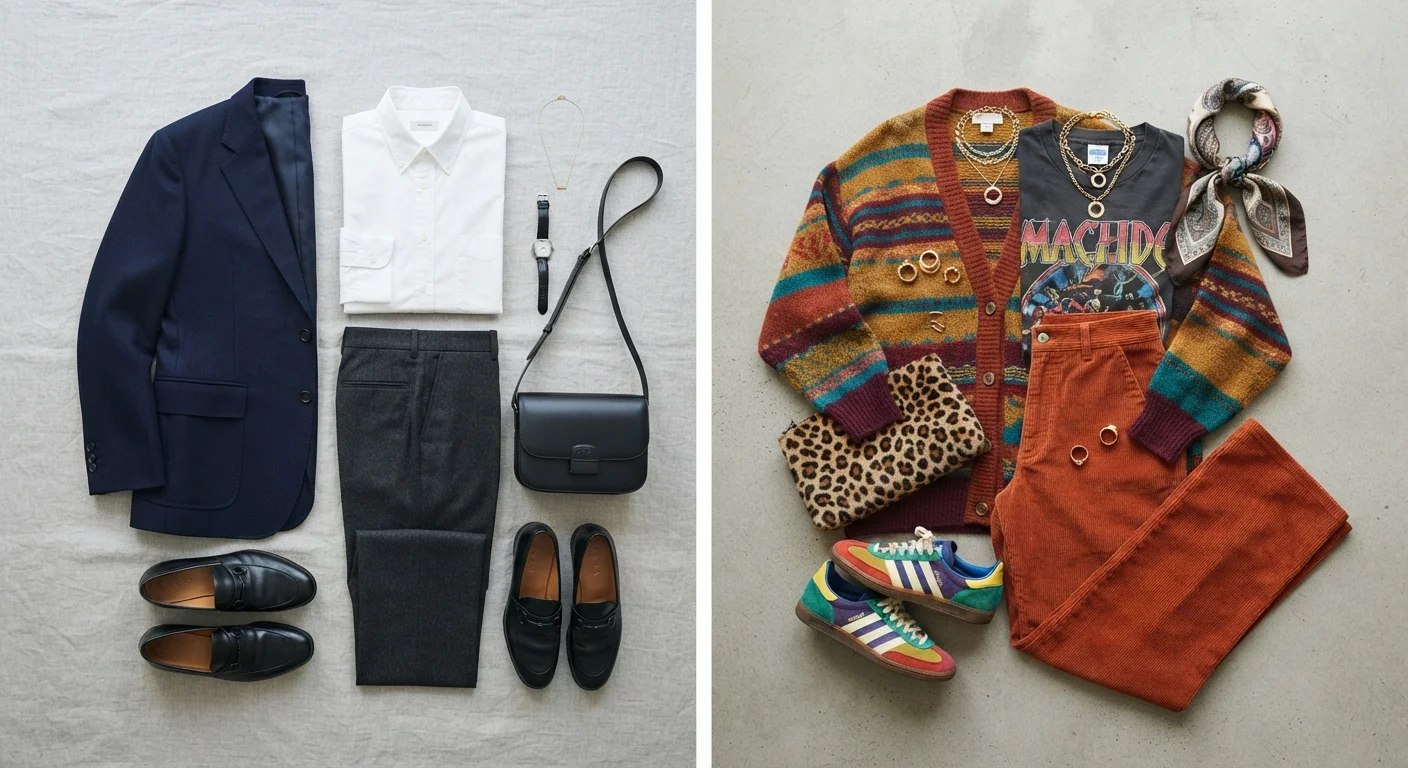
Option A
Body-Shape Dressing
The structured, proportion-first approach to style.
Best for: Readers who want a reliable visual framework for selecting silhouettes that feel balanced and intentional.
Option B
Personality-Led Dressing
The expressive, identity-first approach to style.
Best for: Readers who prioritize self-expression, mood, and individuality over conventional proportion rules.
If you're rebuilding a wardrobe from scratch and want a reliable starting point
Body-Shape Dressing
Proportion guidelines can help narrow overwhelming choices and give you a working visual framework while your personal style is still developing.
If you feel your current wardrobe doesn't reflect who you actually are
Personality-Led Dressing
Centering your values, interests, and mood reconnects clothing to identity - and often produces more satisfying, worn-repeatedly choices.
If you want a style that travels well across dress codes and occasions
Body-Shape Dressing
Knowing which silhouettes work consistently for you simplifies packing, shopping, and dressing for varied contexts without overthinking each outfit.
If you want your clothes to spark joy and conversation
Personality-Led Dressing
Expressive dressing invites creativity, signals your interests and values, and tends to make the act of getting dressed genuinely fun.
If you want a sustainable, long-term style approach
Personality-Led Dressing
Style rooted in identity tends to age better than trend-driven proportion rules, as your aesthetic evolves with you rather than against you.
What Each Approach Actually Means
Body-shape dressing is the practice of selecting silhouettes, cuts, and proportions based on the physical shape of your body - typically categorized as hourglass, pear, apple, rectangle, or inverted triangle. The underlying idea is visual balance: using clothing to create or emphasize symmetry and proportion. As our related piece on what body-shape advice gets right and wrong explains, some of these principles are genuinely useful - while many others are oversimplified or rooted in outdated beauty standards.
Personality-led dressing, by contrast, starts with who you are rather than what your body looks like. It treats clothing as a form of communication - expressing mood, values, subculture, or aesthetic sensibility. Think of the person who always wears something that makes people say, "That is so you" - that's personality-led style at work.
| Criterion | Body-Shape Dressing | Personality-Led Dressing |
|---|---|---|
| Primary goal | Visual balance and proportion | Self-expression and identity |
| Starting point | Physical silhouette and body type | Mood, values, and aesthetic sensibility |
| Decision framework | Rule-based guidelines | Personal instinct and preference |
| Flexibility | Can feel restrictive if applied rigidly | Highly flexible; evolves with you |
| Best use case | Capsule building, navigating new silhouettes | Creating a cohesive, authentic wardrobe |
| Risk | Outdated or oversimplified rules | Can lack structure for new dressers |
| Long-term durability | Rules may feel limiting over time | Tends to age well with identity |
The Case for Body-Shape Dressing
Proportion awareness can be genuinely useful - particularly when you're shopping online, building a capsule wardrobe, or navigating unfamiliar silhouettes. Knowing that a certain cut tends to elongate your torso or that a particular trouser style suits your hip-to-waist ratio gives you a repeatable filter for decision-making.
For readers who find the fashion landscape overwhelming, having a few reliable guidelines can reduce decision fatigue significantly. Research on body-shape dressing suggests that what matters most is how clothing makes you feel - and that proportion awareness, used flexibly, often supports confidence rather than constraining it.
The key word is flexibly. Body-shape guidance works best when treated as a starting point, not a rulebook.
71%
Of people say fit matters most when buying clothes
According to a Cotton Incorporated Lifestyle Monitor survey, fit consistently ranks as the top purchase driver across age groups and body types.
~5
Common body-shape categories in mainstream guides
Most widely circulated body-shape frameworks use between 5 and 7 categories, a system many style researchers consider an oversimplification of real human variation.
The Case for Personality-Led Dressing
Personality-led dressing inverts the question entirely: instead of asking "What should I wear for my body?" it asks "What do I want to communicate today?" This approach tends to produce wardrobes that feel cohesive and authentic because they're built around genuine preferences - texture, color story, cultural reference, mood - rather than prescription.
There's meaningful overlap here with the concept of a personal aesthetic. As our guide to color, pattern, and silhouette explores, style is built from visual levers you can learn to use deliberately. Personality-led dressing is essentially the practice of pulling those levers based on who you are, not what you're supposed to minimize or maximize.
This approach also tends to age better. An aesthetic rooted in your actual interests and identity evolves naturally - rather than clashing with a proportion rulebook that doesn't change as you do.
Where They Conflict - and Where They Converge
The sharpest tension between these two approaches appears when personality-led choices technically "break" proportion rules. Wearing a voluminous top when guidelines say to minimize your upper half. Wearing cropped trousers when guidelines say to elongate your legs. In those moments, the question isn't which system is right - it's which goal matters more to you right now.
That said, the two approaches aren't mutually exclusive. Most confident dressers operate in the overlap: they know which silhouettes tend to feel comfortable and balanced on their body, and they use that knowledge as one input - not the only input - when expressing their personal style.
Common myths about personal style often frame these approaches as competing ideologies. In practice, getting dressed is more fluid than that. You might lean on proportion awareness when dressing for a high-stakes occasion, and lean fully into self-expression on a casual weekend - and both choices can be right.
A Note on "Rules" in Fashion
Body-shape guidelines have existed in mainstream fashion advice for decades, but they're not scientific law - they're visual conventions that reflect certain cultural ideals of proportion. Many stylists and researchers now encourage readers to treat them as optional tools rather than prescriptions. What matters most is that you feel comfortable, confident, and like yourself in what you're wearing.
Building a Style That Works for Both
The most practical path forward is integration. Start by identifying a handful of silhouettes that reliably feel comfortable and balanced on your body - not because a chart said so, but because you've worn them and they worked. Then layer your personality on top: color, print, proportion play, styling details that feel like you.
This is especially useful when dressing across different contexts - knowing your reliable silhouettes means you can adapt to dress codes without losing your personal voice. And as proper fit reminds us, garments that genuinely fit your body tend to look and feel better regardless of which philosophical camp you're dressing from.
Style confidence rarely comes from perfectly following one system. It comes from understanding enough about both to make deliberate, self-aware choices - and wearing them like you mean it.